Why Your Pantry Is Your Most Powerful Cooking Tool
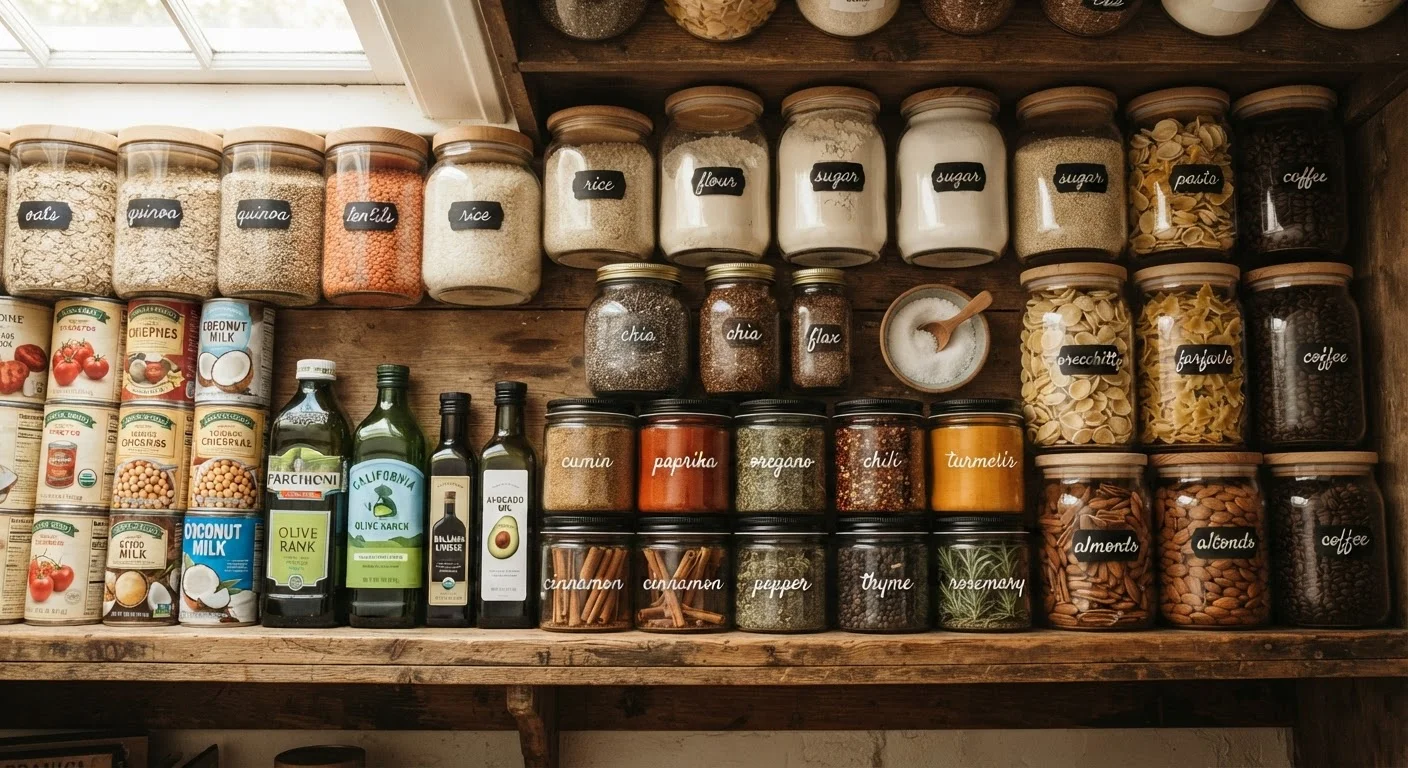
The difference between a cook who scrambles at 6 p.m. and one who has dinner on the table by 6:30 often comes down to what's already in the pantry. A well-stocked pantry is essentially a head start - it means fewer trips to the store, less time staring at recipe lists, and more flexibility to cook what sounds good rather than what you happen to have.
This checklist is designed as a practical audit tool. Work through it section by section, check off what you already have, and use the gaps to build your next shopping list. You don't need to acquire everything at once. Purchasing a few staples per week is a sustainable approach that pairs naturally with smart grocery shopping habits you can build over time.
Once your pantry is in shape, you'll also find weekly meal planning significantly easier - because you'll already know what building blocks you're working with.
Oils and Acids
Grains and Starches
Canned and Jarred Goods
Aromatics and Seasonings
Sweeteners and Baking Basics
How to Use This Checklist Effectively
Before you start, pull open your pantry, cabinets, and refrigerator door shelves. The goal is a real-time audit, not a wish list. Mark each item as have it, running low, or need it. Focus first on the "must" items - these are the workhorses that appear in the widest range of recipes. "Should" items add meaningful variety and nutrition, while "nice to have" items take your cooking further without being urgent.
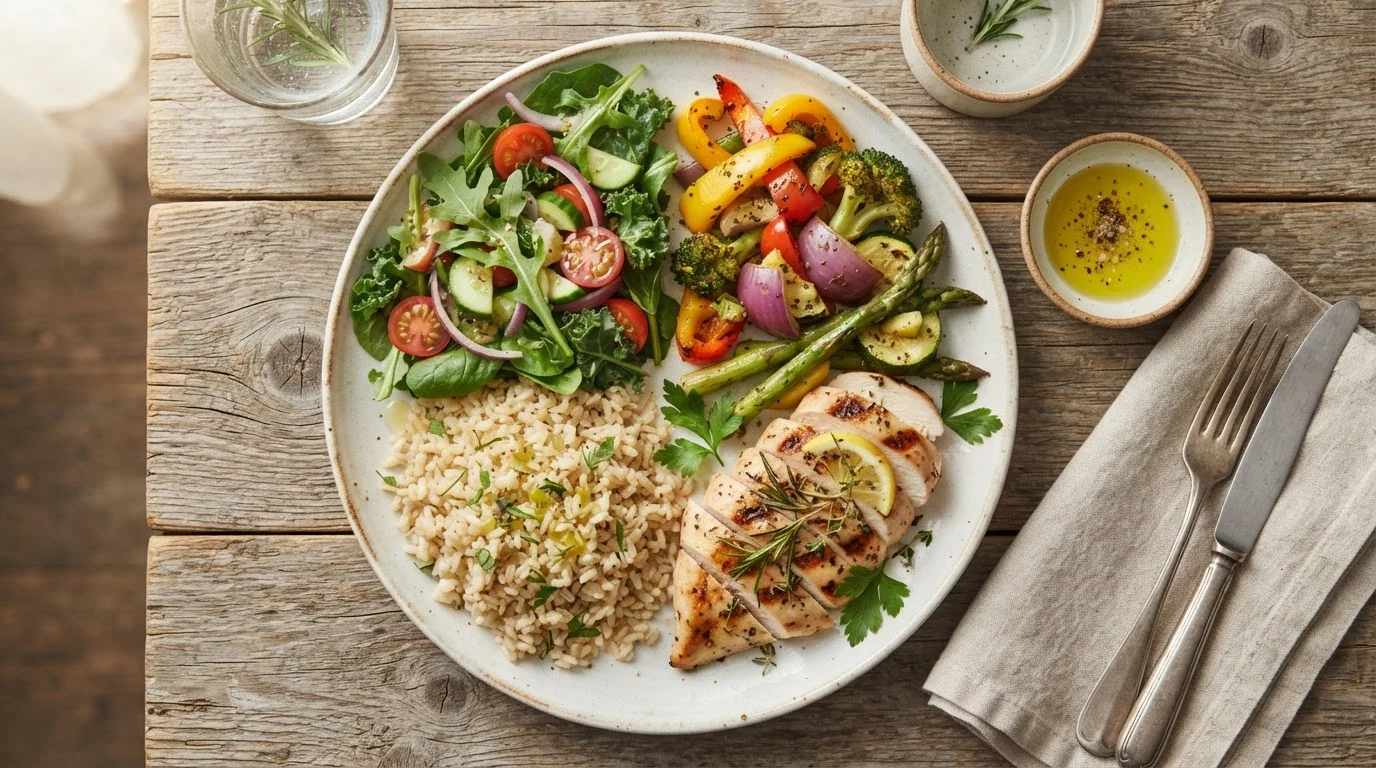
Pair this audit with a balanced plate framework so your pantry reflects the proportions - whole grains, proteins, vegetables, and healthy fats - that support nutritious everyday eating. And if budget is a consideration, many of these staples are among the most cost-effective foods you can buy, a point worth exploring in more depth through practical budget eating strategies.
Permanent marker or label maker
Label open containers and jars with the date you opened them to track freshness.
Airtight glass or plastic storage containers
Transfer dry goods like grains, pasta, and flour from original packaging to extend shelf life and prevent pests.
Pantry inventory notepad or phone notes app
Record what you have, what's running low, and what to buy next - keeps your audit actionable.
Kitchen scale
Measure dry pantry ingredients accurately, especially helpful for baking with flour and grains.
Putting Your Pantry to Work
A stocked pantry only delivers value when you actually cook from it. Treat your pantry audit as a living document - check it monthly, rotate older items to the front, and discard anything past its best-by date. Over time, you'll develop an intuitive sense of what you use fastest and what tends to sit unused.
If you're new to cooking from scratch, combining a solid pantry with foundational kitchen skills makes the whole process smoother. Understanding basic cooking terms and techniques helps you follow recipes with confidence, while applying mise en place principles before you start cooking keeps your workflow efficient. Even improving your knife skills can meaningfully cut prep time when you're working with pantry ingredients like onions, garlic, and canned vegetables.
The pantry isn't just storage - it's the infrastructure of confident, consistent home cooking.
Don't Ignore Expiration and Best-By Dates
Shelf-stable doesn't mean indefinite. Dried spices lose potency after 1-3 years, whole grains can go rancid, and canned goods should be used within 1-5 years depending on type. Inspect your pantry every few months and rotate older items to the front. A pantry full of expired ingredients is storage space that works against you, not for you.