
The Myth That Eating Healthy Costs More
The idea that nutritious food is inherently expensive is one of the most persistent misconceptions in American food culture. It's reinforced by marketing around premium products and the visibility of trendy "superfoods" at inflated prices. But the evidence tells a different story. Research consistently shows that whole foods like legumes, oats, eggs, and in-season vegetables provide excellent nutritional value at low cost per serving.
The challenge isn't affordability - it's knowing which habits and choices make a real difference. As nutrition information overload can lead shoppers toward expensive trends that don't deliver added benefit, stepping back to basics often saves both money and confusion.
Make dried legumes and eggs your primary protein sources
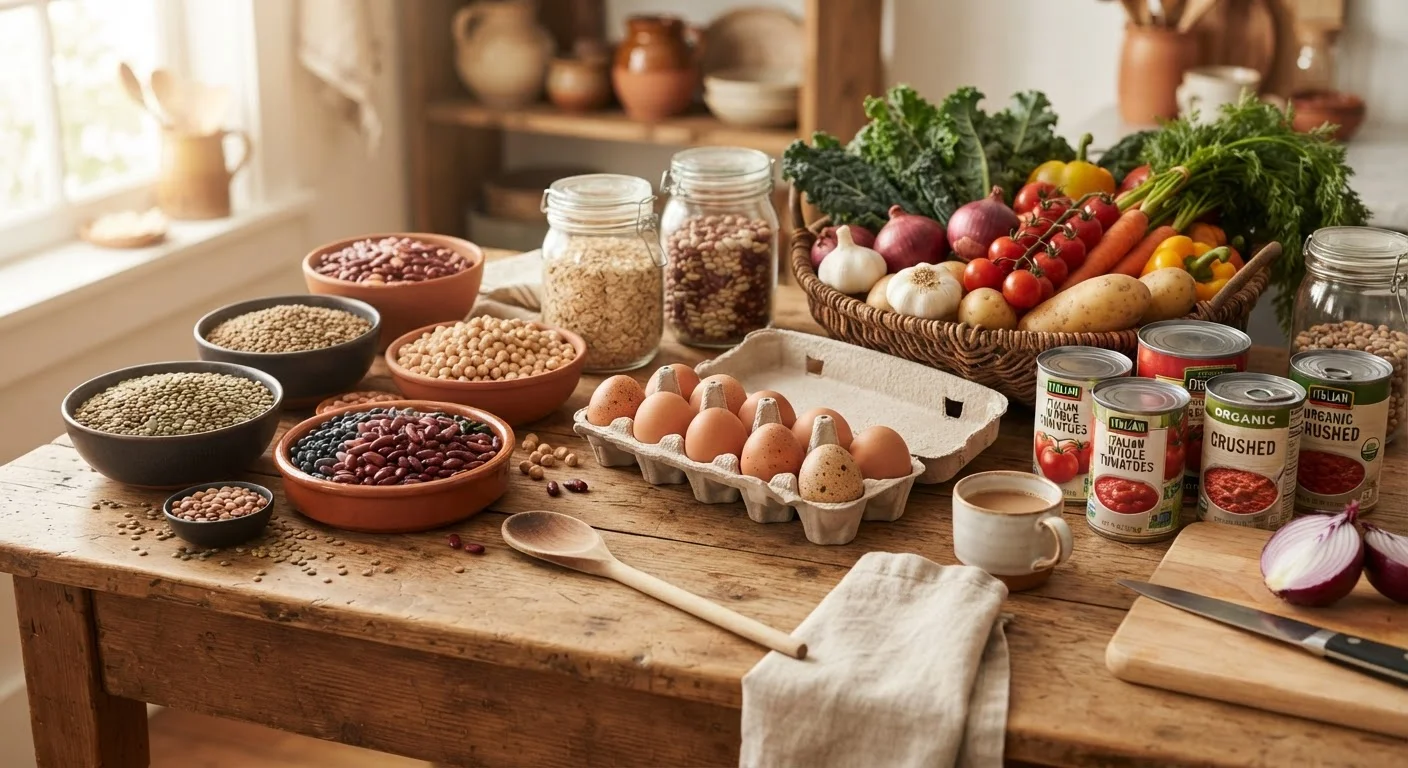
Dried beans, lentils, and chickpeas deliver protein, fiber, and micronutrients at a cost per serving that is a fraction of most animal proteins. Eggs are similarly nutrient-dense and versatile at low cost. Centering meals on these foods reduces the grocery bill substantially without nutritional compromise.
Choose frozen and canned vegetables without hesitation
Freezing and canning preserve most of the nutritional value of vegetables at the point of peak ripeness. For sodium-sensitive individuals, low-sodium or no-salt-added canned options are widely available. Frozen spinach, peas, edamame, and mixed vegetables often cost less per cup than fresh counterparts and have no spoilage risk.
Buy store-brand and seasonal produce over premium alternatives
Store-brand staples - oats, pasta, canned goods, cooking oils - are nutritionally identical to name-brand products and consistently cheaper. Seasonal produce is harvested closer to peak ripeness and requires less transportation, which typically translates to lower prices and better flavor.
Cook grains in large batches and refrigerate for the week
Batch cooking reduces per-meal time and energy, and prevents the costly habit of ordering out on busy weeknights. Whole grains like brown rice, farro, and barley are among the most affordable calorie-dense foods available and reheat well across multiple meals.
Use a shopping list tied to planned meals and stick to it
Unplanned grocery shopping is one of the primary drivers of food waste and overspending. A list anchored to a meal plan ensures you buy only what you'll actually use. It also reduces impulse purchases of processed snacks and convenience items that inflate the bill.
Core Strategies That Stretch Your Food Dollar
The following practices are grounded in nutrition science and practical household economics. None require specialty stores or subscriptions - just intentional choices at the grocery store and in the kitchen.
A useful starting point is understanding how to build a balanced plate without expensive ingredients. Most nutritionally complete meals rely on a protein source, a complex carbohydrate, and vegetables - all of which have very affordable options.
Planning and Pantry Management
Much of the waste in household food budgets comes from unplanned shopping and unused ingredients that spoil. Developing a weekly plan - even a rough one - dramatically reduces both. According to the USDA, American households discard roughly 30-40% of the food supply, a significant portion of which occurs at the consumer level.
A well-stocked pantry of shelf-stable staples is a powerful tool here. Essential pantry ingredients like canned tomatoes, dried pasta, olive oil, and spices form the backbone of countless low-cost meals and reduce the temptation of expensive convenience foods when time is short.
For a structured approach, weekly meal planning helps you map out nutritionally balanced options in advance - and smart grocery shopping habits reinforce those plans at the store level.
This article is for general informational purposes only and is not medical or dietary advice. Consult a registered dietitian or qualified healthcare professional for guidance tailored to your specific health needs.