Why Shopping Habits Drive Nutritional Outcomes
Most nutrition decisions don't happen at the dinner table - they happen in the grocery store. What you bring home is what you eat. Sustained eating patterns, not individual meals, are what research consistently links to long-term health outcomes. See what eating patterns research tells us about long-term wellness for an overview of that evidence.
The habits below aren't about perfection or expensive superfoods. They're low-effort adjustments that shift your cart - and by extension, your plate - toward greater nutritional variety and quality over time. If you're worried about cost, eating well on a budget pairs directly with this guidance.
Core Shopping Habits Worth Building
These practices are grounded in behavioral nutrition research and practical kitchen experience. None require special equipment or a nutrition degree.
Shop with a meal-anchored list, not a free-form one.
A list tied to specific planned meals reduces unplanned purchases and helps ensure you buy ingredients that actually work together. Research in consumer behavior consistently shows that structured lists decrease impulse buying, particularly of highly processed foods. It also cuts food waste, which directly supports budget-conscious shopping.
Eat something before you shop - never go in hungry.
Hunger measurably shifts food preferences toward calorie-dense, high-fat, or high-sugar items, a pattern documented in multiple behavioral studies. Shopping on an empty stomach makes it harder to stick to your list and easier to justify foods you wouldn't otherwise choose.
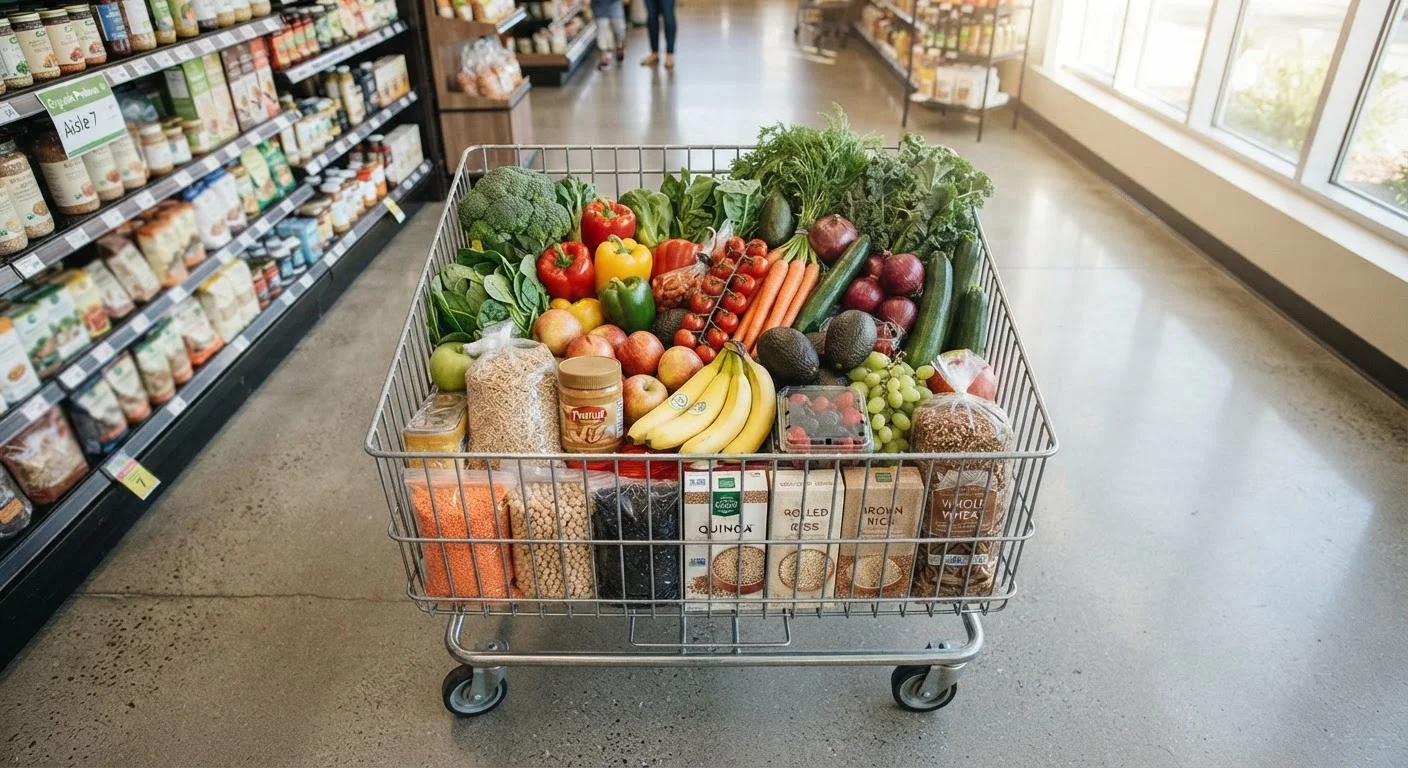
Build your cart from the store perimeter first.
Most grocery stores are laid out so that produce, proteins, dairy, and whole-grain breads occupy the outer aisles, while processed and packaged foods fill the interior. Filling your cart with perimeter items first means less room - and less mental bandwidth - for lower-quality additions.
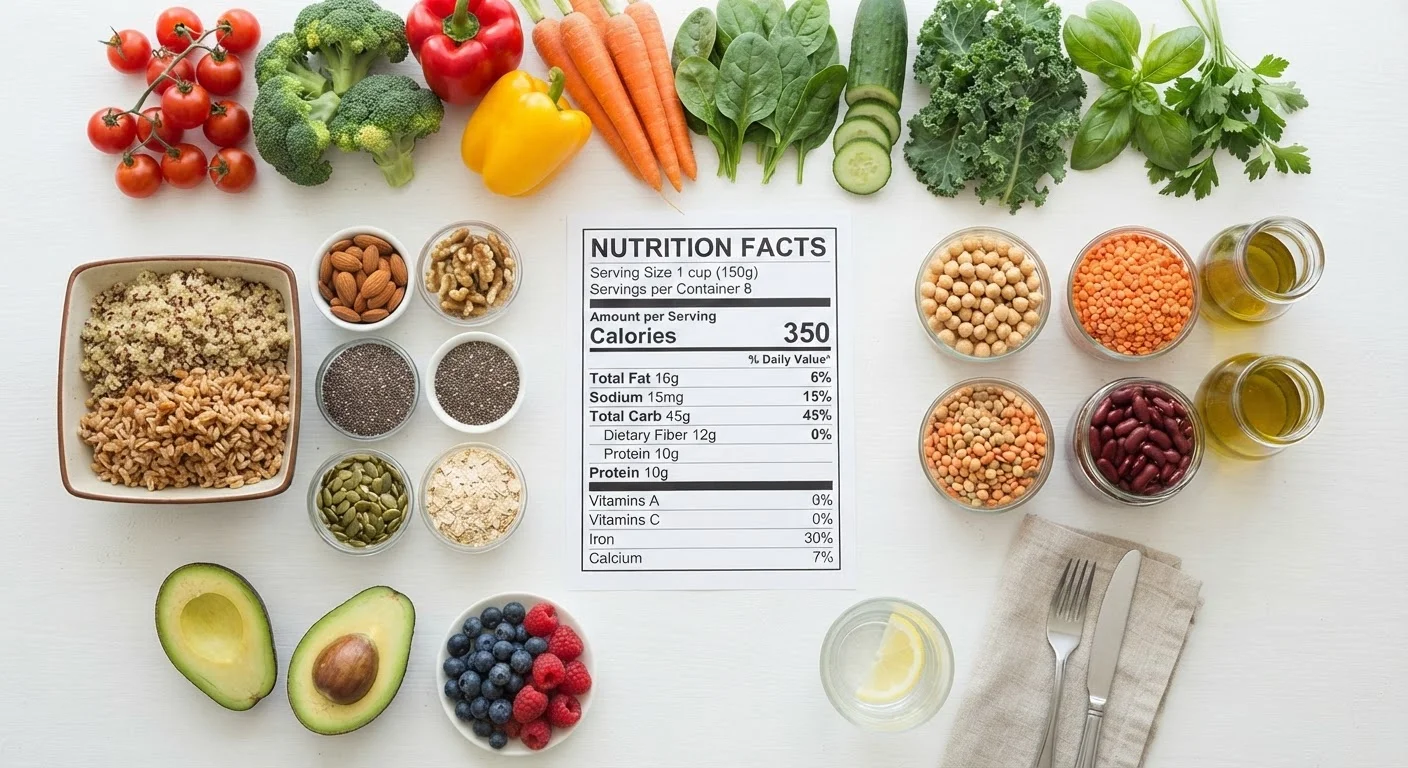
Use fiber content as a quick label-reading shortcut.
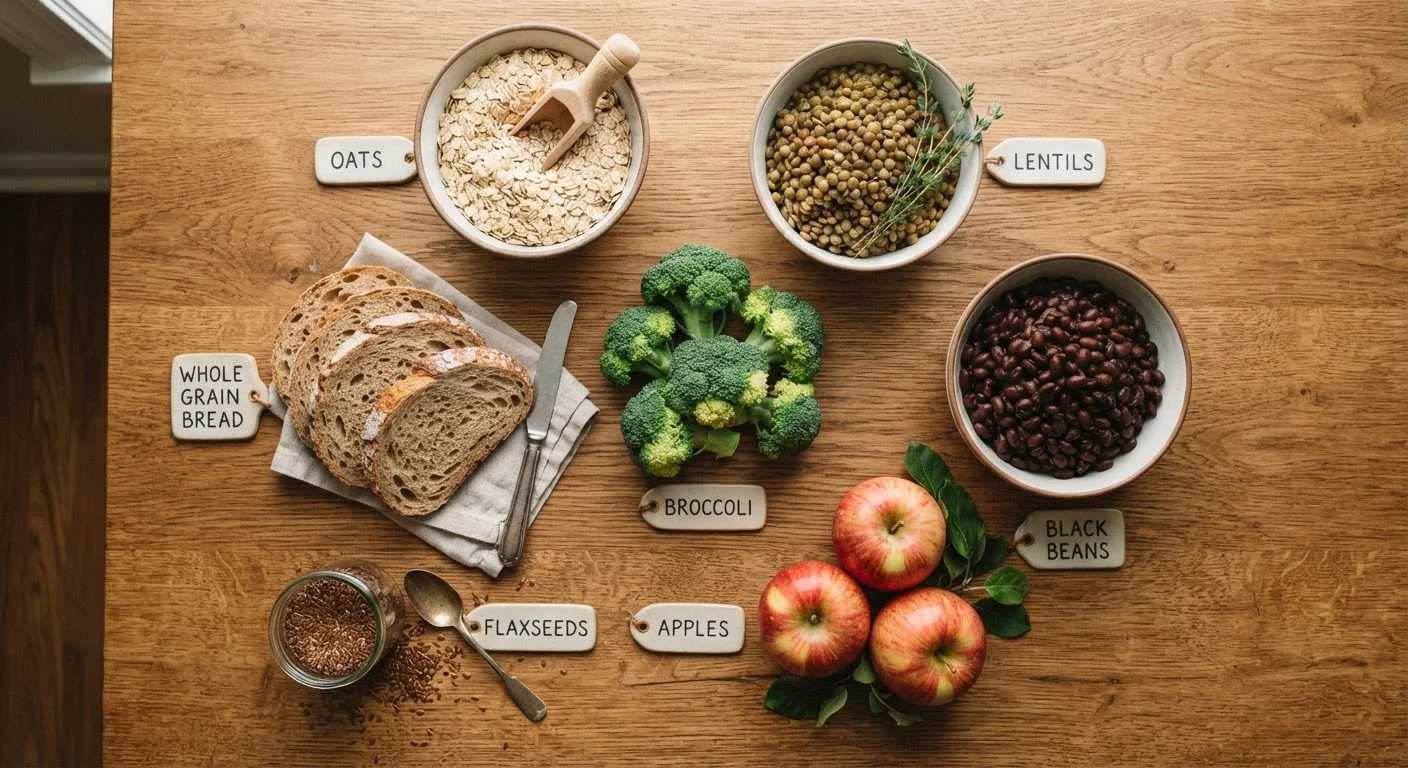
Dietary fiber is a reliable proxy for food quality in packaged products. Foods with meaningful fiber content - typically 3 grams or more per serving - are more likely to be minimally processed and nutrient-dense. Fiber also supports satiety and is associated with gut health benefits. For more on that connection, see gut health and daily habits.
Keep a rotating list of flexible pantry staples to restock.
A reliable pantry lowers the barrier to cooking nutritious meals on low-effort days. Staples like canned legumes, whole grains, canned fish, olive oil, and low-sodium broths extend the reach of whatever fresh ingredients you buy. They also provide backup nutrition when fresh food runs out mid-week.
Check added sugar on labels, not just total sugar.
Total sugar on a nutrition label includes naturally occurring sugars from fruit or dairy, which behave differently in the body than added sugars. The added sugars line - now required on U.S. nutrition labels - gives a clearer picture of how much sweetener was introduced during processing. High added sugar intake is associated with increased risk of several chronic conditions.
Starting Points You Can Act On Today
You don't need to overhaul every habit at once. Pick one or two of these quick-start actions and build from there. Pairing your shopping habit changes with a weekly meal planning approach gives them the most traction.
Once your cart reflects more intentional choices, a balanced plate framework can help you translate those ingredients into well-rounded meals. And a well-stocked pantry means even a bare-bones grocery run still leaves you with options.
This article is for general informational purposes only and is not a substitute for personalized nutrition or medical advice. Consult a registered dietitian or qualified healthcare professional for guidance tailored to your individual health needs.