Two Types of Fiber, Two Different Jobs
Not all fiber works the same way, which is why eating a variety of plant foods matters more than focusing on a single source. The two main categories - soluble and insoluble fiber - each play a distinct physiological role.
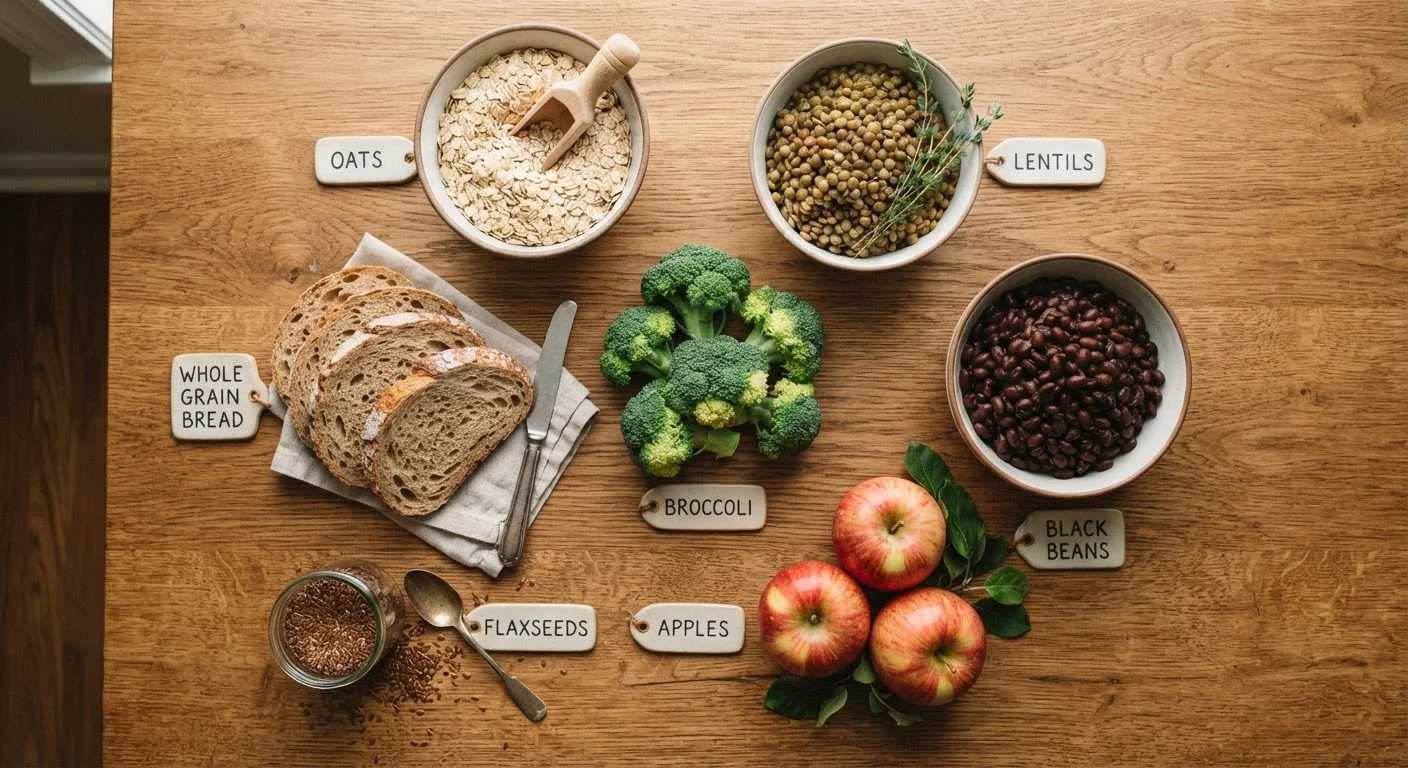
Soluble fiber dissolves in water to form a viscous gel inside the digestive tract. This gel slows the absorption of glucose, which can help moderate blood sugar rises after meals, and it binds to cholesterol-containing bile acids, helping the body excrete them. Good sources include oats, barley, apples, citrus fruits, and legumes.
Insoluble fiber, by contrast, does not dissolve. It adds bulk to stool and accelerates transit time through the colon, which supports regular bowel movements and may reduce the risk of constipation and related discomfort. Whole wheat bran, vegetables, and the skins of many fruits are rich in insoluble fiber.
Most whole plant foods contain both types in varying proportions - one more reason that a diverse, plant-forward diet tends to outperform any single supplement or superfood.
Build Fiber Into Every Meal, Not Just One
Rather than loading up on fiber at a single meal, aim to include at least one fiber-rich food at breakfast, lunch, and dinner. This approach distributes intake more evenly, reduces the likelihood of digestive discomfort, and makes it far easier to reach daily targets without relying on supplements.
Fiber as Food for Your Gut Bacteria
One of fiber's most important - and often overlooked - roles is as a prebiotic: a food source for the beneficial bacteria living in your large intestine. When gut bacteria ferment certain types of fiber (particularly a subcategory called fermentable or prebiotic fiber), they produce short-chain fatty acids such as butyrate, propionate, and acetate.
These compounds are not a minor footnote. Butyrate, for example, serves as the primary energy source for the cells lining the colon and is associated with reduced gut inflammation. A well-fed microbiome also influences immune function, mood signaling via the gut-brain axis, and nutrient absorption - areas of active scientific research.
Fiber's wide-reaching roles in the body - from heart health to blood sugar regulation - go well beyond simple digestion. For a plain-language foundation on related nutrition vocabulary, the practical reference guide to common nutritional terms is a helpful companion read.
~15g
Average daily fiber intake for U.S. adults
Dietary survey data consistently shows American adults consuming roughly 15 grams per day - well below the recommended 25-38 grams depending on age and sex.
95%
Americans failing to meet fiber recommendations
Research published in the American Journal of Lifestyle Medicine estimated that approximately 95% of Americans do not meet recommended fiber intake levels.
10-16g
Fiber per cooked cup of lentils or black beans
Legumes are among the most fiber-dense common foods, making them one of the most practical tools for closing the fiber gap.
Why the Intake Gap Is So Wide
Nutrition surveys consistently show that most American adults consume roughly 15 grams of fiber per day - significantly below the recommended 25-38 grams. The gap is largely a structural one rooted in food environment, not willpower.
Ultra-processed foods - which make up an estimated 57-60% of calories in the average American diet, according to research published in peer-reviewed journals - are almost entirely stripped of fiber during manufacturing. White flour, refined oils, added sugars, and processed starches contribute calories without any meaningful fiber. When these foods crowd out whole grains, vegetables, legumes, and fruit, fiber intake collapses.
Portion sizes and food access also play a role. Legumes and whole grains require more preparation time than packaged convenience foods, and fresh produce is not equally accessible or affordable in all communities.
It is worth noting that fiber isn't the only nutrient affected by this dietary pattern - micronutrient shortfalls often shadow low-fiber diets for the same underlying reasons. Meanwhile, nutrition information overload can make it harder to identify simple, practical solutions.
Practical Ways to Increase Your Fiber Intake
Closing a fiber gap doesn't require a dramatic diet overhaul. Incremental, sustainable swaps tend to produce lasting change without digestive discomfort. A few evidence-backed strategies:
- Swap refined grains for whole grains - choose whole wheat bread, brown rice, or rolled oats over their refined counterparts. The difference in fiber per serving can be two- to threefold.
- Add legumes to existing meals - a half-cup of cooked lentils or black beans added to soups, salads, or grain bowls can contribute 7-8 grams of fiber per serving.
- Eat whole fruit instead of juice - juicing removes the insoluble fiber, leaving mostly sugar and water. A medium apple with skin delivers about 4-5 grams of fiber; apple juice delivers nearly zero.
- Leave skins on vegetables - much of the fiber in potatoes, zucchini, and cucumbers is concentrated in the skin. Scrubbing and keeping skins intact is one of the easiest wins.
- Go slowly - increase fiber intake over two to four weeks and drink plenty of water. Rapid increases can trigger bloating and gas as gut bacteria adjust.
This article is for general informational purposes only and is not a substitute for personalized medical or nutrition advice. Consult a qualified healthcare professional or registered dietitian for guidance tailored to your individual health needs.