
More Than a Digestive Aid
When most people think about fiber, they think about staying regular. While that's a genuine benefit, reducing fiber to a laxative-like nutrient dramatically undersells what the research shows. Fiber is increasingly understood as a key player in metabolic health, cardiovascular risk, and the delicate ecosystem living in your gut.
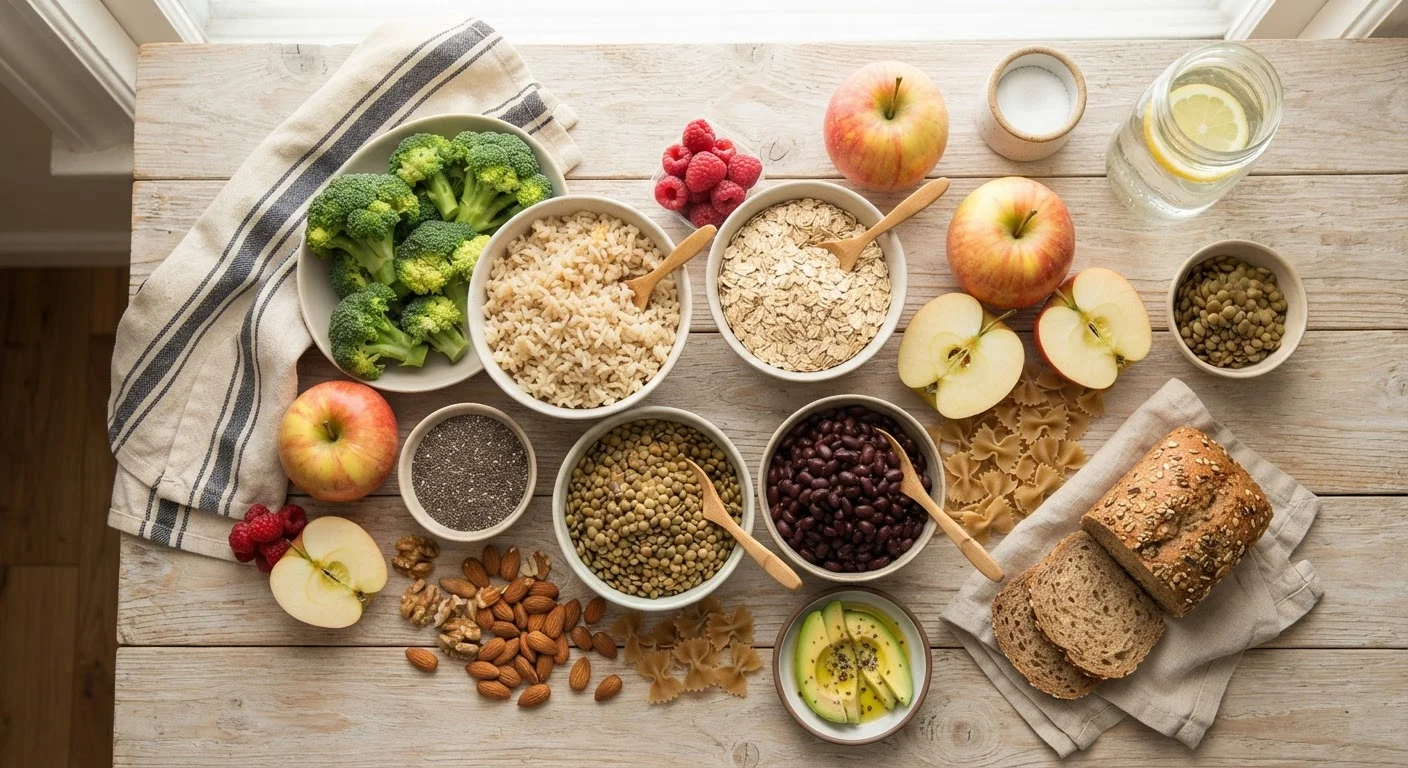
Dietary fiber is found exclusively in plant foods - whole grains, legumes, fruits, vegetables, nuts, and seeds. It's the structural component of plant cell walls that human digestive enzymes cannot break down. That resistance to digestion is precisely what gives fiber its diverse benefits throughout the gastrointestinal tract and beyond.
For a closer look at how fiber compares to other nutrition claims circulating online, see popular nutrition myths examined by science.
Soluble vs. Insoluble: Why Both Matter
Fiber comes in two main forms, and understanding the difference helps explain why variety in plant food intake is important.
- Soluble fiber dissolves in water to form a viscous gel in the gut. This gel slows the rate at which glucose enters the bloodstream, which supports steadier blood sugar levels after meals. Soluble fiber also binds to bile acids in the intestine, which is one mechanism through which it may help reduce LDL (low-density lipoprotein) cholesterol - sometimes called "bad" cholesterol. Oats, barley, apples, citrus, and legumes are particularly rich in soluble fiber.
- Insoluble fiber does not dissolve in water. Instead, it adds bulk to the stool and speeds transit through the colon, reducing the time waste spends in contact with the intestinal lining. Whole wheat, bran, nuts, and most vegetables are strong sources. This type of fiber is most directly linked to regularity and is associated with a lower risk of certain digestive conditions.
Most whole plant foods contain a mixture of both types, which is one reason that eating a varied, plant-rich diet is more effective than focusing on a single food source.
~15g
Average daily fiber intake for U.S. adults
Dietary guidelines recommend roughly 25-38 grams per day, meaning most Americans consume less than half the target amount.
95%
Americans falling short of fiber recommendations
According to data cited by the American Society for Nutrition, inadequate fiber intake is one of the most widespread nutrient gaps in the U.S. diet.
10-15%
LDL cholesterol reduction linked to soluble fiber
Research published in peer-reviewed nutrition journals suggests that consistent soluble fiber intake can produce meaningful reductions in LDL cholesterol levels.
Fiber and the Gut Microbiome
One of the most compelling areas of fiber research involves its relationship to the gut microbiome - the vast community of microorganisms living in the large intestine. Fermentable fibers, often called prebiotics, serve as fuel for beneficial bacteria such as Bifidobacterium and Lactobacillus species. When these bacteria ferment fiber, they produce short-chain fatty acids (SCFAs) like butyrate, acetate, and propionate.
SCFAs play a meaningful role in gut health: butyrate, for example, is a primary energy source for the cells lining the colon and is associated with maintaining a healthy intestinal barrier. Research also suggests SCFAs may influence immune function and inflammation, though scientists are still working to understand the full scope of these effects.
A diet low in fiber has been linked to reduced microbial diversity - a pattern associated in observational studies with various health concerns. To understand the broader relationship between what you eat and your gut ecosystem, our explainer on the gut microbiome and diet covers the current evidence in depth.
Practical Steps to Increase Fiber Intake
Despite fiber's well-documented roles in health, national dietary surveys consistently show that most Americans fall significantly short of recommended intake levels. The gap is largely driven by reliance on processed and refined foods, which strip out much of the natural fiber found in whole plant ingredients.
Practical strategies for increasing fiber intake include:
- Swapping refined grains for whole grain versions of bread, pasta, and rice.
- Adding legumes - beans, lentils, or chickpeas - to soups, salads, and main dishes several times per week.
- Eating fruit with the skin on when safe to do so (apples, pears, peaches).
- Incorporating a variety of vegetables into meals rather than relying on the same one or two.
- Choosing nuts or seeds as snacks instead of low-fiber processed options.
One important caution: increasing fiber intake too rapidly can cause gas, bloating, and cramping. Ramping up intake gradually over several weeks, while also ensuring adequate fluid intake, allows the gut microbiome and digestive system time to adjust. For more on how hydration interacts with digestion, see our guide on hydration and nutrition.
For a detailed breakdown of how common intake gaps develop and specific food sources to prioritize, our companion piece on fiber intake in America is a practical next read.
This article provides general health information for educational purposes only and is not a substitute for professional medical advice. Please consult a qualified healthcare provider with any questions about your diet or health.