
Water's Role in Digestion and Nutrient Absorption
Water is not a passive bystander in the digestive process - it's an active participant. From the moment food enters your mouth, water-based saliva begins breaking down carbohydrates. Stomach acids and digestive enzymes are themselves water-based solutions, and the intestinal lining requires adequate moisture to absorb vitamins and minerals efficiently into the bloodstream.
Nutrients like B vitamins and vitamin C are water-soluble, meaning they dissolve in water and depend on fluid availability to travel through the body. Fat-soluble vitamins (A, D, E, and K) rely on dietary fat for absorption, but they still require water-based circulation to reach tissues. Even the motility of the gut - the muscular contractions that move food along - depends on adequate hydration to prevent sluggishness and discomfort.
This is why hydration and diet can't really be separated. To understand how different foods deliver nutritional value, it helps to consider nutrient density alongside fluid intake - both shape how much benefit your body actually extracts from a meal.
A Simple Way to Eat and Hydrate Together
Building meals around water-rich whole foods - like leafy greens, berries, soups, and cooked legumes - supports both nutritional goals and fluid intake simultaneously. You don't have to think of eating and hydrating as two separate tasks. A diet rich in vegetables and fruits naturally works toward both.
How Food Contributes to Your Fluid Intake
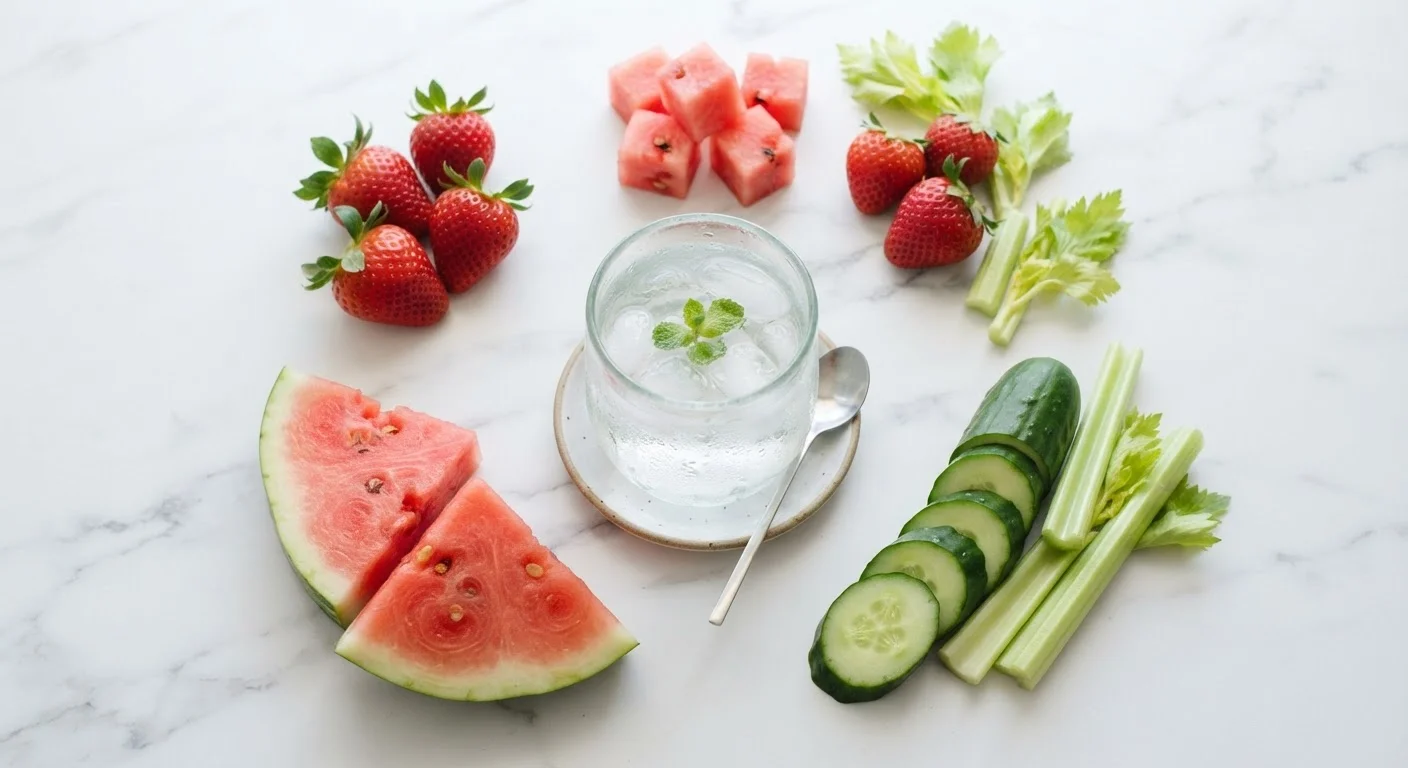
Most people think of hydration as something that happens one glass at a time. But a substantial portion of daily fluid intake - estimates commonly cited in nutrition research suggest around 20% - comes from food. Water-rich foods like cucumbers, strawberries, celery, tomatoes, and watermelon are composed of 90% or more water by weight. Even cooked grains, soups, and legumes contribute meaningfully.
This connection between food and fluid balance runs in both directions. What you eat also affects how much water your body needs and retains. High-sodium diets, common in processed food-heavy eating patterns, drive increased thirst and prompt the kidneys to hold onto water. High-sugar intake can similarly shift the body's osmotic balance, pulling water into cells or the bloodstream in ways that affect overall fluid regulation.
For a closer look at how specific foods and dietary patterns shape hydration, see how diet and fluid intake work together.
The Fiber-Water Connection
Dietary fiber and water have a well-established relationship that is often overlooked. Soluble fiber - found in oats, beans, apples, and flaxseed - dissolves in water to form a gel-like substance in the gut, slowing digestion and supporting stable blood sugar. Insoluble fiber adds bulk to stool and speeds transit through the colon. Both types require adequate water to function properly.
Without enough fluid, a high-fiber diet can backfire, contributing to bloating or constipation rather than alleviating it. When fiber intake increases, fluid needs generally rise proportionally. This is one of the clearest examples of how hydration and nutrition are physiologically interdependent rather than separate concerns.
Dietary fiber's broader roles - including its effects on gut microbiome health and cardiovascular function - are worth understanding alongside its relationship to hydration.
~20%
Daily fluid intake from food sources
Nutrition researchers commonly estimate that roughly one-fifth of most adults' daily water intake comes from solid food rather than beverages.
90%+
Water content in top hydrating vegetables
Foods like cucumber, lettuce, and celery are composed of more than 90% water by weight, according to USDA food composition data.
60%
Approximate water composition of the human body
The U.S. Geological Survey reports that water makes up roughly 60% of adult body weight, underscoring its role in virtually every biological process.
Practical Takeaways for Everyday Eating
Hydration goals aren't one-size-fits-all. Individual fluid needs vary based on body size, activity level, climate, and overall diet composition. Rather than chasing a specific daily number of glasses, most nutrition guidance emphasizes eating a varied diet rich in whole foods - many of which contribute both nutrients and water simultaneously.
Prioritizing vegetables, fruits, legumes, and whole grains naturally supports both core nutrition goals and fluid balance. Paying attention to thirst, urine color (pale yellow typically indicates adequate hydration), and energy levels are practical, individualized signals that most health professionals consider more reliable than rigid daily targets.
If you've encountered conflicting information about how much water you need or which drinks count, hydration myths worth examining offers evidence-based clarity on the most commonly misunderstood claims.
This article is for general informational purposes only and is not a substitute for professional medical or dietary advice. Consult a qualified healthcare provider or registered dietitian for personalized guidance.