Your Plate Is Part of Your Water Supply
Most people think about hydration as a beverage problem - drink more water, maybe add an electrolyte packet, and you're set. But food is a significant, often overlooked part of the hydration picture. Research consistently shows that roughly 20% of the average adult's daily water intake comes directly from solid food.
That percentage climbs when your diet includes plenty of fruits and vegetables, and falls sharply when meals lean heavily on processed, packaged, or dry foods. A breakfast of oatmeal made with water and fresh berries delivers very different hydration value than a bowl of dry cereal. Understanding this relationship helps you make smarter choices at every meal - not just at the water fountain.
For a broader look at how water interacts with digestion and nutrient absorption, see how hydration fits into your overall nutrition.
Water-Rich Foods: The Hidden Hydrators
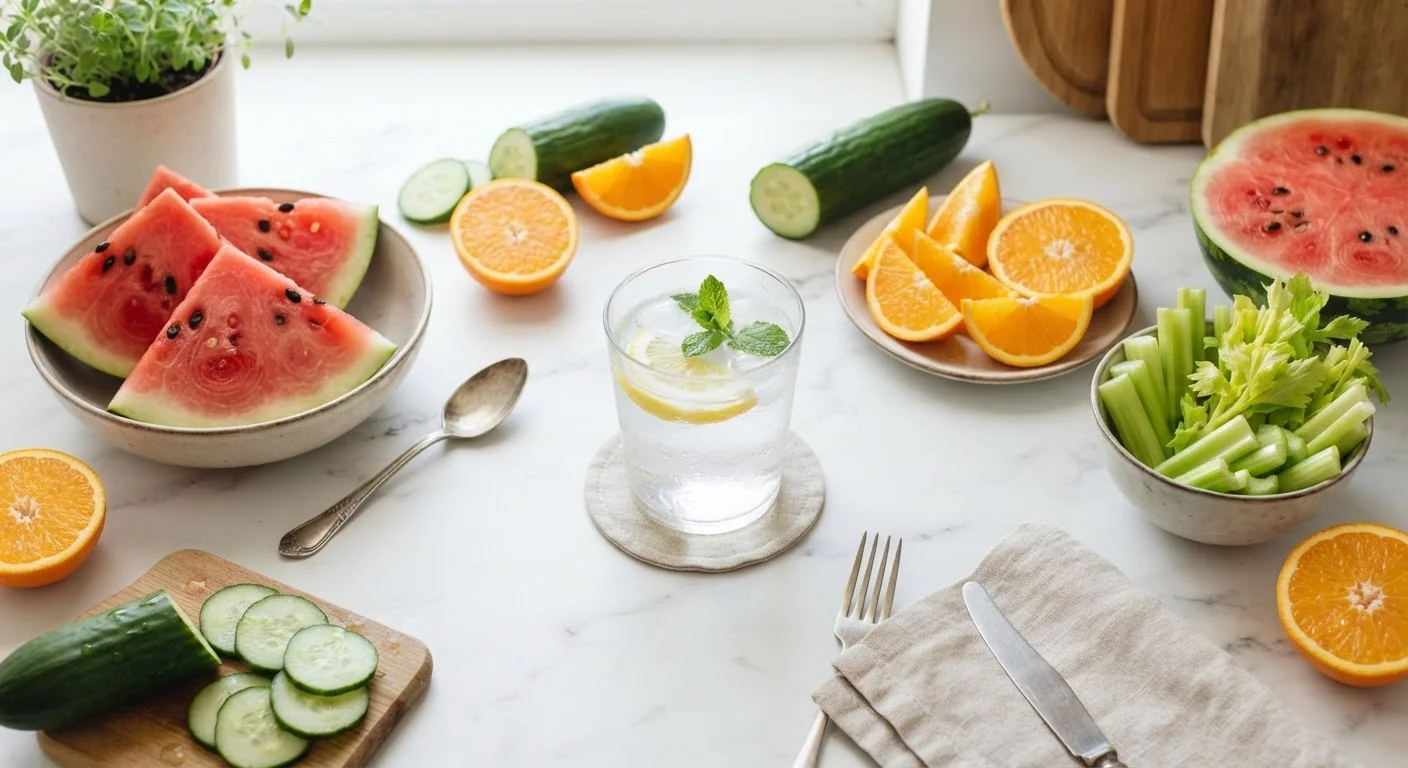
Some of the most effective hydrating foods look nothing like a drink. Cucumbers, iceberg lettuce, celery, tomatoes, watermelon, strawberries, and oranges all contain between 90 and 96% water by weight. Eating a large salad or a serving of watermelon delivers a meaningful amount of fluid along with fiber, vitamins, and minerals - a combination no glass of plain water can match.
These foods also tend to be digested slowly, meaning the water they contain is released gradually rather than all at once. This makes them particularly good at sustaining hydration between meals, rather than spiking and then dropping off the way a large drink might.
Cooking method changes this equation. Roasting, grilling, or dehydrating foods concentrates their nutrients but removes a substantial portion of their water. Raw and lightly steamed preparations preserve more of that fluid content, which is worth keeping in mind if hydration is part of your goal at mealtime.
Sodium, Potassium, and Fluid Balance
Electrolytes - particularly sodium and potassium - are the body's main tools for regulating how water moves in and out of cells. Sodium draws water toward it, and when blood sodium rises (say, after a salty meal), the kidneys retain more water to dilute it. That's why high-sodium foods make you feel thirsty: your body is signaling that it needs more fluid to restore balance.
Potassium, found in abundance in bananas, sweet potatoes, avocados, and leafy greens, works in opposition to sodium. Diets rich in potassium-containing whole foods help offset some of sodium's water-retaining effects and support overall electrolyte balance. This is one reason nutrition researchers frequently emphasize increasing fruit and vegetable intake rather than just reducing salt.
~20%
Daily water intake from food
Research published in nutrition journals estimates that food contributes approximately 20% of total daily water intake for adults eating a typical varied diet.
3,400 mg
Average daily sodium intake for U.S. adults
According to the CDC, the average American consumes well above the recommended limit of 2,300 mg per day, primarily from processed and restaurant foods.
90-96%
Water content in top hydrating vegetables
Foods like cucumber, celery, and lettuce are among the highest water-content foods, per USDA food composition data.
Processed and packaged foods account for a large share of sodium intake for most Americans. Meals built around whole foods naturally moderate sodium and provide electrolytes that support healthier fluid balance - no supplements required for most healthy adults.
Caffeine, Alcohol, and What They Actually Do
Two of the most common dietary concerns around hydration are caffeine and alcohol - and the reality is more nuanced than the common warnings suggest.
Caffeine is a mild diuretic, meaning it can prompt your kidneys to release more water than usual. However, multiple studies have found that moderate caffeine consumption - the amount in one to three cups of coffee - still results in a net gain of fluid, not a loss. The water in the beverage outweighs the diuretic effect. For a full breakdown of what the research actually shows, common hydration myths are worth examining closely.
Alcohol is a more significant story. It suppresses the hormone that tells your kidneys to retain water (ADH), which is why frequent bathroom trips and next-morning thirst are familiar companions to drinking. Unlike caffeine, alcohol can produce a net fluid deficit, particularly in larger amounts.
This article is for informational purposes only and is not a substitute for advice from a qualified healthcare professional. Individual hydration needs vary based on health status, activity level, and other factors. Please consult a healthcare provider with specific questions about your fluid needs.