
What 'Balanced' Actually Means
The word "balanced" gets thrown around in food media constantly, but it rarely comes with a useful definition. For everyday cooking purposes, a balanced meal is one that provides a mix of macronutrients - carbohydrates, protein, and fat - alongside fiber, vitamins, and minerals in amounts that support steady energy and overall health. It doesn't require perfection at every sitting.
This framework draws on guidance from public health nutrition research, including the evidence base behind tools like the USDA's MyPlate model, while translating that evidence into something you can actually use at the stove. If you find nutrition headlines overwhelming, our piece on common patterns that lead home cooks astray is worth reading alongside this one.
The Four Building Blocks of Every Meal
Most nutritionally complete meals share four components. Understanding each one helps you improvise confidently rather than follow recipes rigidly.
Macronutrients
The three main nutrient categories your body needs in relatively large amounts: carbohydrates (for energy), protein (for building and repair), and fat (for energy storage and cell function).
Phytonutrients
Natural compounds found in plants - including pigments that give vegetables their color - that may support health in various ways, though research on their specific effects is still evolving.
Whole grains
Grains that retain all three parts of the original kernel (bran, germ, and endosperm), providing more fiber, vitamins, and minerals than refined grains, which have had the bran and germ removed.
Unsaturated fat
A type of dietary fat found in plant oils, nuts, seeds, and fatty fish that is generally considered heart-supportive when it replaces saturated fat in the diet.
Fiber
A type of carbohydrate found in plant foods that the body cannot fully digest. It supports digestive health, helps regulate blood sugar levels, and contributes to a feeling of fullness.
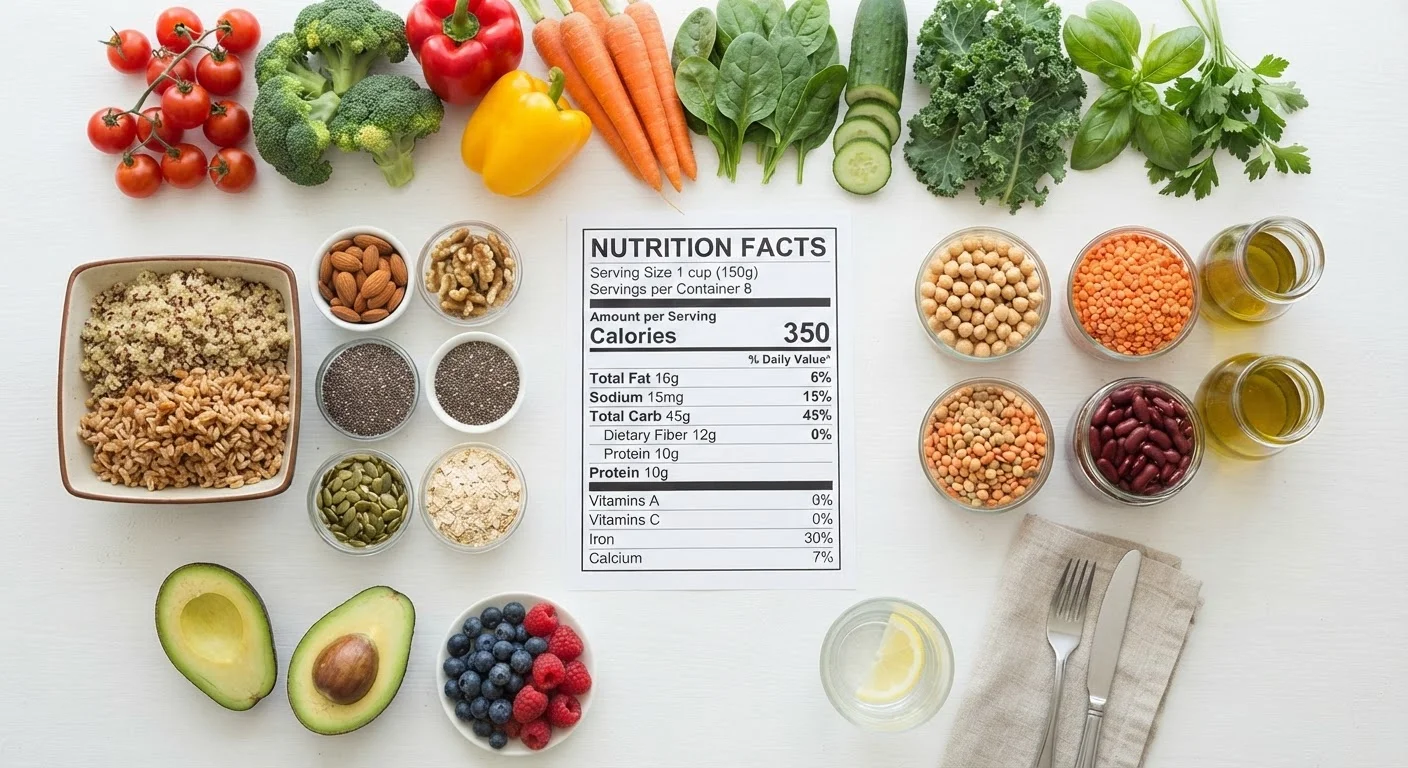
- Vegetables and fruit: These supply fiber, vitamins, minerals, and plant compounds (called phytonutrients) that support many body systems. Variety matters more than quantity - different colors signal different nutrient profiles.
- Quality protein: Protein supports muscle maintenance, immune function, and satiety. Sources include poultry, fish, eggs, legumes, tofu, tempeh, and dairy. Leaner sources tend to carry less saturated fat.
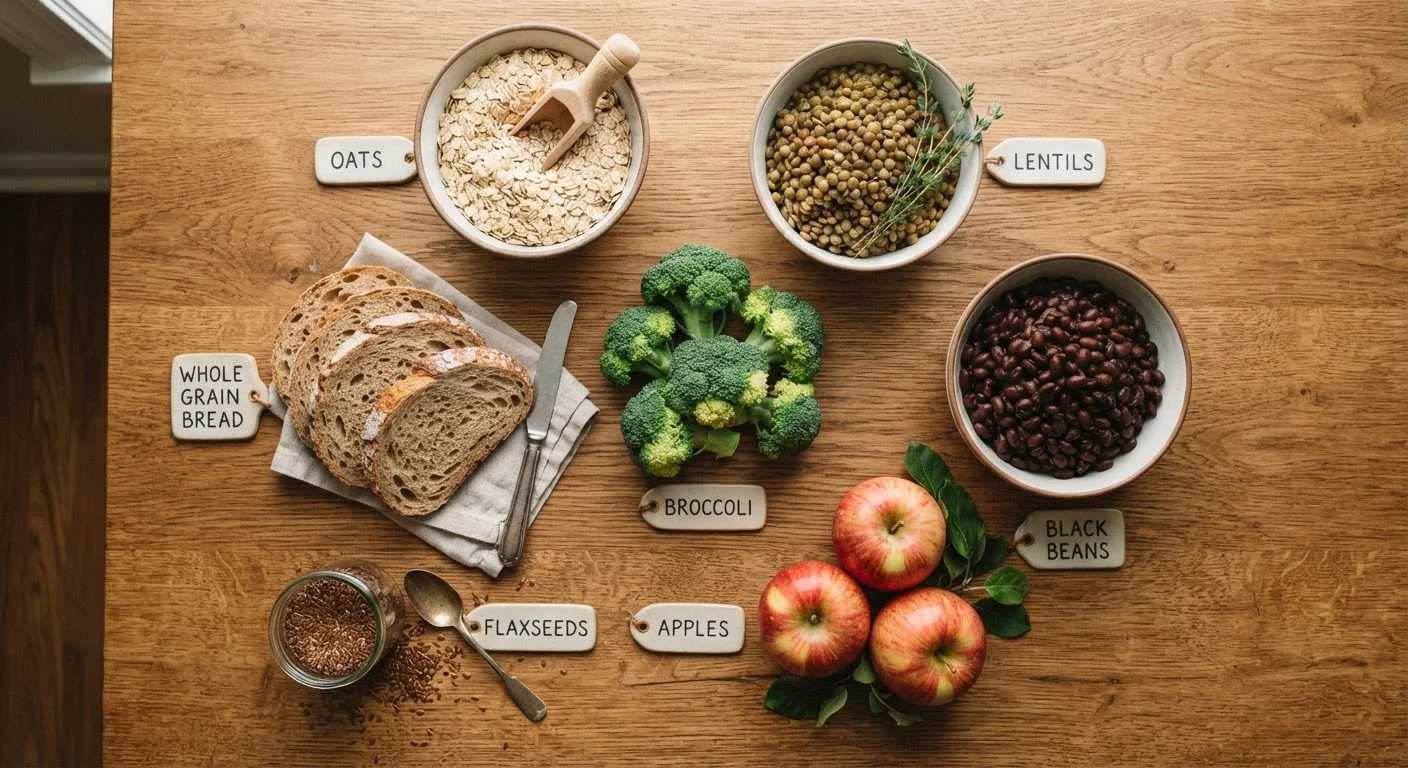
- Whole grains or starchy vegetables: These provide lasting carbohydrate energy and additional fiber. Brown rice, oats, quinoa, whole wheat bread, sweet potatoes, and corn all qualify. Whole grains retain more nutrients than refined versions.
- Healthy fat: Small amounts of unsaturated fat - from olive oil, avocado, nuts, or seeds - help the body absorb fat-soluble vitamins (A, D, E, and K) and make meals more satisfying.
These four components work together. A plate heavy in one area and missing another will leave nutritional gaps over time.
Portion Ratios Without a Scale
Visual portion guides are the most practical tool most home cooks have. The general principle: fill roughly half your plate with vegetables (and some fruit if you like), one quarter with a protein source, and one quarter with whole grains or a starchy vegetable. Healthy fat often comes built into cooking - a drizzle of olive oil, a few slices of avocado, or a small handful of nuts on the side.
Your hand can serve as a quick measuring stand-in:
- A palm-sized portion approximates a reasonable protein serving for most adults.
- A cupped hand is a rough guide for a grain or starchy vegetable portion.
- Two cupped hands represent a generous vegetable serving.
These aren't clinical measurements, but they're accurate enough to keep meals in a reasonable range without counting a single calorie. Weekly meal planning can help you apply this thinking across a whole week rather than one meal at a time.
Adapting the Framework to Real Life
Balanced eating doesn't mean every meal looks like a textbook diagram. Mixed dishes - stir-fries, soups, grain bowls, tacos - can absolutely hit all four building blocks. The key is to mentally scan what's in the bowl: is there a protein? Some vegetable bulk? A grain or starchy base? A small amount of fat?
Budget is a real constraint for many households, and a balanced plate doesn't require expensive ingredients. Canned beans, frozen vegetables, eggs, and oats are among the most nutrient-dense affordable foods available. For more on stretching your food budget without sacrificing nutrition, see eating well on a budget.
What you keep in your kitchen shapes what ends up on your plate. Grocery shopping habits that prioritize whole foods make balanced meals the path of least resistance during a busy week.
Build Flavor While Staying Balanced
A nutritious plate doesn't have to taste plain. Herbs, spices, citrus, and umami-rich ingredients like miso or tomatoes add complexity without tipping the nutritional balance. If your meals often taste flat, our guide on why dishes taste flat walks through easy fixes you can apply before serving.
Common Missteps and How to Course-Correct
Even well-intentioned eaters run into predictable patterns that chip away at balance:
- Skimping on vegetables: This is the most common gap. If vegetables feel like an afterthought, try building the meal around them first - fill half the plate, then add the rest.
- Over-relying on processed grains: White bread and refined pasta aren't harmful in moderation, but they deliver less fiber and fewer nutrients than whole-grain versions. Swapping half your refined grains for whole ones over time is a meaningful change.
- Treating protein as optional: Meals low in protein tend to leave people hungry sooner and may not support muscle maintenance over time. Even a modest protein addition - a boiled egg, a scoop of legumes - makes a difference.
- Avoiding fat entirely: Low-fat approaches that cut healthy fats can actually reduce nutrient absorption. The goal is quality and moderate quantity, not elimination.
No single meal makes or breaks long-term nutrition. What matters is the overall pattern across days and weeks. Use this framework as a guide, not a rulebook, and it will serve you well across a wide variety of meals and food preferences.
This article provides general nutrition information for educational purposes and is not a substitute for personalized advice from a registered dietitian or qualified healthcare professional.