Why Planning Beats Tracking for Most People
Calorie and macro tracking apps work well for some people, but for many home cooks they create anxiety, rigidity, and an unsustainable relationship with food. Meal planning takes a different approach: instead of measuring every gram, you shape your week's eating environment in advance so that balanced choices become the default, not the exception.
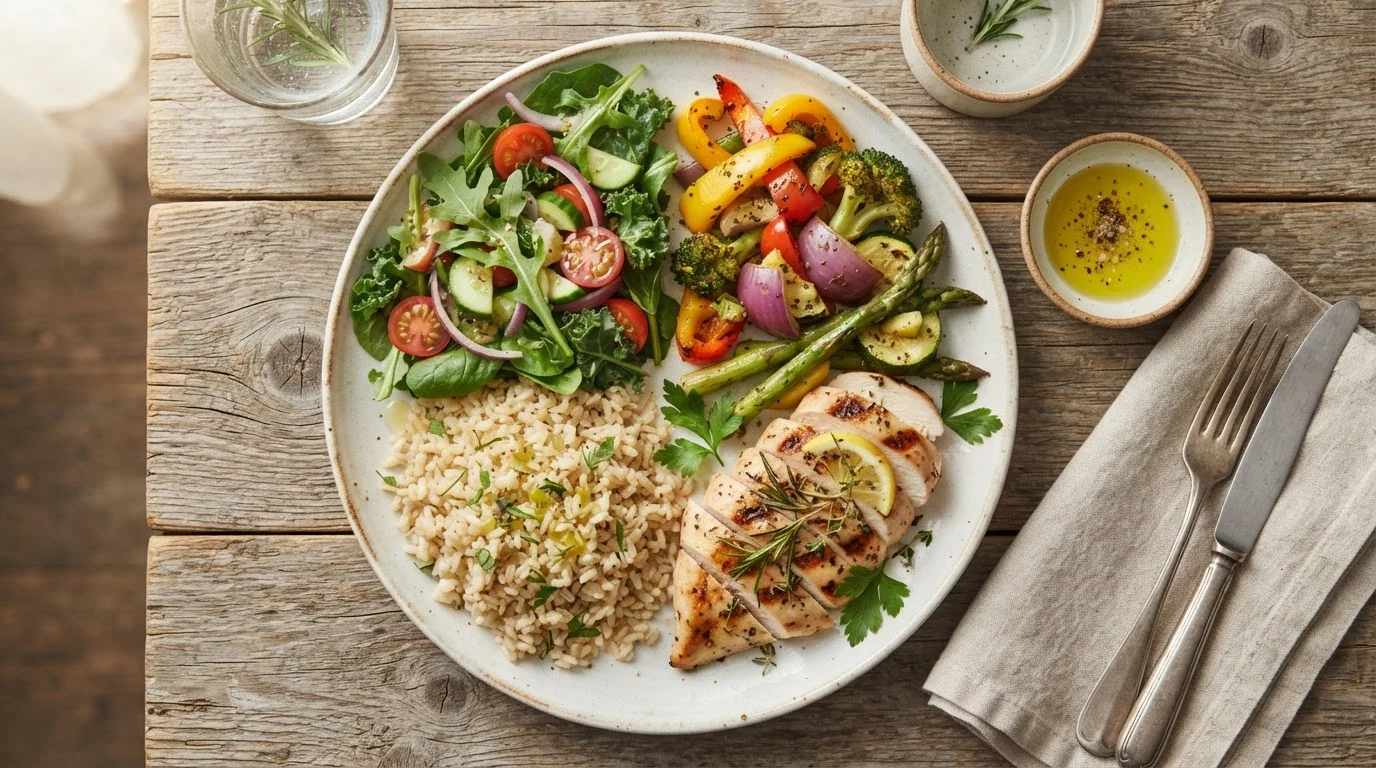
Research consistently shows that planning meals ahead of time is associated with greater dietary variety and higher-quality eating patterns - without requiring obsessive precision. The goal is a week's worth of meals that, taken together, supply a broad range of nutrients. No single meal needs to be perfect. For a deeper look at how individual meals can be assembled more thoughtfully, the balanced plate framework is a useful companion tool.
If you've ever felt overwhelmed by conflicting nutrition advice, you're not alone - nutrition information overload is a real problem that makes simple planning feel harder than it needs to be. The approach below cuts through that noise.
This Is General Nutrition Guidance
The approach described here is intended for generally healthy adults as a practical framework, not medical or dietary advice. Nutritional needs vary significantly based on age, health status, activity level, and medical history. If you have a diagnosed condition, food allergy, or specific health goal, consult a registered dietitian or healthcare provider before making significant changes to your diet.
What You'll Need Before You Start
Weekly meal planning requires almost no special equipment, but a few habits and tools make the process significantly smoother.
What you will need
Once you have these basics in place, the planning process itself takes 20 to 45 minutes - less as you build the habit. Budgeting is often a concern for families approaching meal planning for the first time; the good news is that planned eating and budget-conscious eating align well. See eating well on a budget for strategies that pair naturally with this approach.
Take stock of what you already have
Before planning anything, open your fridge, freezer, and pantry. Note proteins (canned beans, eggs, frozen chicken), whole grains (rice, oats, pasta), and any produce nearing the end of its life. Building your plan around what's already there reduces waste and keeps costs down.
Map your week's realistic schedule
Look at the coming week before writing a single recipe. Identify nights you'll be home late, days you'll need a packable lunch, and one or two evenings when takeout or a simple meal is more realistic. Honest scheduling is the difference between a plan you follow and one you abandon by Wednesday.
Build a nutritional framework for the week
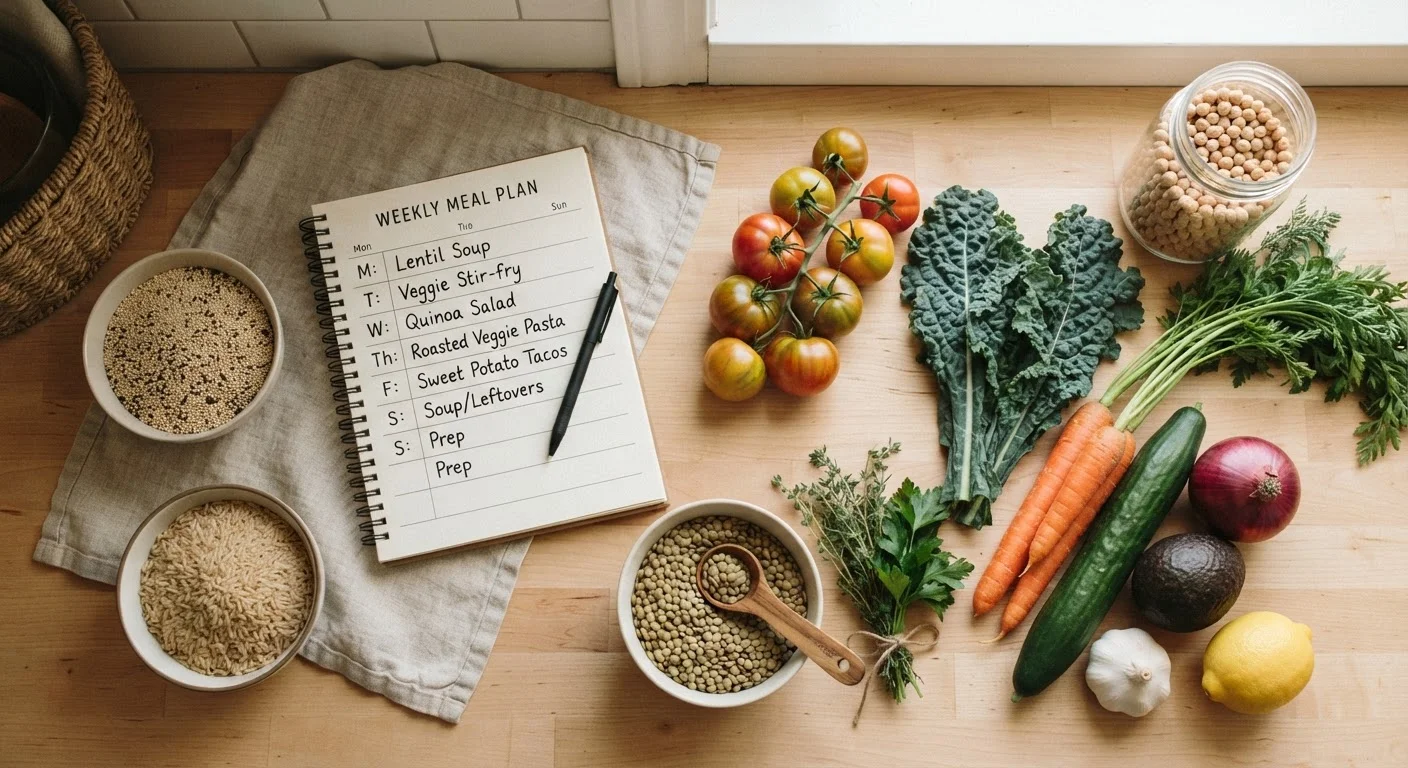
Rather than planning specific recipes first, sketch a broad framework. Aim to include at least three to four different protein sources (legumes, fish, poultry, eggs, or tofu), a minimum of four to five distinct vegetable types, and whole-grain or high-fiber carbohydrates at most meals. Variety across the week - not perfection at every meal - is what drives nutritional breadth.
Draft your meal slots
Fill in breakfast, lunch, and dinner for each day, working from your framework and schedule. Repeat simple breakfasts freely - oatmeal, eggs, or yogurt with fruit are reliable. For lunches, plan leftovers from dinners whenever possible; this halves your cooking effort. For dinners, rotate your protein and vegetable types according to your framework.
Identify two or three batch-cook anchors
Pick two or three ingredients that can anchor multiple meals when cooked in advance: a large pot of grains (brown rice, farro, or quinoa), a tray of roasted vegetables, or a batch of cooked legumes. These components slot into different meals throughout the week - a grain can appear in a dinner bowl, a packed lunch salad, and a quick breakfast scramble.
Write your shopping list from the plan
Once your meal slots are filled, write a consolidated grocery list organized by store section - produce, proteins, dairy or alternatives, dry goods. Cross off anything already in your pantry. A plan-derived list keeps you focused at the store and reduces impulse purchases that don't serve your nutritional goals. For more on building lasting grocery habits, see grocery shopping habits that support better nutrition.
Review and adjust at the end of the week
On Sunday - or whatever day you plan - spend five minutes reviewing what actually got eaten, what went to waste, and where the week broke down. This feedback loop is how your planning process improves over time. A weekly habits audit can help you ask the right questions across nutrition and other wellness areas simultaneously.
Making the Plan Stick Week After Week
The most nutritionally sophisticated meal plan fails if it's too ambitious to follow. A few principles help plans survive contact with a real week:
- Build in flexibility. Leave one or two dinner slots open or labeled "easy meal" - soup from a can plus a salad counts. Rigidity creates the conditions for abandonment.
- Repeat what works. If a particular grain bowl or sheet-pan dinner became a household staple, lean into it. Repetition isn't failure; it's efficiency.
- Keep snacks visible. Washed fruit on the counter and pre-portioned nuts at the front of the pantry make nutritious choices the path of least resistance.
- Plan for vegetables specifically. Proteins and grains tend to get planned; vegetables often get forgotten until the fridge tour reveals wilting produce. Naming which vegetables go with which meal prevents this.
Over time, weekly planning becomes a low-effort habit rather than a project. Your nutrition basics and cooking skills grow alongside it, and the cumulative effect on your eating patterns tends to be substantial.