
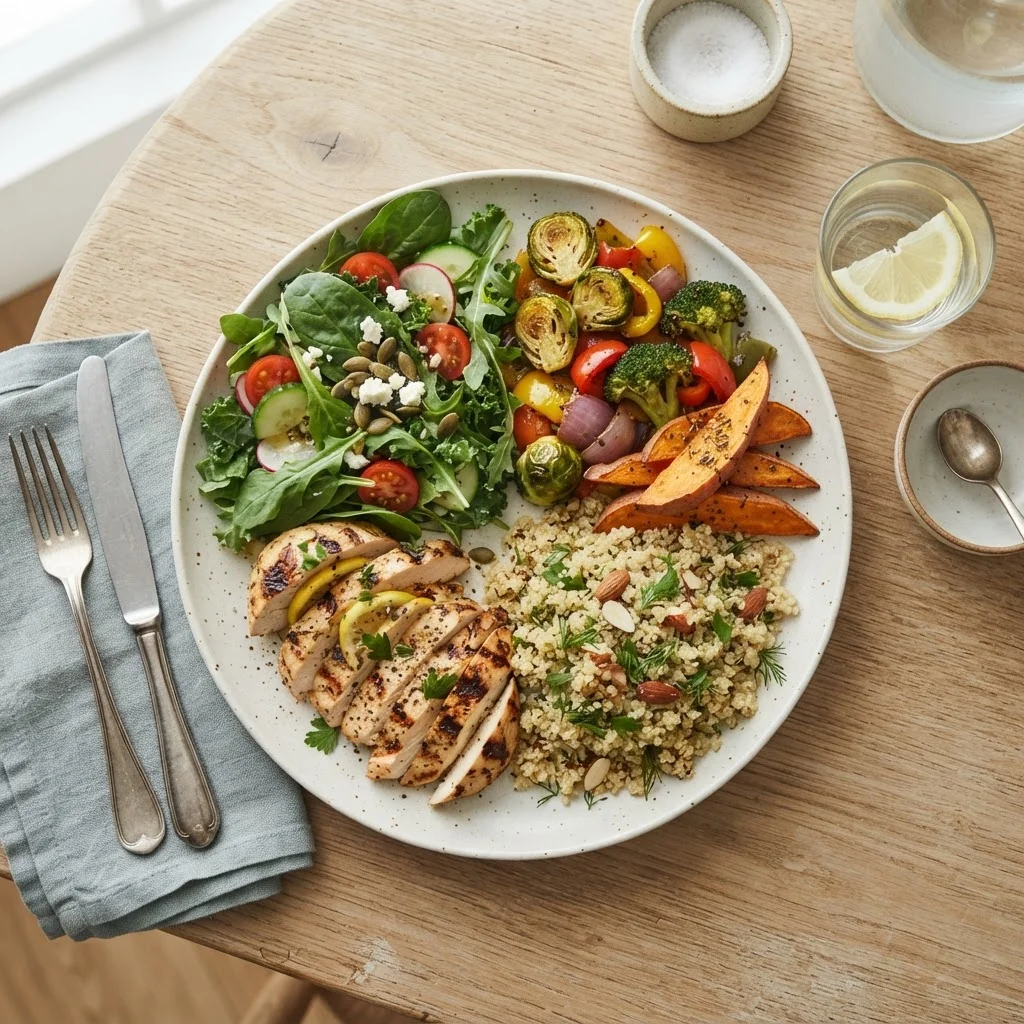
Why a Plate Framework Works Better Than Calorie Counting
Tracking every gram of food consumed is clinically useful in certain medical contexts, but for most people it creates anxiety without delivering proportional health benefit. Decades of nutrition research support a simpler insight: the ratio and variety of foods on your plate matters more than precise numbers. The USDA's MyPlate model and similar visual frameworks from health authorities around the world share this underlying logic.
This checklist translates that research into a practical step-by-step process you can apply at breakfast, lunch, or dinner - whether you're cooking from scratch or assembling a meal from leftovers. If you want to get familiar with the language nutritionists use when discussing food quality, our reference guide to common nutritional terms is a useful companion. For help making this approach work within a tighter grocery budget, see practical strategies for eating well on a budget.
Filling Half the Plate: Vegetables and Fruit
Protein: Aiming for a Quarter of the Plate
Whole Grains and Starchy Carbohydrates
Healthy Fats: Built Into the Meal
Beverages and Hydration
Variety and Weekly Consistency
Tools That Make Balanced Plating Easier
You don't need specialized equipment to build balanced meals, but a few basic tools reduce friction and make the habits stick faster. The goal is lowering the decision load at mealtime so that good choices become the default rather than the effortful option.
9-inch dinner plate
Standard plate size provides a natural visual guide for portion ratios without requiring measurement.
Measuring cups (set)
Useful during the learning phase to calibrate visual portion estimates before eyeballing becomes reliable.
Kitchen scale
Helps with accurate protein portioning when transitioning away from packaged foods where weights aren't visible.
Meal planning template (paper or digital)
Supports weekly variety planning so you can identify and fill nutritional gaps before shopping.
Once you're comfortable assembling balanced plates consistently, the logical next step is planning ahead. Our weekly meal planning guide walks through how to map out a full week without rigid tracking. Pairing that approach with a well-organized pantry - covered in our guide to essential pantry ingredients - makes balanced eating sustainable long-term.
Reading Labels Without Losing Your Mind
Packaged foods are part of most Americans' diets, and that's fine. What matters is being able to evaluate them quickly. Understanding a Nutrition Facts panel lets you make meaningful comparisons - not to obsess over numbers, but to spot when a product is high in sodium, added sugars, or saturated fat relative to what it offers nutritionally. Our field guide to reading Nutrition Facts labels decodes every section of the panel in plain language.
Don't Let Label Numbers Drive Food Anxiety
Nutrition Facts panels are decision-support tools, not scorecards. Fixating on hitting exact daily values at every meal can lead to unnecessary stress and disordered eating patterns in some individuals. Use label information to make broad comparisons and spot obvious outliers - excessive sodium, added sugar, or saturated fat - rather than to optimize every number. If you notice that label-checking is generating significant anxiety, speak with a registered dietitian or mental health professional.
When cooking these balanced plates at home, flavour is a real factor in whether the habit sticks. Food that tastes flat gets abandoned. If your meals feel underwhelming despite solid ingredients, the issue is usually balance of acid, salt, fat, and heat - not the ingredients themselves. Our guide on why dishes taste flat and how to fix them covers exactly that. For broader cooking fundamentals, the Cooking Essentials hub is a strong starting point.
This article is for general informational and educational purposes only and does not constitute medical or dietary advice. Individual nutritional needs vary. Consult a registered dietitian or qualified healthcare professional for personalized guidance, especially if you have a chronic health condition, are pregnant, or are managing a specific health goal.