Why Nutrition Myths Are So Sticky
Nutrition headlines move fast. A study publishes on Monday, a simplified (or distorted) version trends by Wednesday, and by the weekend, millions of people believe something that the original researchers never actually concluded. That cycle is one reason nutrition misinformation is so persistent - and so consequential in the kitchen.
The myths covered here aren't fringe conspiracies. They're beliefs repeated by well-meaning friends, popular media outlets, and even some health professionals. Understanding where they go wrong can help you make genuinely better food decisions without swinging toward another extreme. For a broader look at how conflicting headlines send home cooks off course, see how nutrition information overload affects home cooks.
Myth
Eating fat makes you fat. Cutting fat from your diet is the best way to lose weight.
Fact
Dietary fat does not directly convert to body fat. Weight change is driven by overall calorie balance and diet quality, not fat intake alone.
The low-fat diet craze of the 1980s and 1990s was built on an oversimplification. When researchers and public health bodies urged people to reduce fat, the food industry responded with low-fat products that replaced fat with added sugar - often making foods less satisfying and more calorie-dense in practical terms. Research since then has consistently shown that healthy fats from sources like nuts, fish, olive oil, and avocado are associated with better cardiovascular outcomes and improved satiety. Fat is also essential for absorbing fat-soluble vitamins A, D, E, and K. The type of fat matters far more than the quantity: unsaturated fats support health, while excessive trans fats (largely removed from the food supply) have been clearly linked to harm.
Myth
Detox diets and juice cleanses flush toxins from your liver and give your body a reset.
Fact
Your liver, kidneys, and digestive system detoxify your body continuously. No food, drink, or commercial cleanse meaningfully enhances this process.
The word "toxin" is almost never defined specifically in detox marketing - because the claim doesn't map onto how human physiology actually works. The liver filters blood and breaks down metabolic waste and foreign compounds around the clock. The kidneys excrete waste products through urine. These organs don't accumulate a backlog that requires periodic flushing. A week of juice consumption provides no documented mechanism for accelerating those processes. What a juice cleanse may do is reduce calorie intake temporarily and increase vegetable consumption - outcomes achievable through ordinary balanced eating without the cost or restriction. If you're curious about how beverages factor into real physiological processes, the truth behind common hydration myths is a useful companion read.
Myth
Skipping breakfast slows your metabolism and causes weight gain.
Fact
Metabolism is not meaningfully slowed by skipping one meal. The effect of breakfast on weight depends heavily on individual factors and overall daily intake.
The idea that breakfast "jumpstarts" metabolism became nutritional orthodoxy partly through marketing by cereal companies and partly through observational data showing breakfast eaters tend to have healthier body weights. But correlation isn't causation - people who eat breakfast regularly often have other health-supporting habits. Controlled studies on meal timing show mixed results. Some people function better with breakfast; others do not feel hungry in the morning and eat more total calories when forced to eat early. What does matter consistently is total daily intake, food quality, and whether meals keep blood sugar and hunger stable throughout the day.
Myth
Eating after 8 p.m. automatically causes weight gain because your body stores food as fat at night.
Fact
Your body doesn't have a metabolic switch that activates at a fixed hour. Total calorie intake and expenditure over time determines weight, not the clock on the wall.
This myth likely persists because late-night eating is often associated with mindless snacking on calorie-dense foods - not because nighttime itself has special fat-storing properties. Digestion, metabolism, and energy use slow somewhat during sleep, but the body continues to process and use nutrients throughout the night. Where timing does matter is in the context of circadian rhythm research, which suggests that consistently eating very late relative to your sleep schedule may affect metabolic efficiency over time - but this is an emerging area of research, not a license to apply rigid cut-off rules. The practical guidance: eat most of your calories when you're active and hungry, and keep late-evening eating to reasonable portions of balanced foods.
Myth
All carbohydrates are basically sugar and should be minimized or eliminated.
Fact
Carbohydrates vary enormously in structure, fiber content, and metabolic effect. Whole-food carbohydrates are fundamentally different from refined sugars.
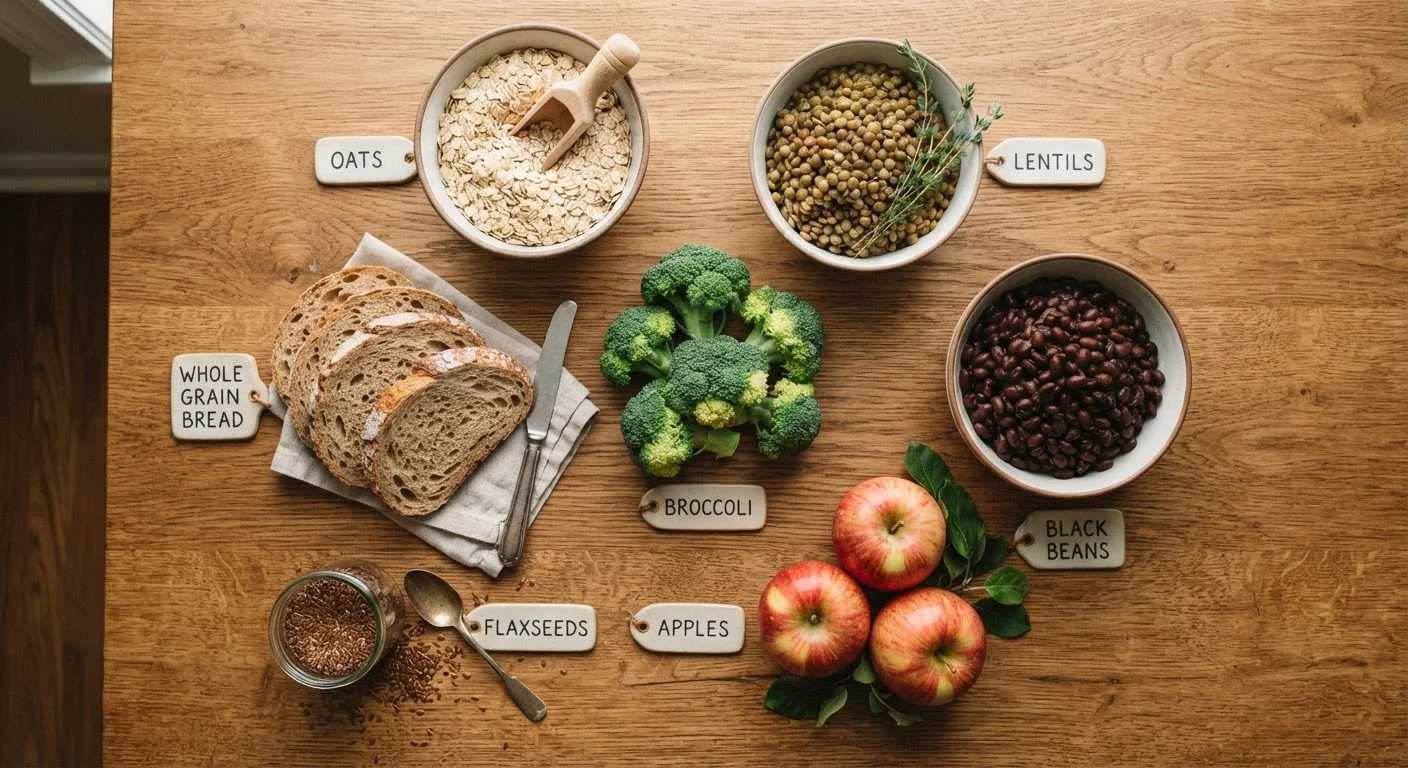
Lumping brown rice, lentils, oats, and berries into the same category as white bread and candy ignores basic food chemistry. Whole-food carbohydrates come packaged with fiber, vitamins, minerals, and phytonutrients that slow digestion, support gut health, and sustain energy. The fiber in legumes and whole grains, for example, is associated with improved blood sugar regulation, lower LDL cholesterol, and a healthier gut microbiome - as explored in depth at why dietary fiber matters more than most people realize. Refined carbohydrates - stripped of fiber and nutrients during processing - do behave differently in the body. The distinction is between food quality and carbohydrate category, not carbohydrates as a class.
Myth
High-protein diets damage your kidneys over time.
Fact
For people with healthy kidney function, research does not support the claim that high protein intake causes kidney damage.
This concern originates from well-established medical knowledge about people who already have chronic kidney disease (CKD). In patients with impaired kidney function, protein restriction is sometimes clinically appropriate because the kidneys struggle to process the metabolic byproducts of protein breakdown. However, extrapolating that finding to healthy individuals misreads the science. Multiple reviews of studies in healthy adults have not found that higher protein intakes - even well above the standard recommended daily allowance - cause kidney damage or accelerate decline in kidney function. That said, anyone with a diagnosed kidney condition or family history of kidney disease should discuss protein intake with a qualified healthcare provider before making significant dietary changes.
Putting the Evidence to Work in Your Kitchen
Correcting these myths isn't just an academic exercise - it changes what ends up on your plate. When you stop fearing healthy fats, you're more likely to add avocado, olive oil, or a handful of walnuts to a meal. When you understand that carbohydrates aren't the enemy, you make room for legumes, oats, and whole grains that genuinely support long-term health. What carbs, proteins, and fats actually do in the body is a practical starting point for building meals that work with your biology rather than against it.
The same logic applies to habits around meal timing. Rather than following rigid rules about breakfast or late-night eating, focus on consistent, balanced meals across the day that keep energy stable and hunger manageable. And skip the expensive detox teas - your liver is already doing that job around the clock.
For a grounded foundation without the noise, what healthy eating actually means according to nutrition science offers evidence-based guidance worth bookmarking. And if food safety beliefs are on your radar too, food safety myths home cooks still believe applies the same myth-busting approach to the kitchen practices that keep food safe.
This article is for general informational and educational purposes only and is not a substitute for professional medical or dietary advice. Consult a qualified healthcare provider or registered dietitian for guidance specific to your health needs.