What Mise en Place Actually Means
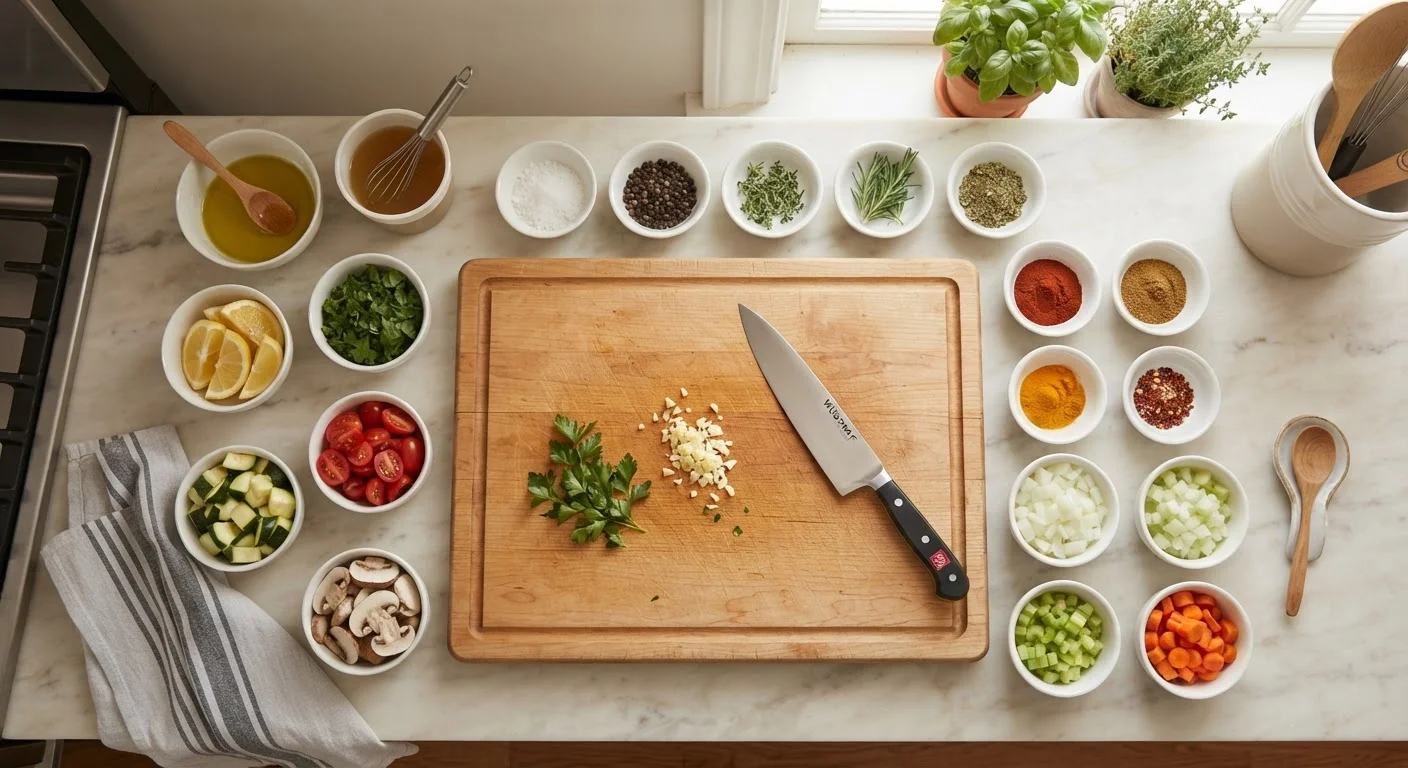
Mise en place (pronounced meez ahn plahs) is a French phrase that translates directly to "everything in its place." In professional kitchens, it refers to the complete preparation and organization of every ingredient, tool, and piece of equipment before cooking begins. Nothing gets chopped, measured, or pulled from the pantry mid-recipe - it's all done in advance.
The concept sounds almost too simple, yet it's one of the most transformative habits a home cook can build. When your onions are already diced, your garlic is minced, and your spices are measured into small bowls, you can follow the actual cooking process with full attention. There's no scrambling to find the cumin while something burns on the stove.
Before you even lift a knife, reading the recipe all the way through is the foundation of good mise en place. You can't organize what you don't understand yet. Pair that habit with a well-stocked pantry and prep becomes dramatically faster.
Tools That Support the Process
You don't need a professional kitchen to practice mise en place. A handful of basic tools make the workflow much smoother.
Small prep bowls or ramekins
Hold pre-measured ingredients so each one is ready to add at the right moment without scrambling.
Chef's knife
The primary cutting tool for chopping, dicing, and mincing vegetables and proteins during prep.
Cutting board
Provides a stable, sanitary surface for all prep work; use separate boards for meat and produce when possible.
Measuring cups and spoons
Ensure accurate portions of dry and liquid ingredients before cooking begins.
Compost or scrap bowl
Keeps your workspace clear by collecting peels, stems, and packaging as you prep.
Good knife technique also plays a direct role - precise, efficient cuts mean your prep goes faster and your food cooks more evenly. Investing time in both skills together pays off every night you cook.
How to Apply Mise en Place Step by Step
Follow these steps before you turn on any burner or preheat the oven. The sequence matters - each stage builds on the one before it.
Read the entire recipe before touching anything
Sit down with your recipe and read it from start to finish - ingredients list, method, and any notes. Pay attention to timing cues ("let rest for 10 minutes"), temperature requirements, and any techniques you're unfamiliar with. This single step prevents the majority of mid-cook surprises.
Gather all ingredients from the pantry, fridge, and freezer
Pull every ingredient the recipe calls for and set it on the counter. This is your inventory check. If something is missing, you find out now - not halfway through cooking. Check quantities and confirm you have enough of each item.
Collect your tools and equipment
Set out every pan, pot, baking dish, strainer, spatula, and measuring tool the recipe requires. Place them within easy reach. If something needs to be preheated - an oven, a cast-iron pan, a steamer - start it now so it's ready when you need it.
Wash, peel, and chop all produce
Work through your vegetables, herbs, and aromatics in the order they appear in the recipe. Chop, dice, mince, or slice each one as specified. Group ingredients that go into the pan at the same time into the same prep bowl - this mimics exactly what a restaurant line cook does.
Measure and portion dry and liquid ingredients
Measure spices, oils, liquids, and pantry staples into individual small bowls or ramekins. This is especially important for spices that go in quickly during high-heat cooking - there's no time to measure on the fly when a pan is screaming hot.
Arrange everything in order of use
Organize your prepped ingredients and tools in the sequence you'll use them - items needed first go closest to the stove, later items stay further back. Take one final look at your setup, confirm nothing is missing, then begin cooking.
Common Mistakes and How to Avoid Them
Even with the best intentions, a few habits can undermine your mise en place routine.
Skipping the recipe read-through: If you start prepping without reading the full recipe, you'll inevitably miss a step - like the fact that the onions need to be caramelized for 30 minutes before anything else happens. Always read first.
Over-prepping too far in advance: Some ingredients - like avocado or cut apple - oxidize quickly. Prep time-sensitive items last, just before cooking starts. Others, like washed greens or portioned spices, can be done an hour or more ahead.
Cluttered workspace: A messy counter defeats the purpose. Clear and wipe your prep area before you start. Put away packaging and discard scraps into a compost bowl as you go.
Understanding the language of recipes also helps you prep correctly. If you're unsure what a term like "julienne" or "fold" means, our glossary of essential cooking terms is a practical reference to keep handy.
Once you've got a confident prep routine, you're better positioned to think about what goes on the plate. See how building a balanced plate becomes easier when cooking itself is stress-free.