Why Most Recipe Mistakes Happen Before You Cook
It's a familiar scenario: you're halfway through a recipe when you realize the butter should have been softened an hour ago, or that you need a kitchen tool you don't own. These aren't cooking failures - they're reading failures. The good news is they're almost entirely preventable.
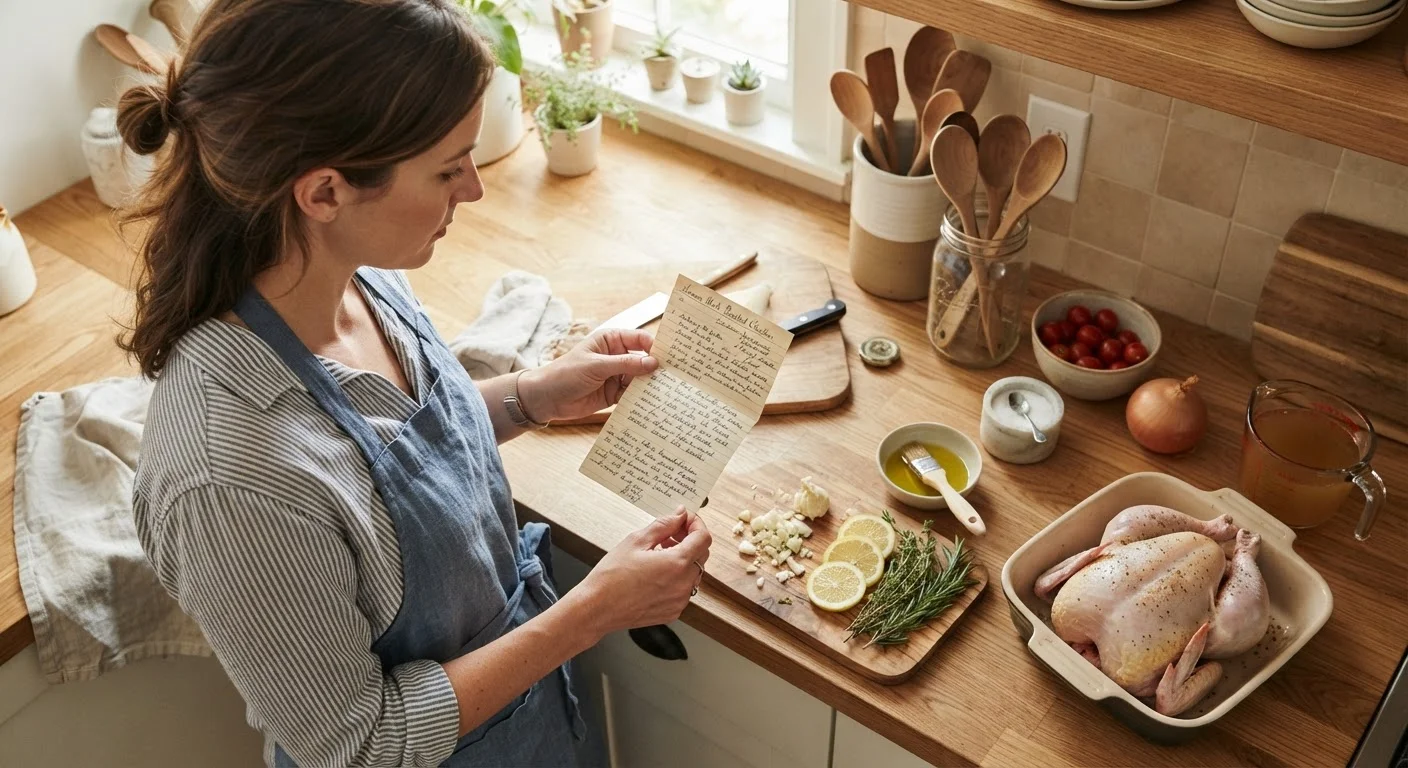
A recipe is a set of instructions with a fixed sequence and hidden dependencies. Skimming it once and diving in treats it like a grocery list, when it's actually closer to a contract. Reading it correctly before you begin is the single highest-impact habit a home cook can build. It costs you five minutes and saves you from ruined meals, wasted ingredients, and unnecessary stress.
If you've ever felt like conflicting or incomplete recipe guidance has led you astray, you're not alone - see our piece on patterns that lead home cooks astray for broader context on navigating kitchen information.
Best Practices for Reading a Recipe the Right Way
These practices apply whether you're working from a cookbook, a website, or a handwritten card. Apply them consistently and they'll become second nature.
Read the entire recipe from top to bottom before doing anything else.
Recipes are sequential but contain information that affects earlier steps - a marinade that needs four hours, an oven that must preheat, eggs that must be at room temperature. Without the full picture, you're flying blind. A complete first read lets you build a mental timeline and catch surprises early.
Flag and look up any technique or term you don't recognize before starting.
Recipe language is often shorthand. Words like 'fold,' 'blanch,' 'deglaze,' or 'temper' describe specific techniques that produce specific results. Doing them incorrectly - or skipping them - changes the dish fundamentally.
Check ingredient notes for words like 'divided,' 'softened,' or 'packed.'
These small qualifiers carry big practical meaning. 'Divided' means an ingredient is used in more than one step. 'Softened' butter cannot be rushed in most applications. 'Packed' versus 'loosely measured' brown sugar can change a cookie's texture significantly.
Verify you have the right equipment before you commit to cooking.
Many recipes assume specific tools: a 9-inch springform pan, a stand mixer, a Dutch oven. Substituting incorrectly - or improvising without understanding the impact - often changes cooking time, texture, or safety.
Note the yield and serving size and adjust the recipe if needed before you start.
Scaling a recipe mid-cook - especially a baked good - almost never works cleanly. Ratios matter in baking especially, and adjusting quantities on the fly introduces errors.
Set Yourself Up Before the First Burner Turns On
Once you've read and understood the recipe, preparation is your next job. This is where the French culinary concept of mise en place - meaning 'everything in its place' - pays off enormously. Measure, chop, and stage every ingredient before heat enters the equation. Our guide on mise en place at home walks you through exactly how to apply this in a home kitchen.
Pair this habit with solid prep skills and you'll feel the difference immediately. Understanding foundational knife skills makes the chopping phase of mise en place faster and safer. And once you're actually cooking, understanding pan temperature will help you interpret what you're seeing and hearing in the pan - not just what the recipe says to do.