Why Cooking Terminology Matters
Recipes assume a shared language. When a recipe tells you to fold egg whites or reduce a sauce, it's relying on you knowing what those actions actually look like. Without that vocabulary, even simple instructions become guesswork - and guesswork leads to inconsistent results.
This glossary covers the terms you'll encounter most often in home cooking. They're grouped by concept to help you see how techniques connect, not just what each word means in isolation. Pair this reference with a clear understanding of cooking methods - our guide to dry heat vs. moist heat cooking is a natural companion read - and you'll have a reliable framework for decoding almost any recipe.
Fond
The browned, caramelized bits that stick to the bottom of a pan after searing or sautéing. Fond is packed with flavor and is the starting point for many pan sauces - loosened by deglazing with liquid.
Al dente
An Italian phrase meaning 'to the tooth.' Describes pasta or vegetables cooked until just tender but still with a slight firmness when bitten. Considered the standard doneness for most pasta.
Sear
To cook the surface of food - usually meat - at high heat to create a browned crust through a process called the Maillard reaction. Searing adds flavor and texture, though it does not 'seal in juices' as an old myth suggests.
Mise en place
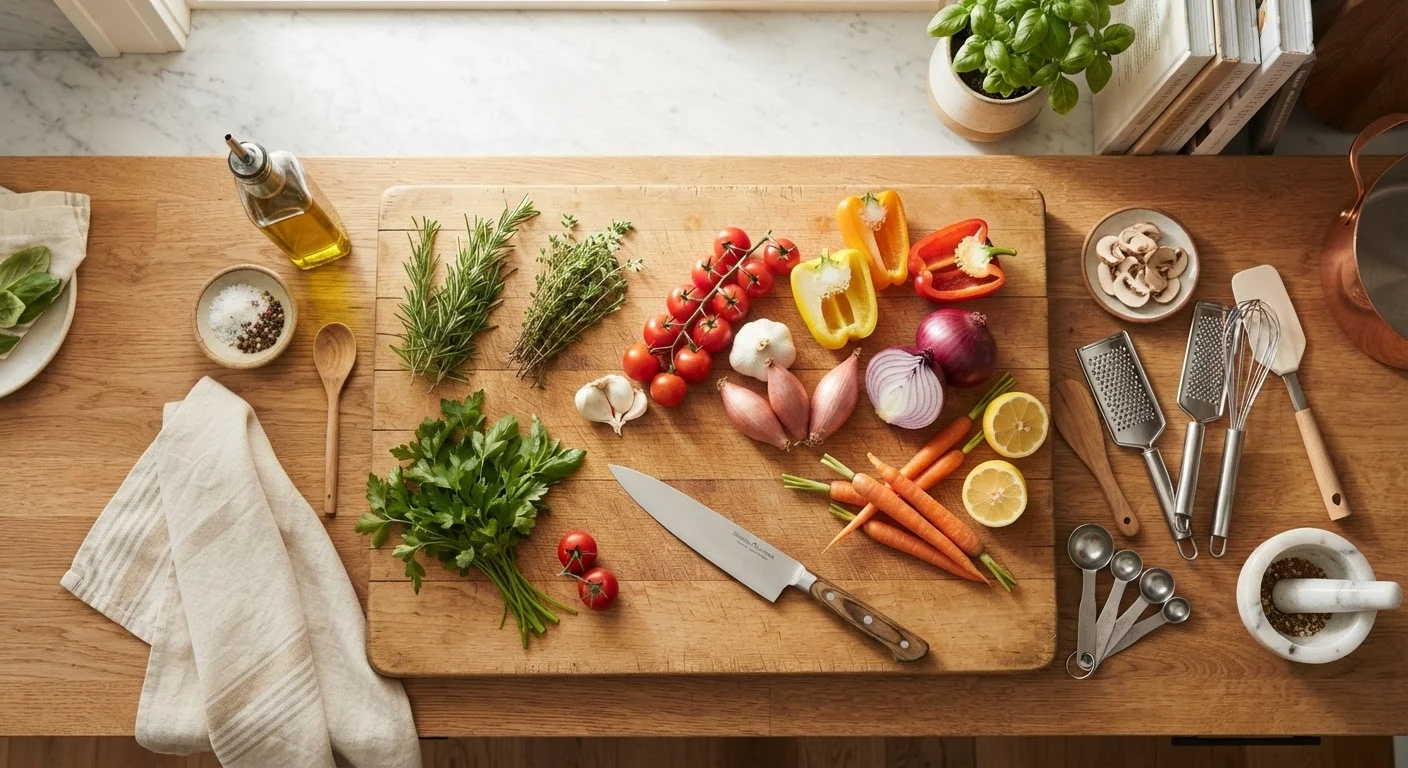
A French culinary phrase meaning 'everything in its place.' It refers to the practice of measuring, prepping, and organizing all ingredients before you begin cooking - a habit that reduces errors and speeds up the cooking process.
Maillard reaction
A chemical reaction between amino acids and reducing sugars that occurs when food is exposed to high heat, producing the brown color and complex, savory flavors associated with seared meat, toasted bread, and roasted coffee.
Baste
To spoon, brush, or pour pan juices, butter, or marinade over food while it cooks. Basting adds moisture and flavor to the surface, and is commonly used with roasting meats and poultry.
Sweat
To cook vegetables gently in a small amount of fat over low or medium heat, covered or uncovered, until they soften and release moisture without taking on color. Common for onions and aromatics at the start of soups and stews.
Macerate
To soften and flavor fruit by soaking it in liquid - typically sugar, alcohol, or citrus juice. The liquid draws out the fruit's natural juices, creating a flavorful syrup while tenderizing the fruit.
The Terms Worth Knowing
The definitions below cover the vocabulary you're most likely to encounter, from basic prep to finishing techniques. Where possible, a quick sense of why a technique matters is included alongside the definition - that context is what makes terms stick.
Prep and Knife Work
- Mince: Cut into very fine, irregular pieces - finer than a dice. Common for garlic and fresh herbs where you want flavor without noticeable texture.
- Julienne: Cut into thin matchstick strips, typically about 2-3 inches long. Often used for vegetables in stir-fries or slaws.
- Chiffonade: Thinly slice leafy greens or herbs by stacking leaves, rolling them tightly, and cutting across the roll into ribbons.
Heat and Cooking Technique
- Sauté: Cook food quickly in a small amount of fat over relatively high heat, stirring or tossing to prevent burning. The word comes from the French sauter, meaning to jump.
- Blanch: Briefly boil vegetables or other foods, then immediately transfer them to ice water to stop cooking. Preserves color, texture, and nutrients.
- Braise: Brown food in fat, then slow-cook it partially submerged in liquid in a covered pot. Best for tougher cuts of meat that benefit from long, low heat.
- Deglaze: Add liquid (wine, broth, or water) to a hot pan after sautéing to loosen the browned bits stuck to the bottom. Those bits - called fond - carry deep, concentrated flavor.
- Reduce: Simmer a liquid uncovered until some of its water evaporates, concentrating flavor and thickening the consistency.
Mixing and Finishing
- Fold: Gently combine a lighter, airy mixture (like whipped egg whites) into a denser one using a wide, sweeping motion. Preserves the air that gives soufflés and mousses their lift.
- Emulsify: Force two liquids that don't naturally mix - like oil and vinegar - to combine into a stable, uniform mixture. Whisking vigorously or adding an emulsifier like mustard or egg yolk helps achieve this.
- Temper: In chocolate work, this means slowly raising and lowering the temperature of melted chocolate so it sets with a glossy finish and clean snap. More broadly, it also means gradually warming a cold ingredient (like eggs) by adding small amounts of hot liquid before combining - preventing scrambling or curdling.
A well-stocked kitchen makes using these techniques much easier. See our guide to essential pantry ingredients for the staples that support everyday cooking.