The Same Pan, Three Different Approaches
Sautéing, pan-frying, and stir-frying all happen in a skillet or wok over direct heat, which is exactly why cooks - especially beginners - blur them together. But each technique is defined by a specific combination of heat level, fat quantity, and how much (or how little) you move the food. Getting that combination right is what separates a perfectly seared chicken thigh from a pale, steamed one.
All three are dry-heat methods, meaning no water or liquid is doing the cooking. If you want to understand the broader family these techniques belong to, our guide to dry heat vs. moist heat cooking lays out the full picture. For now, let's get specific about what makes each stovetop method distinct.
Sautéing: Moderate Heat, Minimal Fat, Occasional Motion
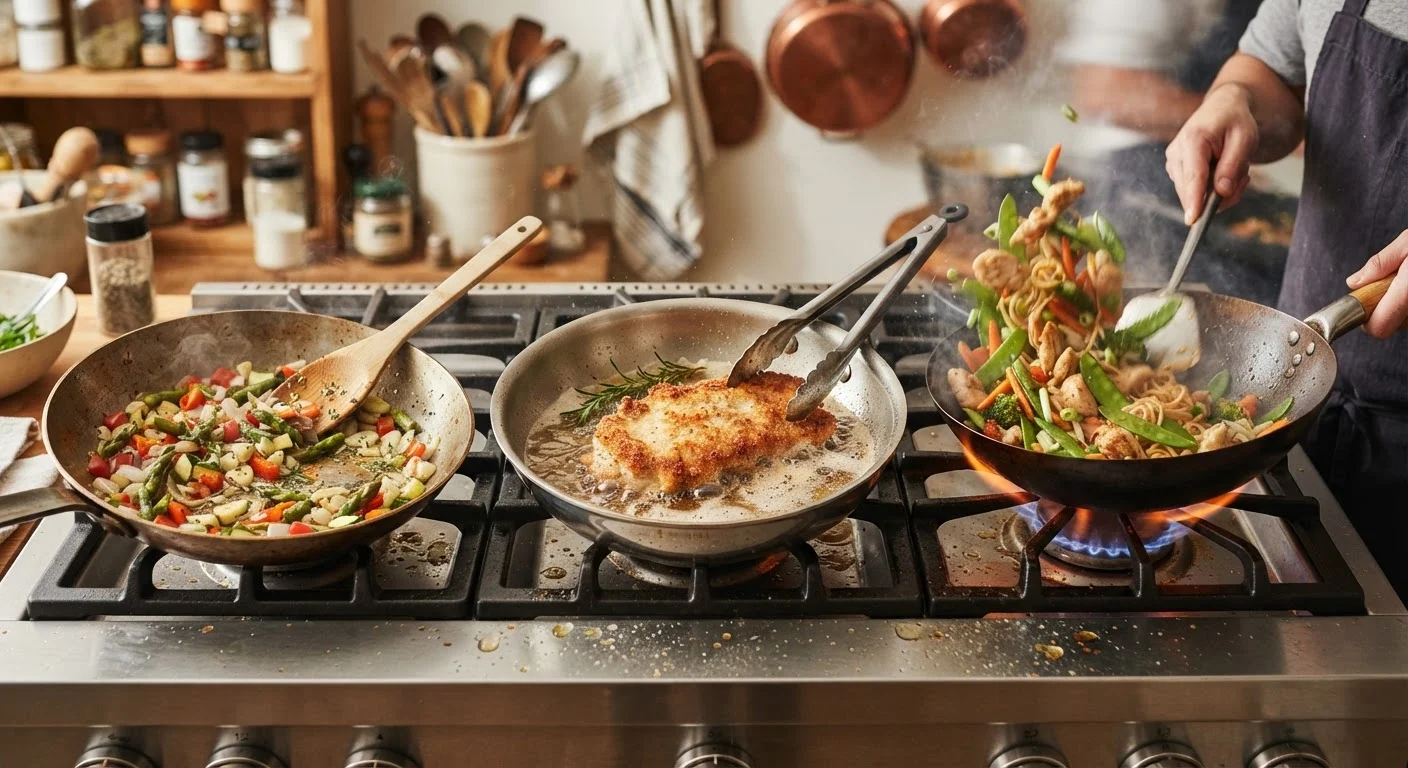
The word sauté comes from the French verb meaning "to jump" - a clue that some movement is involved, but not constant agitation. Sautéing uses a small amount of fat (typically one to two teaspoons) and moderate-to-moderately-high heat to cook ingredients that are already cut small or thin. Think sliced zucchini, diced onions, shrimp, or bite-size pieces of chicken breast.
The goal is to cook the food through while developing some color on the surface - not a deep crust, but a light golden browning from the Maillard reaction. Because so little fat is used, the pan needs to be hot enough that moisture evaporates quickly rather than pooling and steaming the food. This is one reason pan temperature matters so much - add cold food to an insufficiently hot pan and you lose control of the technique entirely.
Sautéing is also the step where aromatics like garlic and onion shine. The way heat transforms these ingredients depends heavily on timing and temperature - see our guide to cooking aromatics for the details. After sautéing, the browned bits left in the pan (called fond) are prime material for a pan sauce - something our deglazing guide covers step by step.
Pan-Frying: More Fat, Deliberate Contact, Crust Development
Pan-frying uses significantly more fat than sautéing - enough to come partway up the sides of the food, typically one-quarter inch or more - and it prioritizes crust formation over speed. Thicker items are the natural fit: bone-in chicken pieces, pork chops, fish fillets, or breaded cutlets that benefit from sustained, even contact with hot fat.
Unlike sautéing, pan-frying is largely a hands-off technique during each side's cook time. You place the food in the pan and leave it alone, letting the fat conduct heat evenly around the exterior. Moving it too early interrupts crust formation and can cause sticking. The food is typically flipped once, not repeatedly.
| Sautéing | Pan-Frying | Stir-Frying | |
|---|---|---|---|
| Heat Level | Moderate to moderately high | Moderate to high | Very high |
| Fat Amount | Minimal (1-2 tsp) | Moderate (¼ inch depth) | Moderate (1-2 tbsp) |
| Food Movement | Occasional toss or stir | Flip once per side | Constant tossing |
| Best Food Size | Small pieces or thin slices | Thick cuts or whole portions | Very small, uniform cuts |
| Cooking Time | 3-10 minutes | 8-20 minutes | Under 5 minutes |
| Typical Result | Light browning, tender texture | Deep golden crust | Lightly charred, crisp-tender |
| Common Ingredients | Vegetables, shrimp, aromatics | Chicken cutlets, fish fillets | Thinly sliced beef, tofu, peppers |
Pan-frying sits between sautéing and deep-frying on the fat spectrum. It produces a substantial, satisfying crust that deep-frying can replicate but that sautéing cannot. If you've ever wondered why a restaurant chicken cutlet has a crunch that home cooking rarely matches, technique - specifically fat depth and heat control - is usually the answer.
Stir-Frying: High Heat, Constant Motion, Speed Above All
Stir-frying demands the hottest pan of the three methods. Traditionally done in a wok over a high-BTU flame, it works by exposing small, uniformly cut pieces of food to intense heat for a very short time - often under two minutes total. The constant tossing and stirring ensure that every piece cycles through the hottest zone at the pan's base without sitting long enough to burn.
Fat is used in moderate amounts, but the defining variable here is motion. Stop stirring in a stir-fry and the food scorches; keep moving and you get that hallmark characteristic called wok hei - a lightly smoky, slightly charred aroma that results from brief contact with very high heat. This is something most home stoves struggle to fully replicate, but a screaming-hot cast iron skillet or carbon steel pan gets closer than a non-stick pan ever will.
Ingredient prep matters enormously. Everything should be cut to roughly the same size and have all its moisture patted dry before it hits the pan. Crowding the pan is the most common stir-fry mistake - too much food drops the temperature and converts the technique into steaming. Before you even reach the stove, having everything prepped and within arm's reach is essential - the French concept of mise en place is especially critical for stir-frying's pace.
Choosing the Right Technique for Your Ingredient
The simplest decision framework: think about the size, thickness, and delicacy of what you're cooking. Delicate, thin, or small items that need quick cooking without a heavy crust - sauté them. Thicker proteins that need a real golden-brown exterior - pan-fry them. Uniform, small pieces of protein or vegetable that you want cooked fast with smoky char - stir-fry them.
Heat management is the thread connecting all three. If you want to go deeper on why temperature is the variable most home cooks underestimate, our article on why pan temperature matters more than your recipe explains the science in plain terms. And when you're ready to expand beyond the stovetop entirely, stovetop vs. oven roasting helps you decide when to move the cooking off the burner altogether.
Understanding these distinctions doesn't require culinary school - it just requires paying attention to what's happening in the pan and making deliberate choices about heat, fat, and motion rather than hoping the recipe's vague instructions fill in the gaps.