Why Aromatics Are the Foundation of Flavor
Onion, garlic, and ginger aren't just ingredients - they're the architectural layer that supports almost every savory dish. When cooked with intention, they shift from sharp and pungent to sweet, nutty, or deeply earthy. That transformation is driven by chemistry: heat breaks down sulfur compounds in onion and garlic and converts starches and volatile oils in ginger into entirely new flavor molecules.
Understanding what's happening at a molecular level helps you make better decisions intuitively. The goal isn't just to soften aromatics - it's to coax out specific flavors depending on what the dish needs. A quick stir-fry calls for aromatics that are barely cooked to preserve their brightness. A braise or slow-cooked curry benefits from aromatics that have been thoroughly softened and even lightly browned. Pan temperature plays a major role here - see why your pan temperature shapes flavor more than your recipe for a deeper breakdown of heat control.
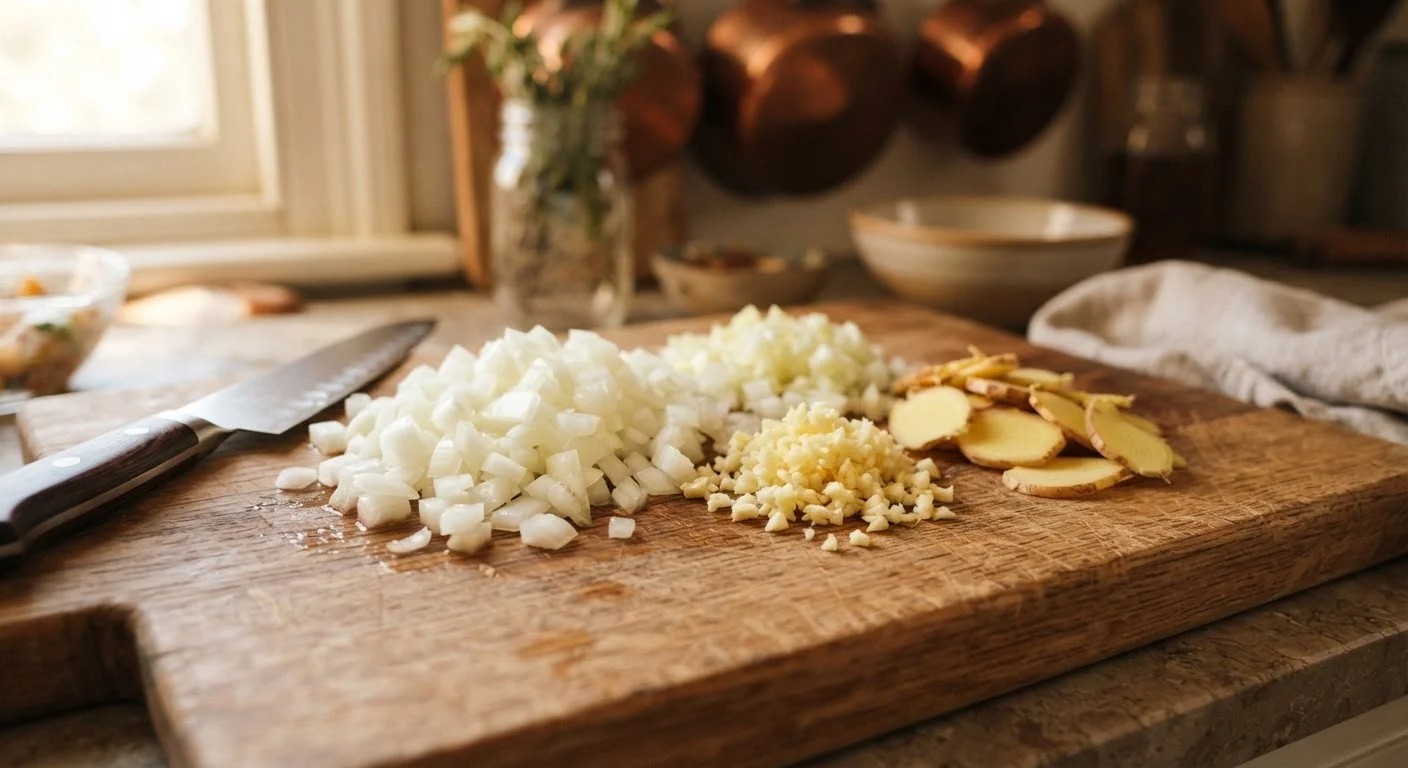
What you will need
Technique and Timing: Step-by-Step
The steps below walk you through the practical process of building an aromatic base for most savory cooking situations. The same principles apply whether you're making a pasta sauce, a curry, a soup, or a stir-fry - the technique scales to the dish.
Prep your aromatics with purpose
The size and shape of your cut determines how fast an aromatic cooks and how much flavor it releases. Finely minced garlic or ginger releases more surface area and flavor compounds quickly - ideal for dishes where you want a pronounced hit. A rough chop or thin slice cooks more slowly and contributes a gentler background note. Decide on the intensity you want before you start cutting.
- Fine mince: Intense, fast-cooking - best for stir-fries and sauces
- Medium dice: Balanced - works for soups, braises, and sautés
- Thin slices or matchsticks (ginger): Visually present, mellow when cooked through
Heat the pan before adding oil
Add your pan to the burner over medium to medium-high heat and let it warm for 30-60 seconds before adding oil. A properly preheated pan ensures the oil distributes evenly and reaches the right temperature quickly. When the oil shimmers slightly and moves fluidly across the surface, you're ready to add aromatics. Learn more about how fat, heat, and motion interact in different cooking techniques.
Add onion first and cook until softened
Add your diced or sliced onion to the pan. Spread it in an even layer and let it cook undisturbed for about 2 minutes before stirring. Onion needs time in contact with the hot surface to begin releasing its water content and caramelizing. Stir occasionally and cook until translucent and fragrant - usually 5-8 minutes over medium heat. For a deeper, sweeter flavor, continue until the edges turn golden.
Add garlic (and ginger for early depth) and cook briefly
Once onions are softened, push them to the edges of the pan and add minced garlic to the center where heat is most concentrated. Cook for 30-60 seconds, stirring constantly, until fragrant but not browned. If your recipe calls for ginger to be cooked from the start (for a deeper, mellower ginger flavor), add it alongside the garlic. Stir everything together and proceed to the next step or add your remaining ingredients.
Adjust for the dish - raw finish or long braise
At this stage, your aromatic base is ready to receive other ingredients. If you want a bright, sharp note of raw ginger or raw garlic in the finished dish (common in Asian-style sauces or dressings), reserve a small amount and stir it in at the very end, off the heat. This layering - cooked aromatics for depth, raw for brightness - is a professional technique that elevates the complexity of a dish significantly.
Once your aromatics are properly cooked, they become an ideal base for building a sauce. If you're working with a hot pan, don't miss the opportunity - deglazing the pan can turn those browned bits into the foundation of something remarkable.
Common Mistakes and How to Avoid Them
Even experienced home cooks fall into predictable patterns with aromatics. The most common error is crowding the pan - too many aromatics at once drops the pan temperature dramatically, causing them to steam rather than sauté. The result is a softer texture but a flat, waterlogged flavor instead of the sweet, caramelized depth you're after.
Use a Wide Pan for Better Results
A wider pan gives aromatics more surface area contact with the heat, which promotes even cooking and proper browning. If aromatics are piled too deep, they trap steam and stew rather than sauté. For most home-cooking quantities, a 10- to 12-inch skillet works well. If you're scaling up a recipe, cook aromatics in batches rather than overcrowding the pan.
Burning garlic is another frequent pitfall. Unlike onion, which can withstand moderate heat for several minutes, minced garlic goes from golden to bitter in under 30 seconds at high heat. If your garlic has darkened past a pale gold color, there's no rescuing it - it will make the whole dish taste acrid. Starting over is faster than fighting that bitterness.
With ginger, many cooks use too little or add it too late. Fresh ginger added early in cooking mellows considerably and adds warmth and depth. Added at the very end, it contributes a sharp, almost citrusy brightness. Both are valid - but they produce different results, so choose deliberately based on what the dish needs. If your finished dish still tastes flat despite solid aromatics, there are reliable techniques for fixing flat-tasting food before serving.