What Is Deglazing - and Why Does It Matter?
If you've ever seared a steak, browned chicken thighs, or sautéed mushrooms in a hot pan, you've noticed what happens afterward: a dark, crusty layer forms on the pan's surface. Your instinct might be to scrub it off. Don't. That layer is called fond (from the French word for "base" or "bottom"), and it's arguably the most flavorful thing in your kitchen at that moment.
Fond forms through a process called the Maillard reaction - a chemical interaction between amino acids and sugars at high heat that creates hundreds of new flavor compounds. Those compounds produce the savory, deeply browned taste we associate with great cooking. When you deglaze a pan, you dissolve that fond into a liquid, transforming what looks like a mess into the foundation of a sauce.
This technique is used in professional kitchens every day, but it's just as approachable for home cooks. If you're building your cooking vocabulary, the Home Cook's Glossary of Essential Cooking Terms covers deglazing alongside other foundational techniques worth knowing.
What You Need Before You Start
Deglazing requires very little equipment and no special ingredients - but a few choices will meaningfully affect the outcome.
What you will need
Stainless steel or cast iron skillet
Creates and holds the browned fond that forms the flavor base of your sauce.
Wooden spoon or flat spatula
Used to scrape up the fond from the pan bottom once the liquid is added.
Liquid measuring cup
Helps you add a controlled amount of deglazing liquid without over-filling the pan.
Fine mesh strainer
Strains out solids for a smooth, restaurant-style finished sauce.
Your choice of pan matters significantly. Stainless steel and cast iron form the richest fond because they allow food to stick and brown without a coating. Nonstick pans discourage fond formation, which makes them a poor choice when a pan sauce is the goal. For more context on how different cooking techniques interact with pan choice, see Sautéing, Pan-Frying, and Stir-Frying: What Sets Them Apart.
How to Deglaze a Pan: Step by Step
Follow these steps immediately after removing your seared or sautéed protein or vegetables from the pan. The residual heat is part of what makes this work.
Remove your protein or vegetables and assess the fond
Transfer your seared meat, poultry, or vegetables to a plate and let them rest. Look at the pan - you want a deep golden-to-brown layer on the bottom, not black or burnt. If the fond has gone dark and acrid-smelling, it's scorched; start over rather than building a bitter sauce from it.
Choose and measure your deglazing liquid
Select a liquid that complements the food you cooked. Dry red or white wine works well with most proteins; chicken or beef stock is a reliable all-purpose choice; apple cider or balsamic vinegar adds a pleasant tartness to pork or duck dishes. Use roughly ½ to 1 cup of liquid for a single-skillet sauce serving two to four people.
Add the liquid to the hot pan
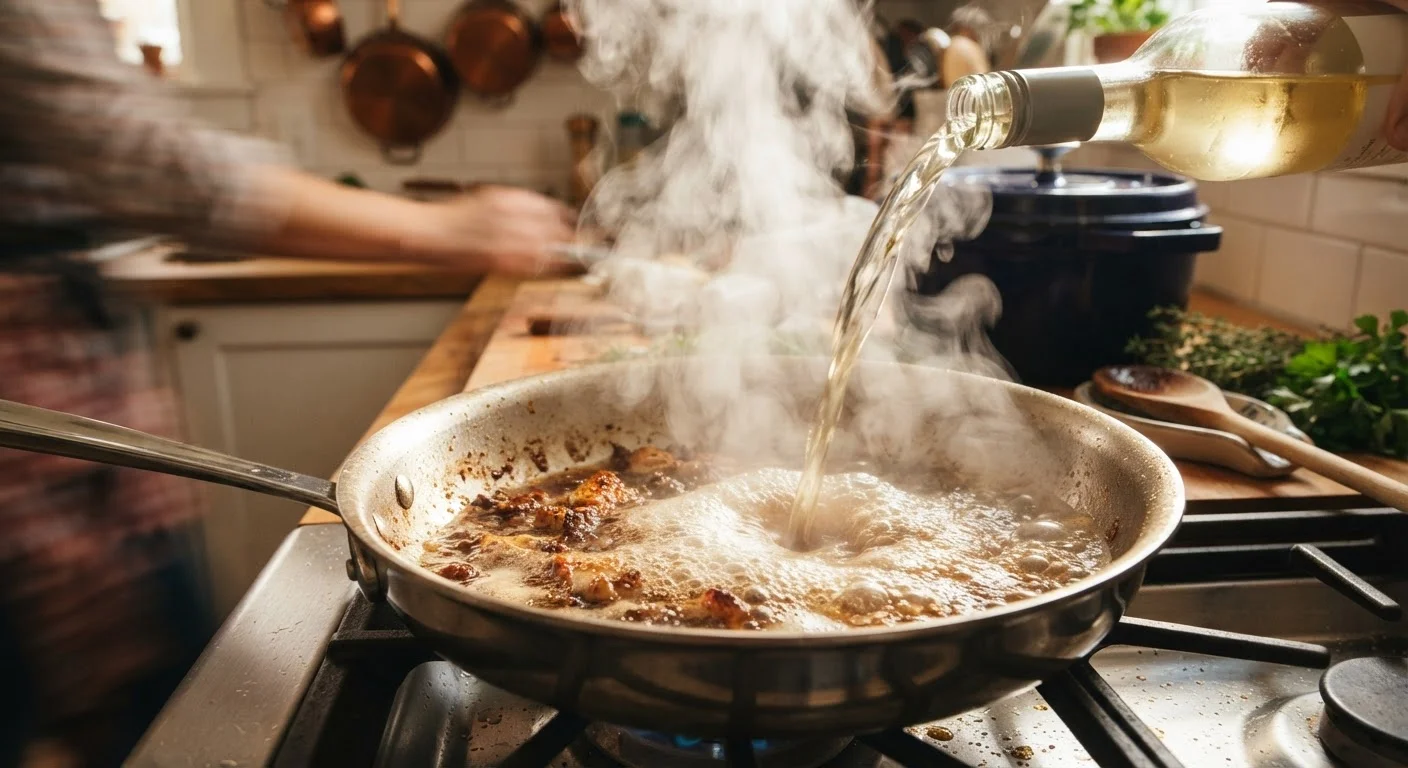
With the pan still over medium-high heat, carefully pour the liquid in all at once. It will sizzle and steam aggressively - that's expected. The rapid temperature change begins loosening the fond immediately.
Scrape up the fond
Using a wooden spoon or flat-edged spatula, scrape the bottom of the pan firmly, working in broad strokes. The fond will dissolve into the liquid within 30 to 60 seconds of constant scraping. You should be able to see the pan surface clearly once all the fond has been incorporated.
Reduce the sauce to your desired consistency
Lower the heat to medium and let the liquid simmer, uncovered, stirring occasionally. As water evaporates, the sauce thickens and the flavors concentrate. Taste it as it reduces and adjust seasoning with salt, pepper, or a small squeeze of acid (lemon juice or a splash of vinegar) at the end to brighten it.
Finish and serve
Once the sauce reaches a consistency that coats the back of a spoon, remove the pan from heat. For a silky finish, whisk in one to two tablespoons of cold unsalted butter until fully emulsified. Taste one final time, adjust seasoning if needed, and spoon the sauce directly over your protein or vegetables.
Match Your Liquid to Your Protein
Think of the deglazing liquid as a flavor bridge. White wine and chicken stock suit poultry and fish; red wine and beef stock complement red meats; apple cider or sherry vinegar works beautifully with pork. Even a splash of soy sauce and water can create a deeply savory pan sauce for stir-fry-style dishes. The goal is harmony, not contrast.
Building the Sauce Further
Deglazing is the starting point, not the finish line. Once the fond is dissolved into your liquid, you have a flavorful but thin base. A few additional techniques will take it from "pan juice" to actual sauce.
Reduction is your primary tool. Simmering the liquid over medium heat evaporates water, which concentrates flavors and thickens the sauce naturally - no starch needed. A good reduction can cut your liquid volume in half or more, depending on how thick you want the final result.
Adding aromatics early in the process builds more complexity. Shallots or garlic stirred into the hot pan right before you add the deglazing liquid will soften and meld into the sauce as it reduces. The guide to getting the most flavor out of aromatics explains how heat transforms these ingredients and when to add them for best results.
Finally, finishing with cold butter - a French technique called monter au beurre - gives the sauce a glossy sheen and a silky mouthfeel. Remove the pan from heat, then whisk in one or two tablespoons of cold, unsalted butter until fully melted. If you want to take sauce science further, Emulsification: The Science Behind Creamy Dressings and Sauces explains why fat and liquid bind the way they do.
Don't Over-Reduce Your Sauce
Reducing too far concentrates not just flavor but also salt and any sugars in your liquid. If the sauce becomes too thick or too salty, you can thin it with a small splash of water or unsalted stock. It's much easier to reduce more than to fix an over-reduced sauce.