Why Oil and Water Don't Play Nice
Pour olive oil into a bowl of lemon juice and watch what happens - the oil floats to the surface almost immediately. This isn't a flaw; it's physics. Oil molecules are nonpolar, meaning they have no electrical charge. Water molecules are polar, meaning they do. Because opposite-charged molecules attract, water molecules cling tightly to each other and actively push oil away.
This molecular standoff is why so many sauces and dressings separate in the fridge or on the table. Understanding this natural tension is the first step to overcoming it. Just as salt works at a molecular level to transform texture and flavor, emulsification works invisibly to hold your sauces together.
The Role of the Emulsifier
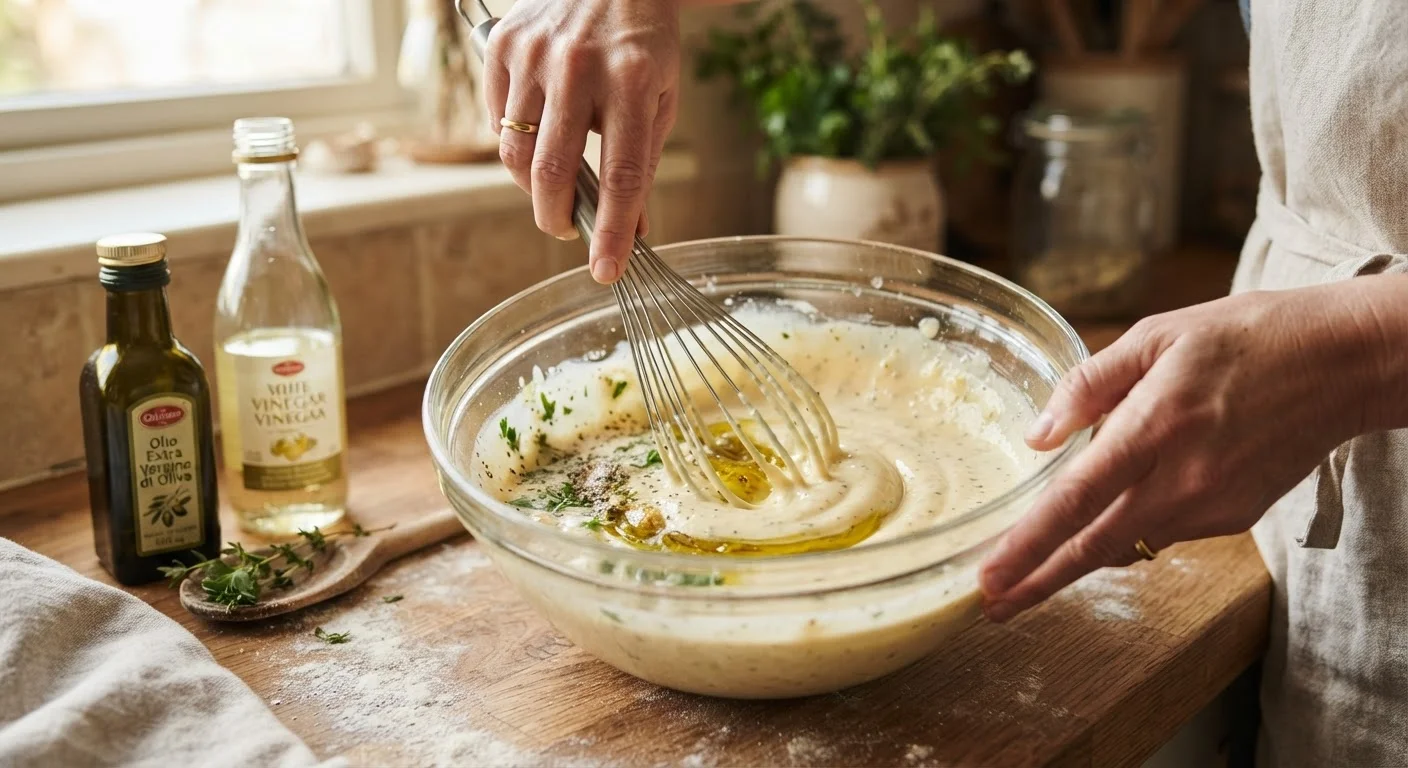
An emulsifier is the peacemaker between oil and water. Its molecules have a dual personality: one end is attracted to water, and the other end is attracted to fat. When you introduce an emulsifier and apply mechanical force - like whisking or blending - the emulsifier molecules surround tiny droplets of oil, coating them so they can be suspended evenly throughout the water-based liquid.
The most common kitchen emulsifiers are:
- Egg yolks - Rich in lecithin, a powerful natural emulsifier. Essential for mayonnaise and hollandaise.
- Mustard - Contains mucilage compounds that help stabilize vinaigrettes.
- Honey - Works as a mild emulsifier in lighter dressings.
- Miso paste - An increasingly popular option for plant-based sauces.
Start With Room-Temperature Ingredients
Cold ingredients are one of the most common reasons emulsions break before they form. When making mayonnaise or hollandaise, allow your egg yolks and oil to come to room temperature first. Warmer ingredients blend more easily because the fats are slightly more fluid, giving the emulsifier a better chance to do its job from the very first drop.
Knowing which emulsifier to reach for is part of the broader kitchen vocabulary covered in the home cook's glossary of essential cooking terms.
The Technique: Slow Addition and Steady Motion
Even with the right emulsifier, technique matters enormously. The most common mistake beginners make is pouring all the oil in at once. When too much oil hits the mixture too fast, the emulsifier can't keep up - oil droplets clump together and the mixture breaks.
The rule of thumb: add oil slowly, in a thin, steady stream, while whisking constantly. This gives the emulsifier time to coat each tiny oil droplet as it enters the mixture. For mayonnaise, starting with just a few drops at a time - then gradually increasing the flow - is what produces that signature thick, glossy texture.
The same logic applies when building pan-based sauces. If you've ever finished a pan sauce by swirling in cold butter to create a silky consistency - a technique called monter au beurre - you've already used emulsification. For more on sauce-building fundamentals, see how deglazing builds a great sauce.
Fixing a Broken Emulsion
Even experienced cooks occasionally end up with a greasy, separated mess. A broken emulsion looks curdled, oily, or watery - but it's rarely a lost cause. The rescue method is straightforward:
- Place a fresh egg yolk (or a teaspoon of mustard) into a clean bowl.
- Begin whisking the broken sauce into the new emulsifier, adding it slowly - just a few drops at first.
- Gradually increase the amount as the mixture comes together.
The fresh emulsifier re-establishes the molecular framework, and the broken sauce essentially becomes the "oil" in a new emulsion. This same principle of balance and correction applies broadly in cooking - knowing why a dish isn't working is half the battle, much like understanding why dishes taste flat and how to fix them before serving.
This article is for informational purposes only. Always use fresh, properly handled ingredients when preparing egg-based sauces, especially for vulnerable populations such as pregnant individuals, young children, the elderly, or those with compromised immune systems. Consult a healthcare professional or food safety resource if you have concerns.