Osmosis: Why Salt Makes Food Sweat
The moment salt contacts a moist food surface, osmosis begins. Osmosis is the movement of water across a membrane from a region of lower solute concentration to one of higher concentration. Salt on the outside of a vegetable or piece of meat creates a high-concentration zone, and water inside the food migrates outward to equalize it.
This is exactly what happens when you salt sliced cucumbers for a salad or eggplant before cooking. A pool of liquid forms on the surface within minutes. That released moisture carries with it some bitter compounds, which is why salted eggplant tastes milder and browns more evenly in the pan - less surface water means better contact with hot oil during sautéing or pan-frying.
For vegetables you want to keep crisp, like cabbage in coleslaw, the same osmotic pull concentrates flavor and changes texture. The vegetable softens slightly but becomes more intensely flavored, because the remaining water-to-solid ratio shifts.
Osmosis Works on Both Sides
If you salt food and then submerge it in a brine (saltwater solution at the right concentration), the process reverses and the food actually absorbs liquid. This is wet-brining: the saltwater enters the tissue rather than escaping it. Both methods use osmosis, just in opposite directions depending on the salt concentration relative to the food's interior.
How Salt Transforms Protein
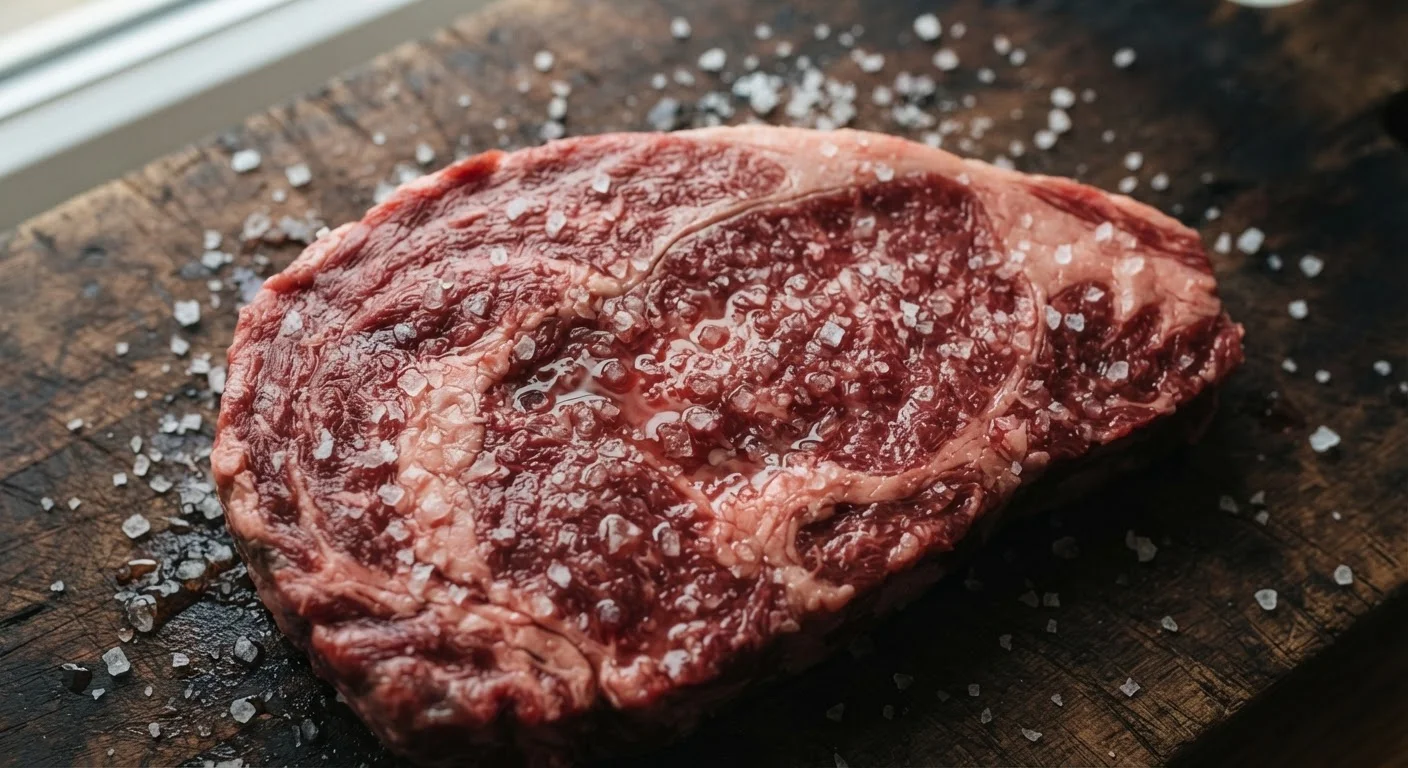
Salt's effect on proteins is especially dramatic - and especially useful for meat, fish, and eggs. Muscle fibers in raw meat are coiled proteins held in tight bundles. When salt penetrates the surface, it disrupts the electrical charges that keep those proteins tightly folded. The fibers partially unwind, a process called denaturation, and they reorganize in a way that traps more water inside during cooking.
This is the science behind dry-brining: salting meat and allowing it to rest for at least 45 minutes (or ideally several hours) before cooking. Initially, moisture is drawn out. But as the salt dissolves in that liquid, it gets reabsorbed back into the muscle tissue along with the sodium ions. The result is meat that is seasoned throughout - not just on the surface - and that holds onto more of its juices under heat.
Eggs are another clear example. Salt added to scrambled eggs before cooking causes the proteins to set differently, producing a softer, more tender curd than eggs salted only at the end.
Salt as a Flavor Amplifier, Not Just a Flavor
Salt doesn't just add a salty taste - it shapes how you perceive every other flavor in a dish. Sodium ions suppress bitterness receptors on the tongue, which is why a small amount of salt in a bitter food makes it taste more balanced and less harsh. This is why experienced cooks add a pinch of salt to desserts, coffee grounds, or dark sauces - not to make them salty, but to round out their edges.
Salt also enhances aroma. Many of the volatile compounds responsible for how food smells are released more readily when salt is present, making a dish seem more fragrant and complex. This is one reason a properly seasoned dish tastes more vibrant than an under-salted one, even at the same ingredient level.
Pairing salt's flavor work with well-developed aromatics makes an even bigger difference - see how timing and heat affect aromatics like garlic and onion to layer flavor more effectively. And if a dish still tastes flat after seasoning, balancing salt with acid and fat can bring it into focus.
~40 min
Minimum dry-brine time for effective reabsorption
Food science sources generally indicate that salted meat needs at least 40-45 minutes for drawn-out moisture to be fully reabsorbed into the muscle tissue.
1-2 tsp
Salt per quart of pasta water
Standard culinary guidance recommends this range to season pasta from within during cooking, though personal preference plays a role.
~25%
Reduction in perceived bitterness with salt
Research on taste receptor interactions suggests sodium can meaningfully suppress bitter taste perception, though exact percentages vary by compound and concentration.
Timing Salt Correctly Changes Everything
When you add salt is nearly as important as how much you use. Salting meat immediately before high-heat cooking pulls surface moisture right as the food hits the pan, which can interfere with browning. Salting well in advance (dry-brining) gives that moisture time to be reabsorbed, producing better crust and deeper flavor.
For vegetables headed into a stir-fry or sauté, salting mid-cook rather than at the start preserves more of their structure and color, since the osmotic process hasn't had time to fully soften them. Pasta and grains benefit most from salted cooking water - seasoning happens from the inside as the starch absorbs liquid.
Understanding these windows - before, during, or after cooking - gives you real control over texture and flavor. Salt isn't a finishing move. It's an ingredient that's doing molecular work at every stage.