How Each Method Actually Works
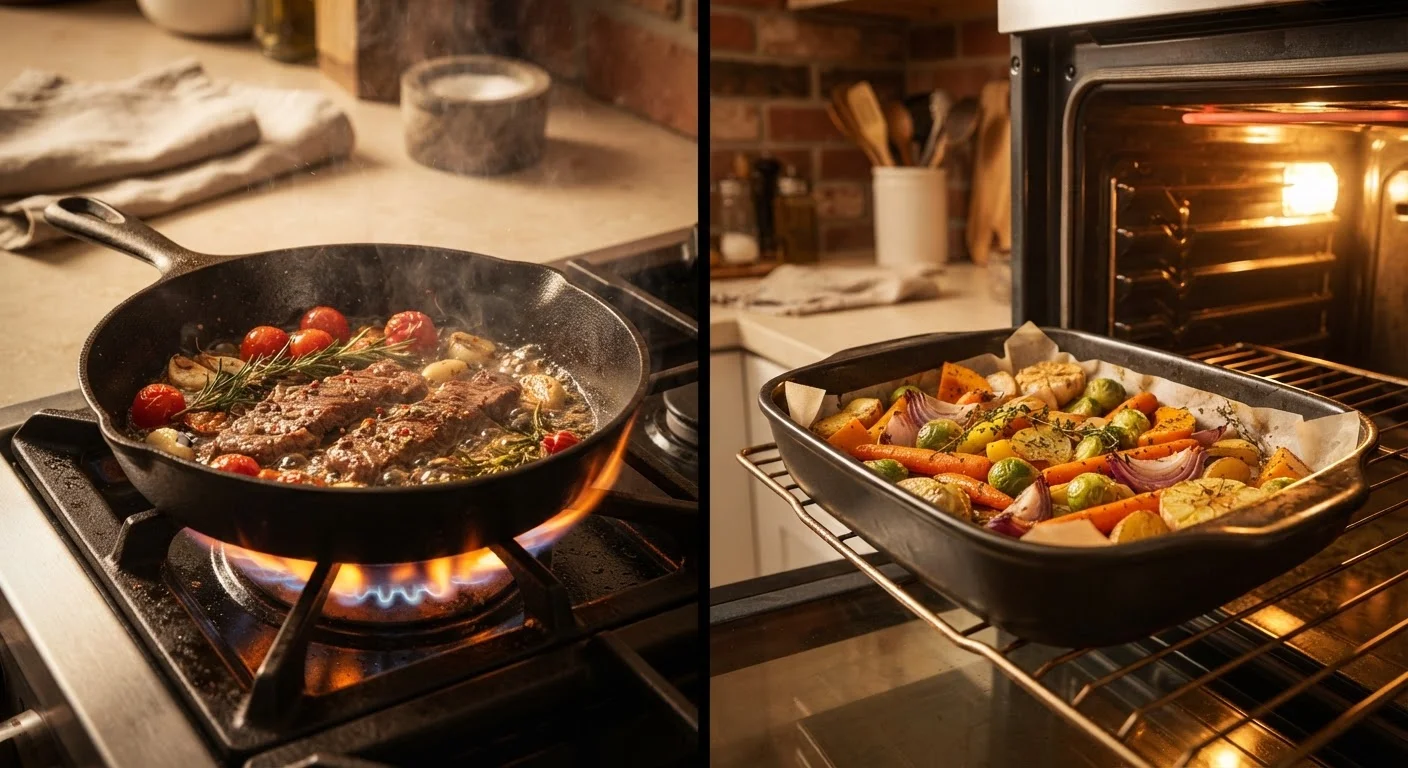
Before choosing a cooking method, it helps to understand what's physically happening to your food. Stovetop cooking relies on conduction - heat travels from the burner into the pan and directly into whatever touches it. This is intimate, immediate contact that responds the moment you turn the dial up or down.
Oven roasting, by contrast, uses convection - hot air circulates around the food and gradually transfers heat from all sides. There's no single hot spot; instead, the oven creates a consistent ambient temperature that works its way inward at a steady pace. This is part of why it belongs to the broader category of dry-heat methods. For a deeper look at how dry heat differs from moist-heat techniques, see dry heat vs. moist heat cooking.
Understanding this distinction makes it much easier to predict what will happen to your ingredients before you even turn on the heat.
When the Stovetop Has the Advantage
The stovetop excels at speed and control. When you need to develop a quick, dark sear on a thin chicken cutlet, build a flavorful fond at the bottom of a pan, or bloom spices in oil, direct conductive heat does the job in minutes. You can see and smell what's happening, and you can react immediately.
Aromatics - onion, garlic, ginger - are a perfect example. Their flavor compounds transform rapidly over direct heat, releasing sweetness and depth that define the base of a dish. Getting this right takes timing and attention; how heat transforms aromatics is worth understanding before you start.
The stovetop is also ideal for foods that cook through before ambient oven heat would even make a dent: thin fish fillets, shrimp, eggs, and most vegetables cut into small pieces. For these, the oven would either undercook the exterior or dry out the interior before finishing properly.
| Criterion | Stovetop Cooking | Oven Roasting |
|---|---|---|
| Heat source | Direct conduction through pan | Ambient convection from all sides |
| Best for | Thin cuts, aromatics, quick sears | Large cuts, dense vegetables, whole pieces |
| Level of attention required | High - constant monitoring | Low - mostly hands-off |
| Browning control | Precise, on contact surfaces | Even, across all exposed surfaces |
| Speed | Fast (minutes) | Slower (30-90+ minutes for large items) |
| Ease of adjustment | Instant - adjust burner immediately | Slower to respond to temperature changes |
| Equipment needed | Skillet or sauté pan | Sheet pan, roasting pan, or oven-safe skillet |
One caveat: stovetop cooking punishes inattention. A pan that's too hot will scorch; one that's too cool will steam instead of sear. pan temperature is arguably the most important variable you're managing on the stovetop.
When Oven Roasting Wins
Oven roasting earns its place with larger, denser ingredients that need time for heat to penetrate without burning the outside. A bone-in chicken thigh, a tray of cubed butternut squash, or a pork tenderloin all benefit from the even, enveloping heat of a hot oven. You get caramelization across the entire surface - not just where the pan makes contact - and a gentler, more even doneness throughout.
The oven is also forgiving in a way the stovetop isn't. Once you slide the pan in and set a timer, heat does the work. That hands-off quality matters on busy nights or when you're juggling multiple components of a meal.
High oven temperatures (400-450°F) trigger the Maillard reaction - the same browning process responsible for crust on bread and the deep color on roasted vegetables - across surfaces that might be awkward to manage in a pan. Think of halved Brussels sprouts or chunks of cauliflower: getting every cut face browned in a skillet requires constant flipping, while a sheet pan in the oven handles it passively.
The Case for Combining Both
Many of the best results in the kitchen come from using both methods in sequence. The classic example is a thick-cut steak or a bone-in chicken breast: sear it hard on the stovetop to build a deeply browned crust, then transfer the pan to a 375°F oven to finish cooking through without burning the exterior.
This approach lets each method do what it does best. The stovetop creates the crust; the oven provides the gentle, even heat needed to bring a thick interior up to temperature safely. It's a technique used in professional kitchens precisely because neither method alone produces the same result.
The same logic applies to shakshuka, frittatas, and certain skillet dishes: build the base on the stovetop, then move to the oven for a gentler, all-around finish. If you want to go deeper on the stovetop side of the equation, sautéing, pan-frying, and stir-frying covers how fat, heat, and motion each change the outcome.
Choosing between stovetop and oven isn't about one being superior - it's about matching the method to the ingredient, the cut, and the result you want on the plate.