
Sleep Is Not Biological Downtime
The cultural shorthand for sleep - "shutting down," "recharging" - misses a more accurate picture. From the moment you fall asleep, your brain launches into a coordinated sequence of activity that is, in some respects, more structured than wakefulness. Electroencephalogram (EEG) recordings, which measure electrical activity across the brain's surface, show distinct and repeating patterns across the night. These patterns are not random; they reflect tightly regulated biological programs.
Sleep is organized into cycles lasting approximately 90 minutes. Each cycle moves through several stages: lighter NREM (non-rapid eye movement) sleep, deep slow-wave NREM sleep, and REM (rapid eye movement) sleep. These stages are not equivalent - each has a different neural signature and a different set of functions. Understanding that distinction is the foundation for understanding what neuroscience has learned about sleep.
For a broader look at remarkable processes the body runs without conscious input, see seven biological processes most people never think about.
Memory Consolidation: The Brain's Nightly Filing System
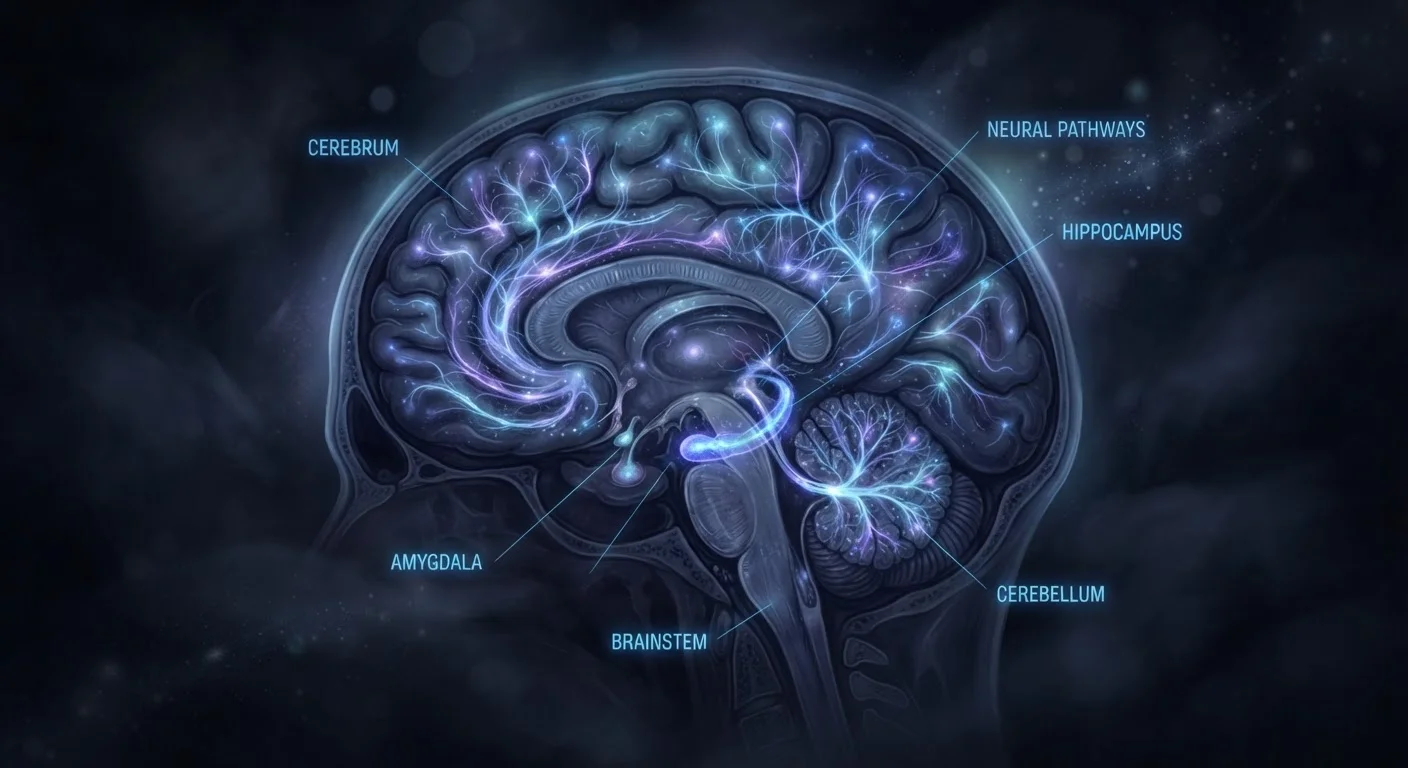
One of the most robustly supported findings in sleep neuroscience is the role of sleep in memory consolidation - the process by which newly acquired information is stabilized and integrated into long-term storage. During wakefulness, experiences are encoded initially in the hippocampus, a seahorse-shaped structure deep in the brain that acts as a temporary holding area.
During NREM slow-wave sleep, a dialogue occurs between the hippocampus and the cerebral cortex. Sharp-wave ripples - bursts of coordinated hippocampal activity - are timed to synchronize with slower cortical oscillations called sleep spindles and slow waves. This synchrony appears to facilitate the transfer of memories from the hippocampus to more distributed cortical networks where they can be stored durably. REM sleep, which becomes more prominent in the later cycles of the night, appears particularly important for emotional memories and procedural skills.
The practical implication is significant: learning something and then sleeping on it is not a metaphor. Studies consistently show that sleep after learning improves retention compared with equivalent periods of wakefulness.
~90 min
Duration of each sleep cycle
Each complete NREM-to-REM sleep cycle lasts approximately 90 minutes, with most adults completing four to six cycles per night.
60%
Increase in glymphatic flow during sleep
Research in animal models published in Science (2013) found the brain's interstitial space expanded significantly during sleep, enabling dramatically greater cerebrospinal fluid circulation.
20-25%
Of total sleep time spent in REM
In healthy adults, REM sleep accounts for roughly one-fifth to one-quarter of total nightly sleep, with longer REM periods occurring in the final sleep cycles before waking.
The Glymphatic System: Cleaning House While You Rest
Among the more striking discoveries of recent neuroscience is the identification of the glymphatic system - a brain-wide waste-clearance network first described in detail around 2013. Unlike the rest of the body, the brain lacks conventional lymphatic vessels to drain metabolic byproducts. Instead, it relies on channels surrounding blood vessels to circulate cerebrospinal fluid through brain tissue, flushing out waste products that accumulate during neural activity.
This system is dramatically more active during sleep than during wakefulness - studies in animal models suggest the interstitial space in the brain expands during sleep, allowing cerebrospinal fluid to flow more freely. Among the substances cleared are amyloid-beta and tau proteins, both associated with neurodegenerative conditions when they accumulate. While translating animal findings directly to humans requires caution, the evidence for a sleep-dependent brain-cleaning mechanism is considered compelling by the broader neuroscience community.
This is one reason that sleep hygiene is more than a wellness trend - the biological stakes of consistent, quality sleep extend to long-term brain health.
REM Sleep, Dreams, and Emotional Regulation
REM sleep is the stage most associated with vivid dreaming, and it has a distinctive neural profile. The brain during REM sleep shows activity patterns resembling wakefulness - high-frequency, desynchronized electrical activity - yet the body's major muscle groups are temporarily paralyzed, a state called atonia that prevents physical acting out of dream content.
The prefrontal cortex, which governs rational deliberation and impulse control, is relatively quieter during REM, while the amygdala - the brain's emotional processing hub - is highly active. This shift may explain the emotionally intense and sometimes illogical quality of dreams. Neuroscientists have proposed that REM sleep supports emotional memory processing by allowing the brain to re-experience emotional events in a neurochemical environment with reduced noradrenaline, potentially reducing the emotional charge associated with difficult experiences.
Whether this process is disrupted in conditions like post-traumatic stress disorder remains an active area of research, and readers with sleep-related concerns should consult a qualified healthcare professional.
If you're curious about how evening habits shape brain activity before sleep begins, reading before bed and its effects on sleep and the brain explores what research suggests about that common ritual.
What Disrupted Sleep Does to the Brain
When sleep is chronically cut short or fragmented, the biological programs described above are interrupted. Memory consolidation suffers - particularly the consolidation of declarative memories and emotionally significant experiences. Glymphatic clearance is reduced. The prefrontal-amygdala balance that supports emotional regulation is destabilized, contributing to increased reactivity and impaired decision-making.
Neuroimaging studies of sleep-deprived individuals consistently show reduced activity in prefrontal regions and heightened amygdala responses to negative stimuli - a pattern resembling emotional dysregulation. These are not subtle changes; they can emerge after even a single night of significantly disrupted sleep.
This article is for general scientific education and does not constitute medical advice. Anyone experiencing persistent sleep difficulties, excessive daytime sleepiness, or other sleep-related concerns should speak with a qualified healthcare professional.
For evidence-based guidance on preparing the brain for better sleep, building a wind-down routine that actually works examines which pre-sleep habits have genuine research support.
This article is for general informational and educational purposes only and is not a substitute for professional medical advice, diagnosis, or treatment. Always consult a qualified healthcare provider with questions about your health or sleep.