Why the Sky Rewards Those Who Plan Ahead
The universe operates on remarkably reliable schedules. Earth's orbit, the tilt of its axis, and the gravitational dance of its neighbors produce a recurring calendar of celestial events - some annual, some tied to longer cycles, but all predictable enough to plan around. Unlike spontaneous weather, most major astronomical events can be anticipated months or even years in advance.
That predictability is what makes skywatching one of the most accessible hobbies available. You don't need expensive equipment to witness a meteor shower peak or watch the Moon slide into Earth's shadow. What you do need is a basic understanding of what's coming and why it happens. Pairing that knowledge with a star map turns a vague interest in the night sky into a genuinely rewarding practice.
Below are the categories of astronomical events that consistently deliver the most impressive - and scientifically meaningful - viewing experiences throughout any given year.
Annual Meteor Showers
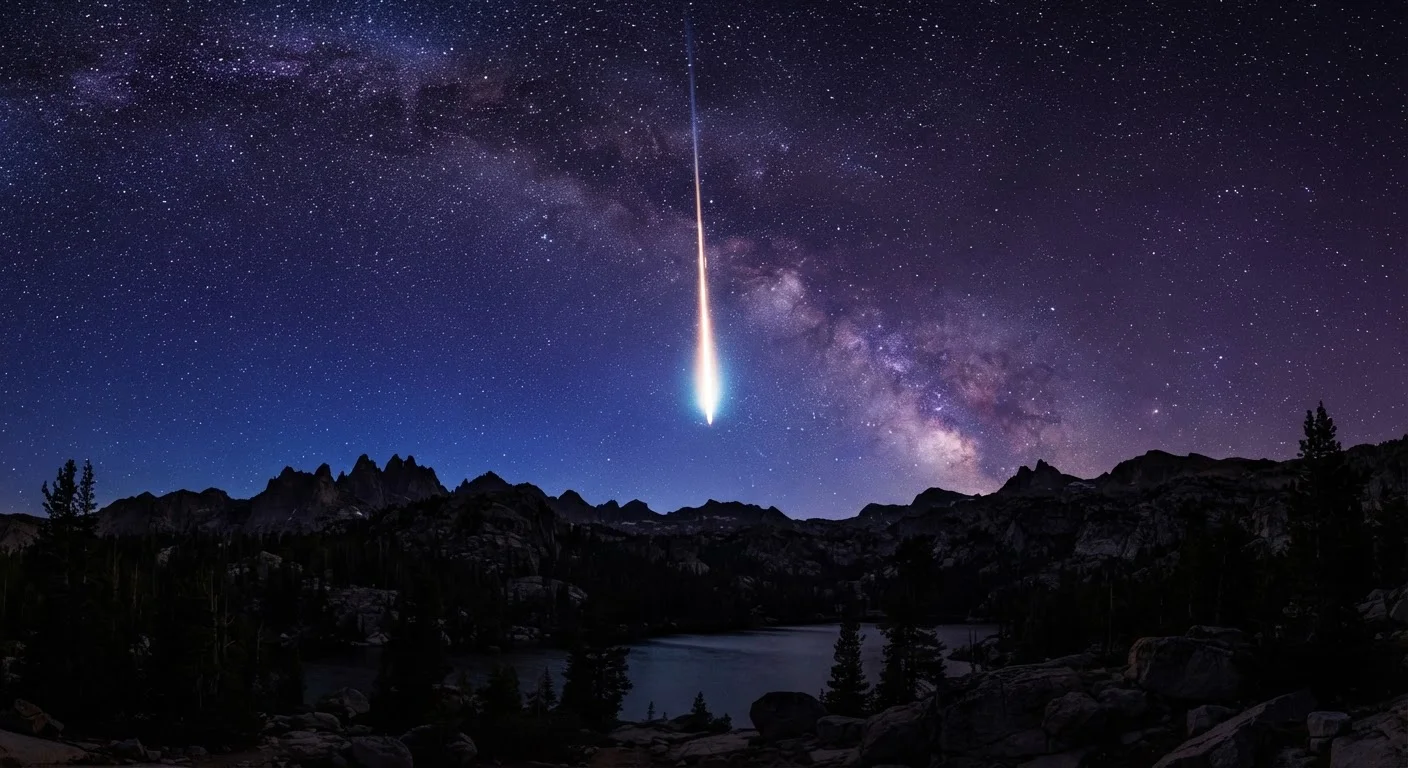
Meteor showers occur when Earth passes through trails of debris left by comets. The particles - often no larger than a grain of sand - burn up in the upper atmosphere, producing streaks of light. Several showers repeat reliably each year and are named for the constellation from which their meteors appear to radiate.
The Perseids (peaking in August) and the Geminids (peaking in December) are widely considered the most prolific, with the Geminids capable of producing over 100 meteors per hour under ideal dark-sky conditions. The Leonids, Lyrids, and Eta Aquariids round out a full calendar of reliable displays. Peak nights typically last only a few hours, so checking published peak times for your time zone is worthwhile.
The Geminids can produce over 100 meteors per hour under ideal dark-sky conditions.
Lunar Eclipses
A lunar eclipse occurs when Earth passes directly between the Sun and the Moon, casting its shadow across the lunar surface. Unlike solar eclipses, lunar eclipses are visible across an entire hemisphere and require no protective eyewear. Total lunar eclipses - often called "blood moons" because Earth's atmosphere refracts reddish light onto the Moon's surface - are among the most visually striking events in skywatching.
Lunar eclipses happen a few times each year on average, though not every one is total, and some are only partial or penumbral (a subtle dimming most observers barely notice). NASA and other space agencies publish multi-year eclipse calendars, making it straightforward to find upcoming events for your location.
Lunar eclipses require no special equipment and are visible across an entire hemisphere simultaneously.
Solar Eclipses
Total solar eclipses - where the Moon completely covers the Sun's disk - are among the rarest and most profound experiences in observational astronomy. Totality, which can last only a few minutes, reveals the Sun's corona, a faint outer atmosphere normally invisible against daytime brightness. Observers within the narrow path of totality describe a sudden drop in temperature, the appearance of stars in daylight, and an almost universal feeling of awe.
Partial solar eclipses are far more common and occur across much wider geographic areas. Important safety note: Never look directly at the Sun without certified solar filters at any phase other than totality. Dedicated eclipse glasses meeting the ISO 12312-2 standard are the appropriate tool for safe viewing of partial phases.
Totality reveals the Sun's corona - an ethereal outer atmosphere normally invisible to the human eye.
Planetary Oppositions
A planetary opposition occurs when an outer planet - Mars, Jupiter, Saturn, Uranus, or Neptune - sits directly opposite the Sun in Earth's sky. At opposition, the planet rises near sunset, remains visible all night, and appears at its largest and brightest. For amateur astronomers with even modest telescopes, oppositions offer the best windows for observing planetary detail.
Jupiter's oppositions occur roughly every 13 months. Saturn's distinctive ring system becomes particularly prominent at its opposition, typically every 12-13 months. Mars oppositions vary more dramatically in distance due to its elliptical orbit - some bring the planet remarkably close to Earth, while others are far less spectacular. Published astronomy calendars track these dates years in advance.
At opposition, outer planets rise near sunset and remain visible throughout the entire night.
Solstice and Equinox Sky Events
The solstices and equinoxes mark the four seasonal turning points of Earth's orbit and have driven astronomical observation for millennia. While these moments themselves are not visual spectacles, they carry real significance for skywatchers: the summer solstice delivers the longest night in the Southern Hemisphere and the longest day in the Northern; winter solstice reverses that.
More practically, equinoxes are excellent calibration points for learning the sky. At an equinox, the Sun rises almost exactly due east and sets almost exactly due west - a reliable anchor for orienting yourself. Seasonal constellations shift dramatically around these dates, meaning the sky map changes enough to reward re-learning. Pairing solstice nights with a star map walkthrough is a productive way to learn constellations that will be prominent for the next several months.
Equinoxes offer a reliable east-west solar reference point - a useful anchor for learning the night sky.
Conjunctions and Close Approaches
A conjunction occurs when two or more celestial objects appear close together in the sky from Earth's perspective. Planet-planet conjunctions, Moon-planet pairings, and occasional groupings of multiple bright planets are among the most visually arresting events that require no equipment to appreciate. Some conjunctions bring planets within a fraction of a degree of each other - an appearance of nearness that, while an optical effect of line-of-sight rather than true proximity, is nonetheless striking.
Notable conjunctions between bright planets - Venus and Jupiter, for example - can draw attention from people who don't regularly observe the sky. Astronomy publications and apps flag upcoming conjunctions months ahead. Because they're often brief, a single evening of missed clouds can mean waiting years for a comparable event.
Planet conjunctions can bring two worlds so close in the sky they nearly appear to touch.
Making the Most of Every Viewing Night
Consistency matters more than perfection. You won't always catch ideal conditions - clouds, the Moon's phase, and local light pollution all play roles. But the more familiar you become with the rhythms of the sky, the better you'll anticipate windows of opportunity. Many seasoned skywatchers keep a simple journal logging what they saw, the time, and conditions; over a few years, patterns emerge that sharpen future observations.
Reduce Light Pollution Impact
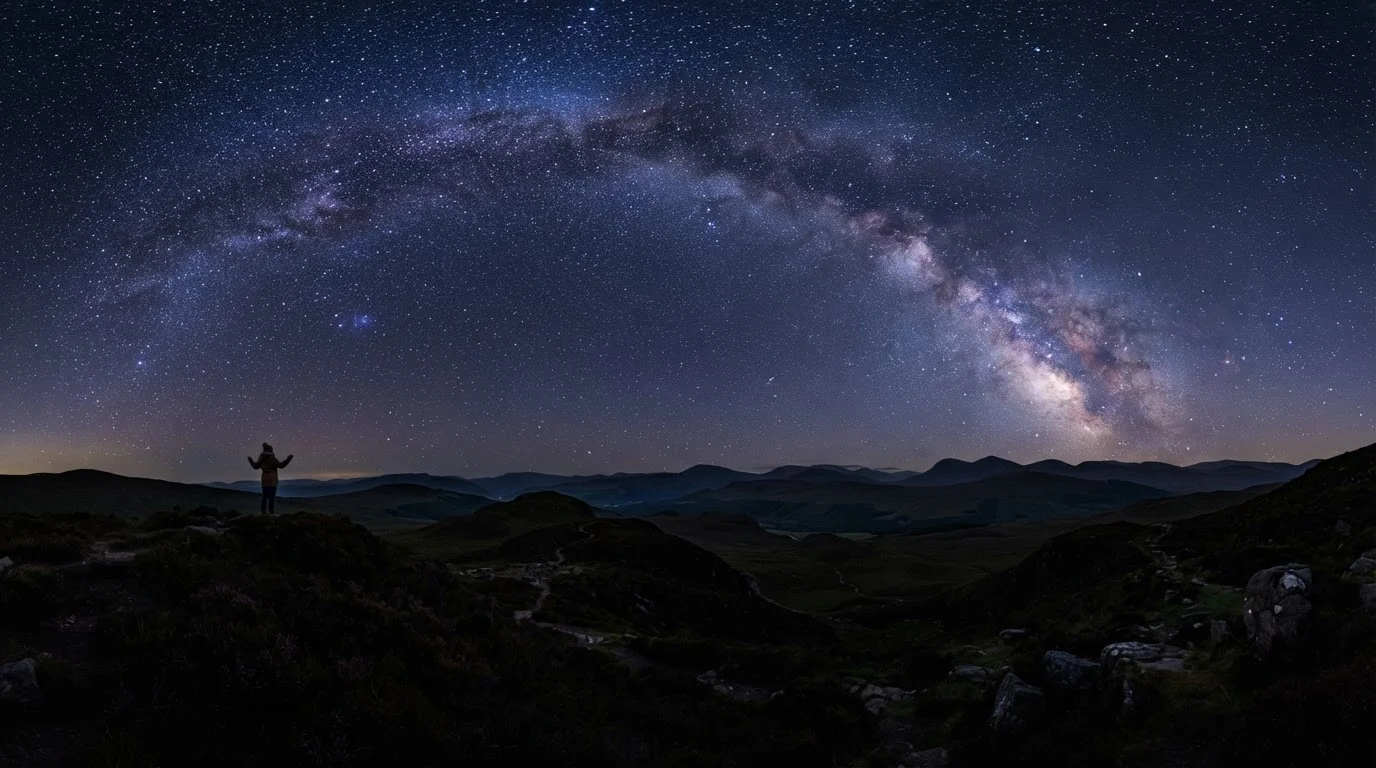
Even driving 20-30 miles away from urban centers can dramatically improve sky darkness. Apps like Light Pollution Map help identify darker zones within a reasonable distance of most cities. Arriving at least 20 minutes before the main event gives your eyes time to dark-adapt, making fainter features - meteor trails, the Milky Way, planetary detail - far more visible.
Each event on this list builds on the others. A meteor shower is more dramatic when you already know your way around the constellations it radiates from. A planetary opposition becomes more meaningful once you understand where in the solar system that planet actually sits. The sky is a system, and every event you track deepens your understanding of it.