
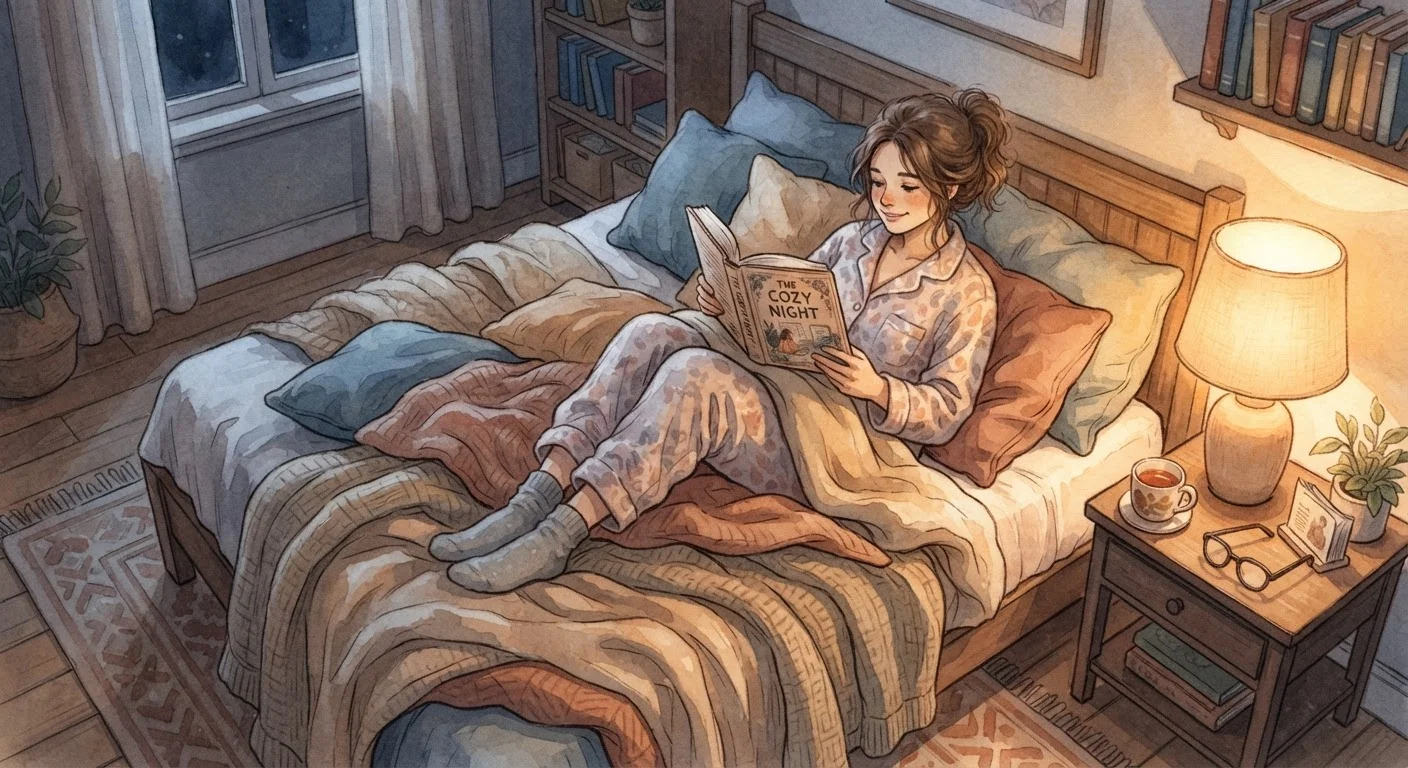
Why So Many People Read Before Bed - And What's Actually Happening
Bedtime reading is one of the oldest wind-down rituals humans practice. Long before smartphones and streaming, people reached for a book as a way to close the door on the day. Today, roughly half of American adults say they read before bed at least occasionally - and for good reason. The behavior taps into something genuine about how the brain transitions toward sleep.
When you settle into a book, your attention narrows. The mental noise of daily responsibilities, social obligations, and unfinished tasks recedes as you follow a narrative or absorb new ideas. This cognitive shift is part of why reading can feel restorative in a way that scrolling rarely does. Building a wind-down routine that includes reading gives your nervous system consistent cues that the active part of the day is over.
Build Consistency for the Best Results
The calming effect of bedtime reading strengthens over time when practiced consistently. Picking up a book at roughly the same hour each night helps your brain associate the habit with sleep onset - similar to how other elements of a wind-down routine work. Even 15 minutes counts.
What Research Suggests About Reading and Stress Reduction
A frequently cited study from the University of Sussex found that reading reduced participants' stress levels by around 68% - more than listening to music or taking a walk. While this figure comes from a relatively small study and shouldn't be overstated, the underlying mechanism makes intuitive sense: narrative immersion pulls your focus away from anxious rumination and into a structured, external world.
This matters for sleep because stress and physiological arousal are among the most common reasons people struggle to fall asleep. A racing mind resists rest. Anything that reliably lowers that baseline - without replacing it with fresh stimulation - is likely to help. If you've ever noticed your thoughts quieting the moment you crack open a familiar novel, you've felt this effect firsthand.
For readers who deal specifically with nighttime anxiety, building a wind-down routine when your mind won't quiet down offers additional strategies that complement a reading habit.
~68%
Stress reduction from six minutes of reading
A University of Sussex study found reading reduced stress more effectively than music or walking, though the sample was small and findings should be interpreted cautiously.
~50%
American adults who read before bed
Surveys by the Pew Research Center have found that roughly half of American adults engage in some form of pre-sleep reading, making it one of the most common evening rituals.
1-3 hrs
Delayed sleep timing linked to evening blue light
Research published in the Proceedings of the National Academy of Sciences found that reading on a light-emitting device before bed shifted sleep timing and reduced alertness the next morning.
Print vs. Screen: Why the Format Matters
Not all reading is equal when it comes to sleep. The format you choose can shape outcomes significantly. Physical books - printed pages under a warm, dim lamp - don't emit the type of light that interferes with melatonin, the hormone your body produces to signal nighttime. E-ink readers without backlighting are similarly neutral. But tablets, phones, and LCD-backlit e-readers emit blue-spectrum light that research has linked to delayed melatonin release and reduced sleep quality.
This doesn't mean digital reading is always harmful, but the evidence does suggest that bright, backlit screens in dark rooms carry the greatest risk of disrupting your body clock. If you prefer digital formats, many devices now offer night modes or warm-color settings that reduce blue-light output, though research on how much these features help remains mixed.
The contrast between print and screen reading is one dimension of a broader conversation about what screen time actually does to sleep - an area where popular claims often outpace the evidence.
Content Counts: What You Read Is as Important as How
A thriller that keeps you flipping pages until 2 a.m. isn't the same as a gentle essay collection that lulls you into drowsiness by page twenty. The emotional and cognitive demand of your reading material shapes its effect on your brain before sleep. High-stakes narratives, graphic content, or anything that triggers anxiety or excitement activates the same stress-response pathways that you're trying to quiet.
For pre-sleep reading, the sweet spot tends to be moderately engaging - immersive enough to hold your attention away from worries, but not so gripping that you lose track of time or end the session emotionally activated. Many readers find that familiar genres, rereading old favorites, or slower-paced literary fiction works well. Others prefer narrative nonfiction, essays, or poetry. The goal is absorption without overstimulation.
This connects to broader questions about sleep hygiene - the set of daily behaviors that cumulatively shape how well you sleep. Reading is one piece of that picture, and what you read matters as much as when.
Reading, Memory, and the Sleeping Brain
One underappreciated benefit of pre-sleep reading is its potential relationship to memory. During sleep, the brain consolidates experiences and information from the day - moving material from short-term to longer-term storage. Because reading before bed places new information into your mind just before this consolidation window opens, some neuroscientists have proposed that it may be a particularly effective time to absorb certain kinds of material.
This is an active area of research rather than settled science, but it aligns with what many avid readers report anecdotally: books read before sleep seem to stick. Whether you're reading fiction that deepens emotional understanding or nonfiction that builds knowledge, the sleeping brain may be doing quiet work to integrate what you encountered. For a deeper look at that process, what neuroscience has uncovered about the brain during sleep is worth exploring.