The Core Difference: What Happens to the Fiber
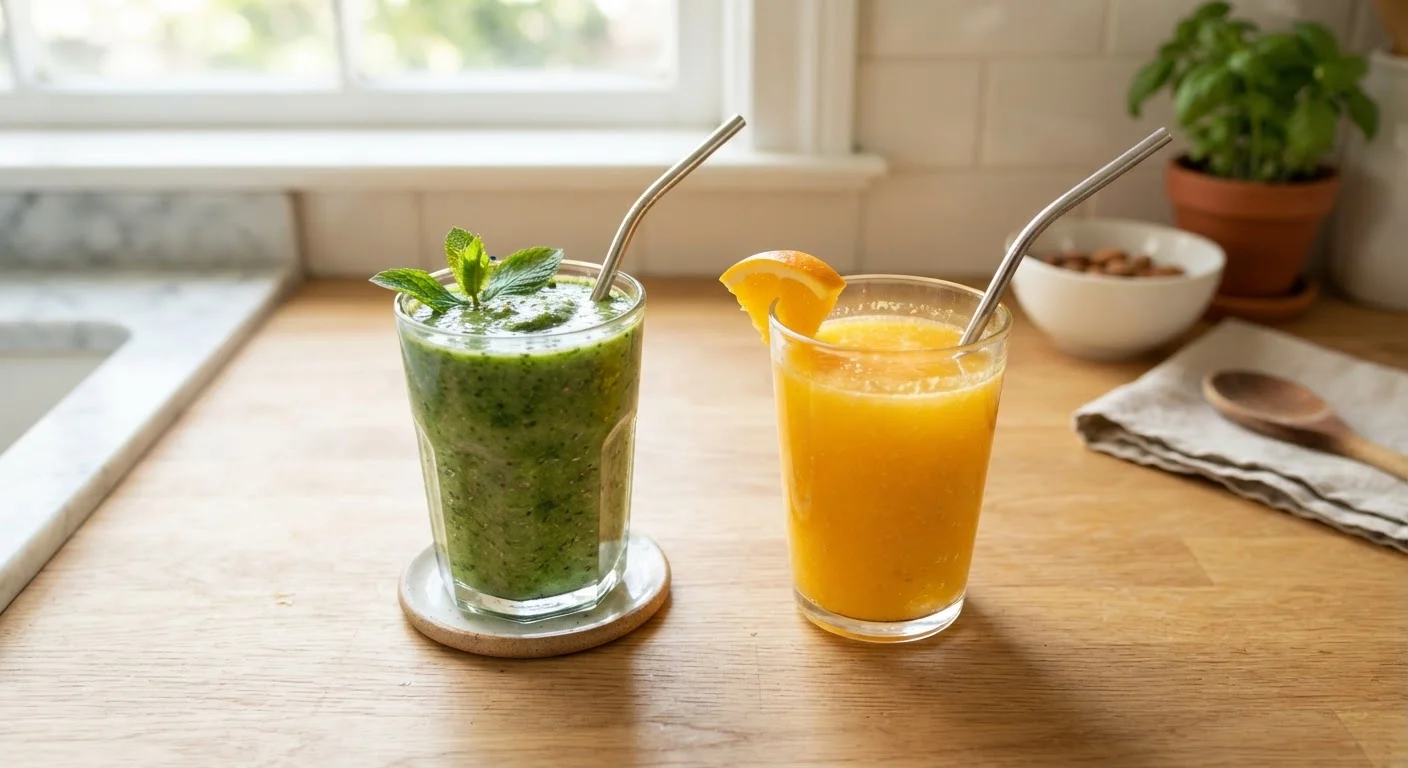
The single most important distinction between a smoothie and juice isn't the taste or the color - it's what happens to the fiber. When you blend whole fruits or vegetables into a smoothie, every bit of the plant goes into your glass: the pulp, the skin (when left on), and the cell walls that carry dietary fiber. When you juice, a machine separates liquid from solids, and most of that fiber ends up discarded as pulp.
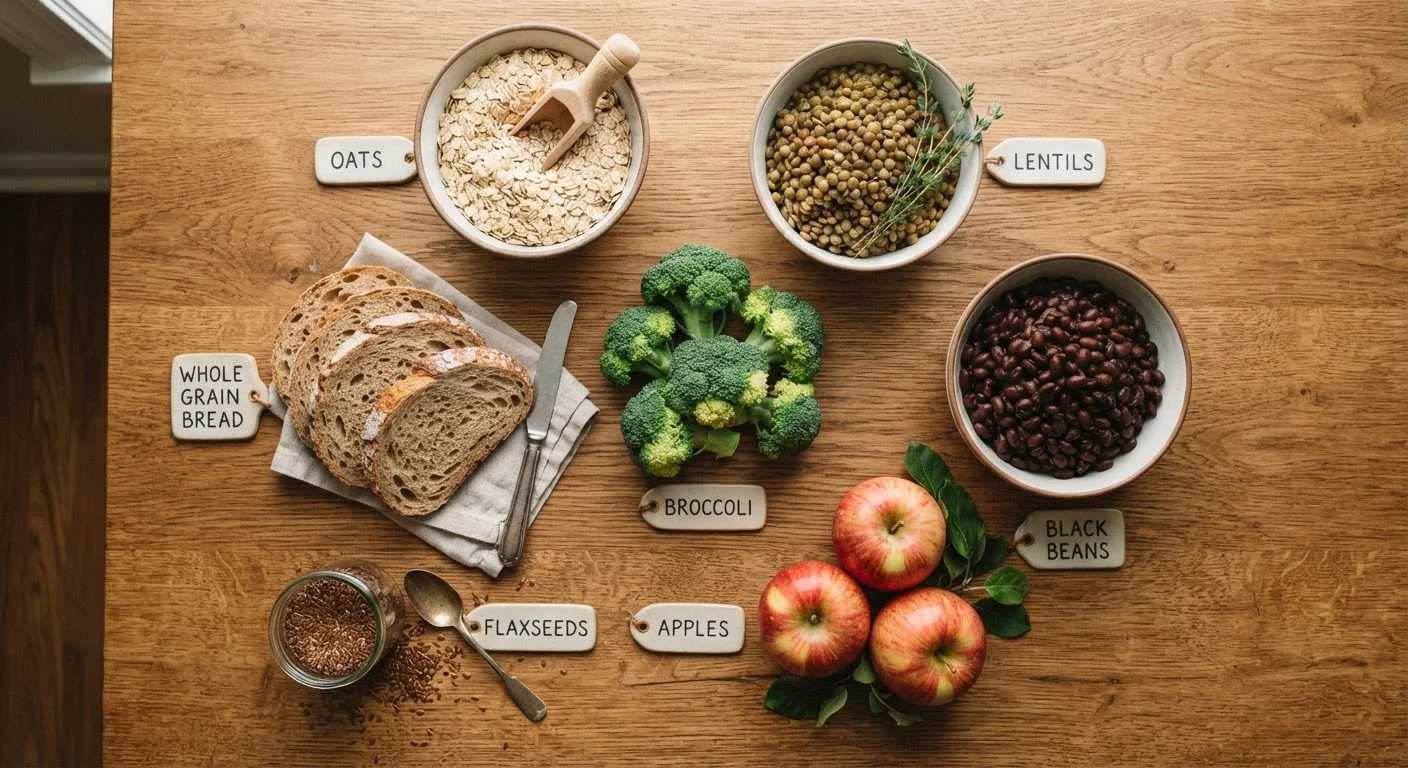
This matters because dietary fiber does two important things. First, it physically takes up space in your stomach, contributing to a sense of fullness. Second, it slows the rate at which sugars from fruit are absorbed into your bloodstream. Without fiber, juice delivers its natural sugars rapidly - producing a faster energy spike that also tends to subside more quickly, sometimes leaving you hungry again sooner.
To understand how processing affects nutritional value more broadly, see how food processing changes nutrition.
| Criterion | Smoothie | Juice |
|---|---|---|
| Fiber content | High - whole produce retained | Low - pulp removed |
| Satiety (fullness) | Longer-lasting | Shorter-lasting |
| Sugar absorption speed | Slower (fiber buffers it) | Faster (no fiber buffer) |
| Vitamin & mineral delivery | Good | Good to excellent |
| Calorie density per cup | Moderate to high | Moderate |
| Ease of customization | Very flexible | Somewhat flexible |
| Produce required per serving | Less | More |
Satiety: Why Smoothies Generally Win on Fullness
Research consistently points to fiber as one of the key drivers of satiety - the feeling of being full and satisfied after eating or drinking. Because smoothies preserve fiber, they tend to keep people fuller longer compared with an equivalent volume of juice. A smoothie made from a banana, a handful of spinach, and some frozen berries, for instance, contains several grams of fiber that juice made from the same fruit would largely lack.
Protein and healthy fats, common smoothie add-ins like yogurt, nut butter, or seeds, extend satiety further still. Juice, on its own, provides little of either. That said, juice isn't nutritionally empty: it delivers vitamins, minerals, and plant compounds efficiently, which matters in contexts where eating whole produce is difficult.
Portion size also plays a significant role. A large juice can deliver as many calories and as much sugar as several whole fruits at once, with none of the fiber to slow absorption. Keeping portions moderate - generally around 4 to 8 ounces for juice - helps avoid unintentional sugar overload.
Head-to-Head: Nutrition and Practicality
Both drinks have genuine nutritional merit, and neither is universally superior. Your choice should depend on your specific goals, what you're pairing the drink with, and how the beverage fits into your overall diet. For store-bought versions of either, checking labels for added sugars is essential - understanding juice label terminology can help you decode what's actually in the bottle.
~2-4g
Fiber in a typical homemade smoothie
A basic fruit-and-vegetable smoothie can contribute meaningfully toward the recommended daily fiber intake of 25-38 grams for adults, per USDA dietary guidelines.
<1g
Fiber typically found in an 8 oz glass of juice
Most commercial and freshly squeezed juices retain very little dietary fiber after the pulp is separated during extraction.
4-8 oz
Recommended portion for 100% fruit juice
Major nutrition organizations, including the American Academy of Pediatrics, suggest limiting juice servings to control sugar intake across age groups.
From a practical standpoint, juicing requires more produce to fill a glass, which can make it more expensive and more resource-intensive. Smoothies are generally easier to prepare at home, more filling per serving, and more adaptable to individual dietary preferences. Both can support good grocery shopping habits when you choose produce-forward recipes over sugar-laden commercial versions.
It's also worth noting that both beverages contribute to your daily fluid intake, though hydration works best as part of a broader pattern that includes plenty of plain water.
This article is for general informational and educational purposes only and is not a substitute for personalized medical or dietary advice. Consult a qualified healthcare professional before making significant changes to your diet, especially if you have a health condition such as diabetes.