The Three Flavors of 5G Most Carriers Don't Advertise
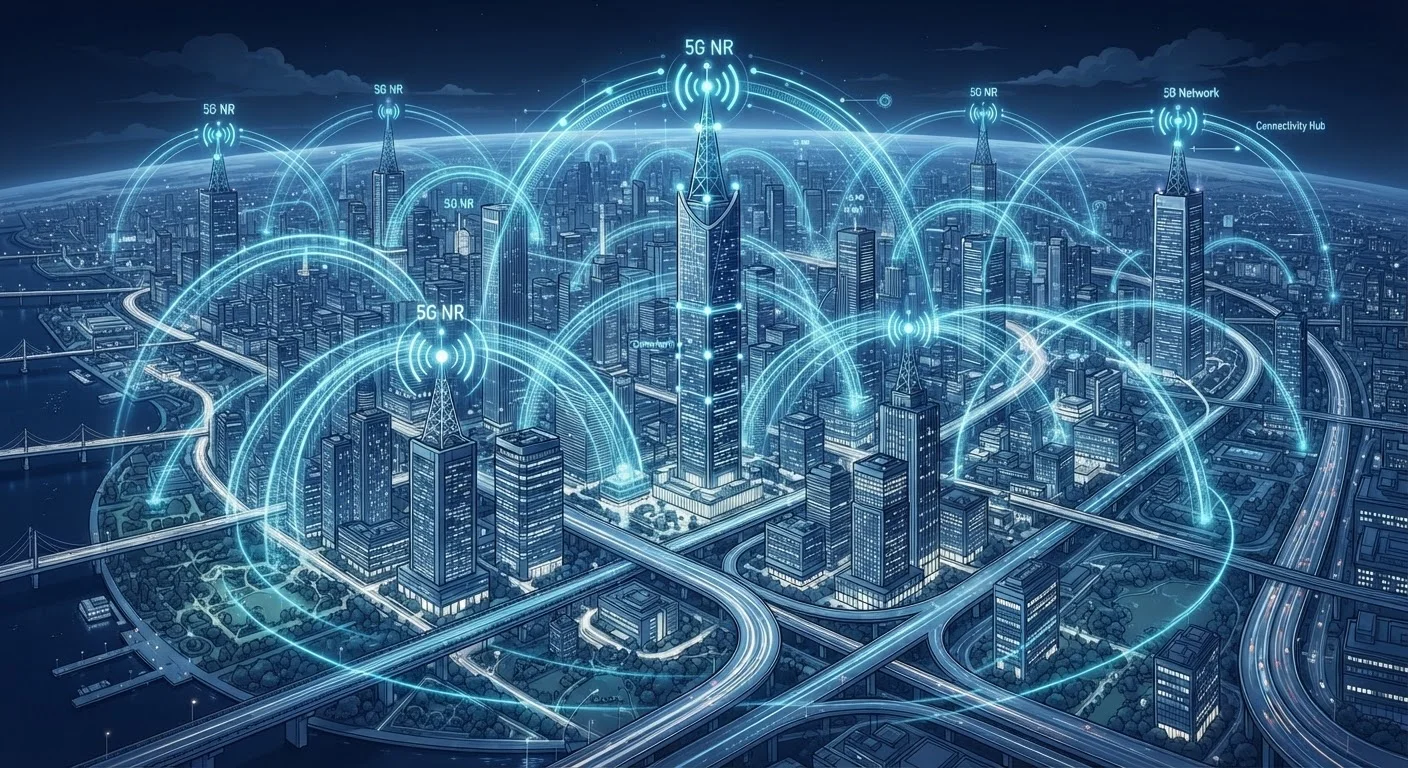
When a carrier says you're covered by 5G, that label can mean very different things depending on which frequency band is in use. There are three main categories:
- Low-band 5G (below 1 GHz): Wide coverage area, good building penetration, but speed improvements over 4G LTE are often modest - typically 30-250 Mbps in real conditions.
- Mid-band 5G (1-6 GHz): The practical sweet spot. Faster than low-band and covers a reasonable geographic area. This is where most meaningful 5G upgrades happen for everyday users.
- High-band / millimeter-wave (mmWave, above 24 GHz): Extremely fast peak speeds - sometimes exceeding 1 Gbps - but signals travel only a few hundred feet and are blocked by walls, windows, and even rain.
For a deeper comparison of these frequency trade-offs, see our breakdown of Sub-6 GHz vs. mmWave 5G.
~30-250 Mbps
Typical real-world low-band 5G download speed
Based on aggregate speed-test data reported by network analysis firms tracking US carrier performance.
1 Gbps+
Peak millimeter-wave 5G speeds in ideal lab conditions
Peak speeds are achievable in controlled environments; real-world mmWave performance varies widely due to distance and obstruction.
<10 ms
Target latency for Standalone 5G
This target applies to full Standalone 5G deployments; most current Non-Standalone networks do not yet achieve this in practice.
What Actually Makes 5G Faster
Speed gains in 5G come from a combination of engineering decisions, not a single innovation:
- Wider radio channels: 5G can use much wider slices of radio spectrum than 4G, which means more data can move through at once - similar to widening a highway from two lanes to six.
- Massive MIMO antennas: 5G base stations use arrays of dozens or even hundreds of small antennas that can direct signals precisely toward individual users rather than broadcasting in all directions. This technique, called beamforming, reduces interference and improves efficiency.
- Network slicing: In fully Standalone 5G deployments, operators can carve the network into virtual segments dedicated to specific uses - prioritizing a hospital's devices differently from a streaming consumer, for example.
- Lower latency architecture: 5G networks are engineered to reduce the round-trip delay (latency) data experiences. While 4G LTE latency typically runs 30-50 milliseconds, 5G targets single-digit milliseconds under ideal conditions.
To understand how 5G compares to its predecessor on these dimensions, see what actually separates 4G LTE and 5G.
Where 5G Falls Short in Practice
The gap between 5G's theoretical ceiling and what users experience day-to-day is significant. Several factors account for this:
Coverage is uneven. Millimeter-wave 5G - the version with headline-grabbing speeds - is concentrated in small pockets of dense urban areas. Step inside a building or walk a few blocks, and you're likely back on mid- or low-band 5G, or even 4G LTE.
Congestion still happens. A 5G cell site, like any cell site, shares its capacity across every connected device in range. In crowded venues or at peak hours, speeds can drop substantially. How network congestion develops explains why this problem is harder to solve than simply deploying more towers.
Your phone matters. Not all 5G modems are created equal. Some budget 5G phones support only low-band frequencies, limiting the speed gains available even where mid-band 5G exists.
Non-Standalone architecture limits gains. Many current 5G deployments still rely on 4G LTE infrastructure for core network functions - a configuration called Non-Standalone (NSA). True latency improvements require Standalone (SA) 5G, which is still rolling out.
Check Your Carrier's Band Map Before Upgrading
Many carriers publish interactive maps that distinguish between low-band, mid-band, and millimeter-wave 5G coverage. Looking up your specific address on that map - rather than the general 5G coverage map - gives you a more accurate picture of what speeds to expect. This is especially useful if you're deciding whether a 5G phone upgrade makes practical sense for your area.
What This Means for Your Phone Bill and Daily Life
For most users in mid-sized or large cities, upgrading to a 5G device will deliver noticeably faster downloads and more consistent streaming in covered areas. For rural users or those in smaller markets, the practical difference may be minimal for now.
Before assuming 5G will transform your experience, it's worth checking which band your carrier actually deploys in your area - not just whether 5G appears in your coverage map. Many carriers distinguish between coverage tiers in their fine print.
If you want to put 5G in the context of the full history of mobile networks, our network generations reference traces each generation from 1G through today. And if you've encountered health or speed claims about 5G online, our review of common 5G misconceptions separates what's established from what isn't.
The broader picture of how wireless infrastructure functions - and why coverage varies so much across the US - is covered in the Networks & Coverage hub.