Why 5G Myths Spread So Easily
Fifth-generation wireless technology - commonly called 5G - has generated more public confusion than almost any previous cellular upgrade. Some of that confusion is honest: the marketing language carriers use is vague, the underlying technology is genuinely complex, and real-world performance varies more than advertisements suggest. But some of the circulating claims go much further, touching on health fears and conspiracy theories that aren't grounded in established evidence.
The result is that many people hold beliefs about 5G that are either partly true, completely false, or a mix of both. Understanding what's actually known - and what isn't - helps you make better decisions about your phone plan and your household. See our clear-eyed look at how 5G actually works for a grounding in the basics before diving into the myths below.
Myth
5G signals are dangerous to human health because they emit harmful radiation.
Fact
5G uses non-ionizing radiofrequency (RF) energy, which does not carry enough energy to break chemical bonds or damage DNA the way ionizing radiation (like X-rays) does.
The word "radiation" causes understandable alarm, but it covers a wide spectrum. At one end sits ionizing radiation - gamma rays, X-rays - which carries enough energy to damage cells. At the other end is non-ionizing radiation, which includes visible light, Wi-Fi, and cellular signals including 5G. Regulatory bodies such as the WHO and the ICNIRP set exposure limits for RF energy, and 5G networks are required to operate well within those limits. The scientific consensus does not currently classify 5G as a proven health hazard, though research continues as with any technology.
Myth
5G is always dramatically faster than 4G LTE.
Fact
Speed depends almost entirely on which 5G frequency band is in use. Low-band 5G - the most widely deployed type - often delivers speeds comparable to, or only modestly faster than, 4G LTE.
Carriers use three broad categories of 5G spectrum. Low-band (below 1 GHz) travels far and penetrates buildings well, but peak speeds are modest. Mid-band (roughly 1-6 GHz) offers a stronger speed improvement with reasonable coverage. High-band, or mmWave, can deliver multi-gigabit speeds but has very short range and struggles to pass through walls. Most Americans on 5G today are connected to low-band or mid-band signals. If your phone shows a 5G icon, that alone tells you little about the speed you'll actually experience.
Myth
Once 5G is available, carriers shut down 4G LTE.
Fact
4G LTE and 5G networks are designed to coexist. Carriers rely on 4G infrastructure to handle the majority of traffic and to fill coverage gaps where 5G isn't yet deployed.
The transition from one generation of wireless to the next takes many years. Even as 5G expands, 4G LTE continues to serve the majority of mobile data traffic in the United States. Most 5G phones automatically switch between 4G and 5G depending on signal availability - a process called dynamic spectrum sharing in some implementations. Far from being switched off, 4G remains the backbone of carrier networks while 5G builds out incrementally.
Myth
If you have a 5G phone and live in a 5G coverage area, you'll notice a big speed difference every day.
Fact
For common tasks like streaming video, browsing, or messaging, the real-world difference between 4G and most 5G connections is often imperceptible.
Everyday smartphone tasks don't require gigabit speeds. Streaming high-definition video uses a fraction of what even a solid 4G LTE connection can deliver. The most meaningful speed gains from 5G are realized in dense, high-traffic environments - stadiums, transit hubs - and for specific use cases like downloading large files or low-latency industrial applications. For typical personal use, the upgrade in daily experience is often subtler than marketing suggests.
Myth
5G towers are everywhere now, so coverage should be the same as 4G.
Fact
5G coverage - particularly higher-band 5G - remains patchy, with significant gaps outside major metro areas and in rural regions.
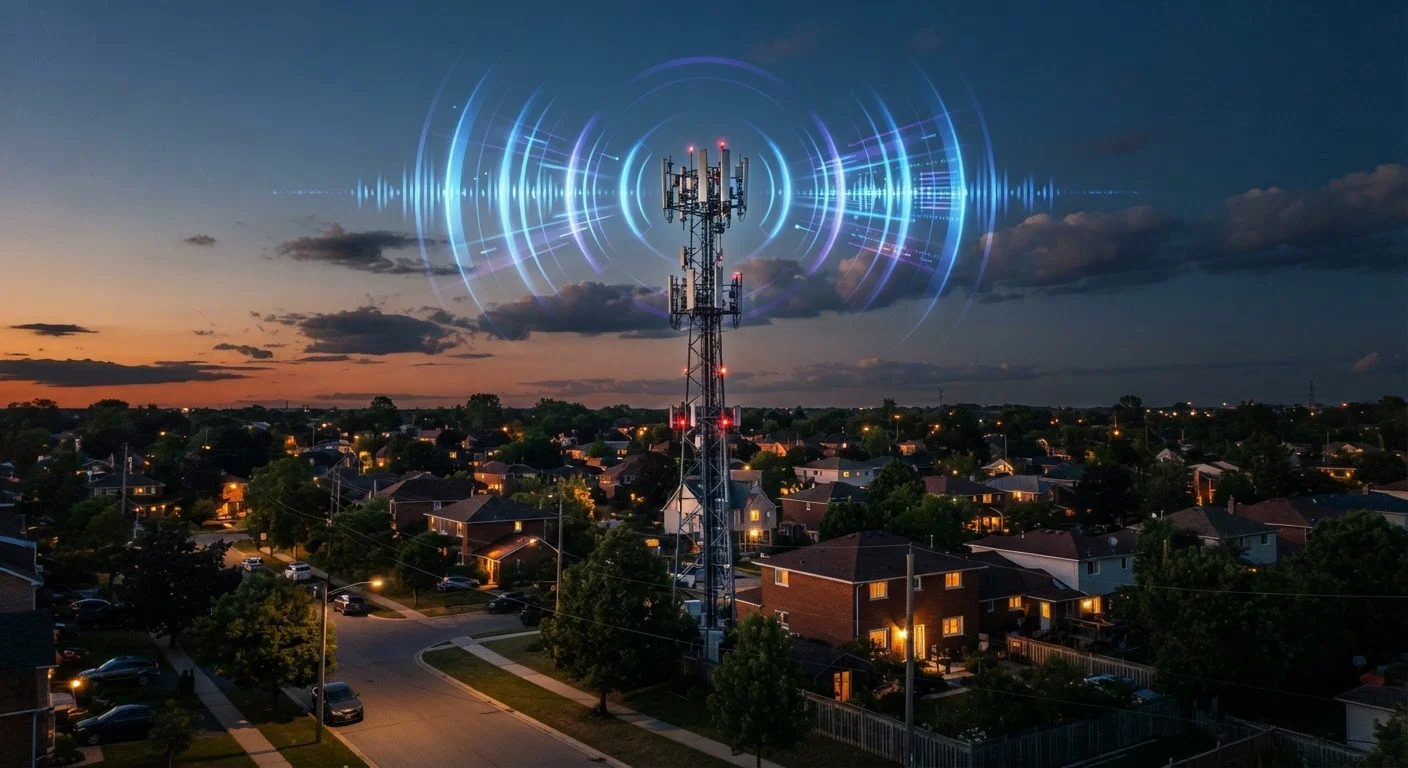
Because higher-frequency 5G signals travel shorter distances and are blocked more easily by obstacles, carriers need far more towers to achieve the same geographic coverage as 4G. Infrastructure deployment takes time and capital. While low-band 5G has extended to many regions by reusing existing tower sites, meaningful mid-band or mmWave coverage is still concentrated in urban areas. Checking a carrier's actual coverage map for your specific location - not a general nationwide claim - gives a far more accurate picture.
What the Evidence Actually Shows
The myths above share a common thread: they treat a complicated, layered technology as simpler than it is. 5G isn't one thing - it runs on multiple frequency bands with very different characteristics. Sub-6 GHz and millimeter-wave (mmWave) 5G behave almost nothing alike in the real world, which is why blanket statements about 5G speed or range so often fall apart in practice.
Regulatory bodies including the FCC and the World Health Organization (WHO) continue to monitor radiofrequency exposure limits, and the scientific consensus as of the time of writing does not identify 5G frequencies as a proven health risk at regulated exposure levels. That doesn't mean questions should go unasked - it means you should look to peer-reviewed research and established health institutions rather than unverified social media claims for answers.
For a side-by-side comparison of what 4G and 5G actually deliver differently, see what actually separates 4G LTE and 5G. If you notice similar patterns of misinformation in other areas of technology, our look at common smartphone myths is worth a read as well.
Coverage Maps Don't Tell the Whole Story
Carrier coverage maps show where a signal theoretically reaches, not what speed or quality you'll actually get inside buildings, in valleys, or during peak usage hours. Before switching plans based on 5G availability, consider checking independent coverage data for your specific location. A plan that costs more for 5G access may not deliver a noticeable benefit depending on where you live and how you use your phone.