Why Protein Quality Is More Nuanced Than the Label Suggests
When you scan a nutrition label, the protein gram count tells only part of the story. Two foods can list identical protein amounts yet differ significantly in how well the body uses that protein. Two key concepts help explain this: amino acid completeness and digestibility.
Proteins are built from 20 amino acids, nine of which are essential - meaning the body cannot synthesize them and must get them from food. A protein source containing all nine in sufficient quantities is called complete. Most animal proteins (eggs, dairy, meat, fish) qualify. Most individual plant proteins do not, though soy is a notable exception.
Digestibility matters just as much. The DIAAS is the standard nutritionists use to rate how efficiently a protein is absorbed and used. Eggs score exceptionally high; most legumes score lower due to antinutrients like phytates that can reduce absorption. Cooking and food processing methods - soaking, fermenting, sprouting - can improve digestibility meaningfully. For a deeper look at how processing affects nutritional value, see our breakdown of whole vs. processed foods.
How Common Protein Sources Actually Compare
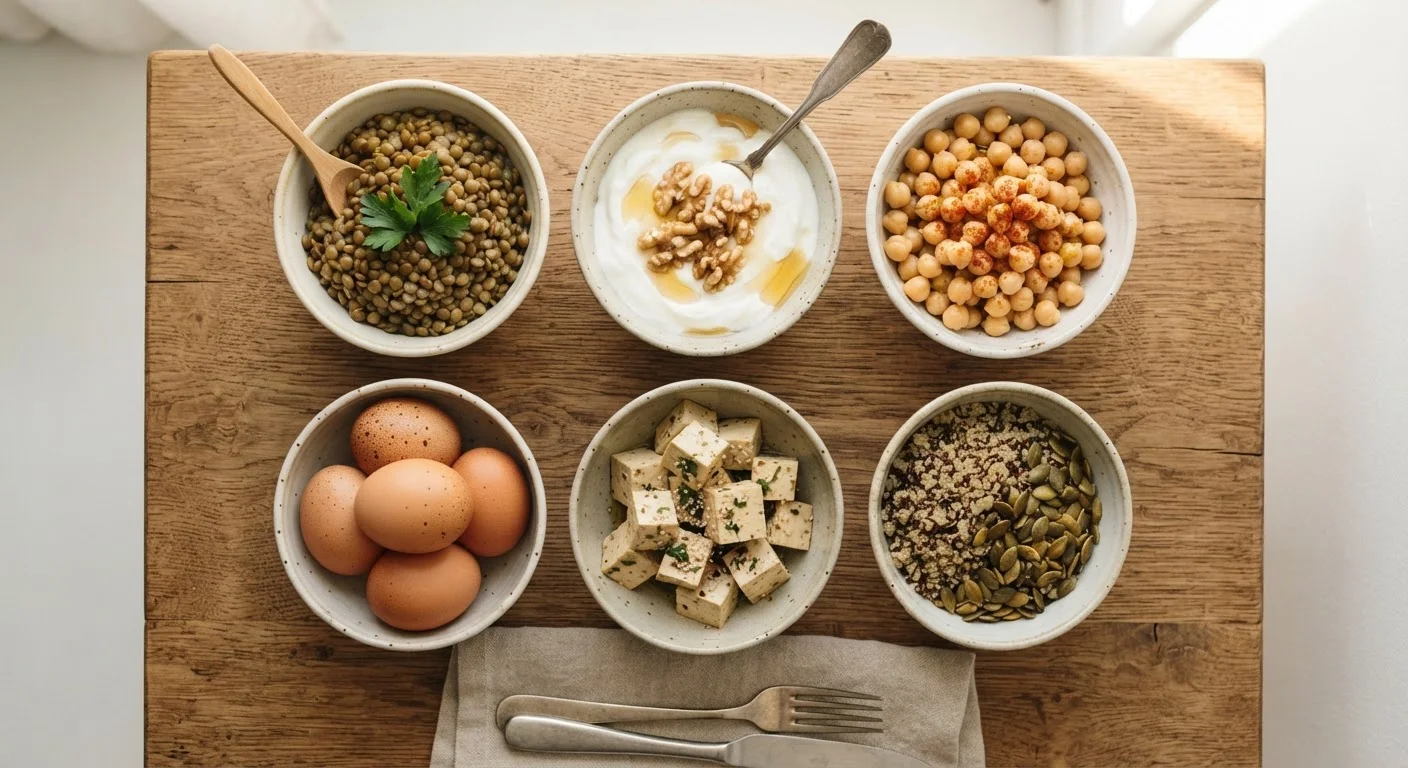
Here's how four widely consumed protein sources - eggs, legumes, dairy, and tofu - stack up across the criteria that matter most to everyday eaters.
| Eggs | Greek Yogurt | Lentils | Tofu | |
|---|---|---|---|---|
| Protein per serving | ~6g per large egg | ~17g per cup | ~18g per cup cooked | ~10g per half-cup |
| Complete protein? | Yes | Yes | No (low methionine) | Yes |
| Digestibility (DIAAS) | Very high (~1.0+) | High | Moderate | Moderate-high |
| Fiber content | None | None | High (~8g/cup) | Low |
| Saturated fat | Moderate | Low (plain nonfat) | Negligible | Very low |
| Cost (general) | Low | Low-moderate | Very low | Low-moderate |
| Suits vegan diet? | No | No | Yes | Yes |
A few things stand out in this comparison. Eggs pack a complete amino acid profile into roughly 6 grams of protein each, with a DIAAS near or above 1.0 - among the highest of any whole food. Greek yogurt (plain, unsweetened) offers similar completeness alongside calcium and probiotics. Tofu, made from soybeans, is the only plant source in this group that is genuinely complete. Legumes such as lentils and chickpeas fall short on the amino acid methionine but deliver exceptional fiber and are among the most affordable protein foods available. For a detailed side-by-side of plant and animal protein profiles, our nutritional comparison article goes deeper on the science.
Making Plant Proteins Work: The Complementary Approach
The old rule that plant-based eaters must carefully combine proteins at every single meal has been largely updated by nutrition research. Current thinking holds that eating a variety of plant proteins across the day - not necessarily at every sitting - effectively covers all essential amino acids for most healthy adults.
In practice, this means a diet with lentils at lunch and whole grains or nuts at dinner naturally fills the amino acid gaps present in either food alone. Rice (low in lysine, adequate in methionine) pairs well with beans (low in methionine, rich in lysine). This is why traditional cuisines worldwide - rice and dal in South Asia, corn tortillas and black beans in Latin America - happened to land on nutritionally complementary combinations long before food science explained why.
Easy Ways to Boost Plant Protein Absorption
Soaking dried beans and lentils overnight and discarding the soaking water reduces phytates, improving mineral absorption. Cooking tomatoes or citrus alongside iron-rich legumes enhances iron uptake thanks to vitamin C. Fermenting soy - as in tempeh and miso - naturally increases digestibility. None of these steps require special equipment, just a bit of planning.
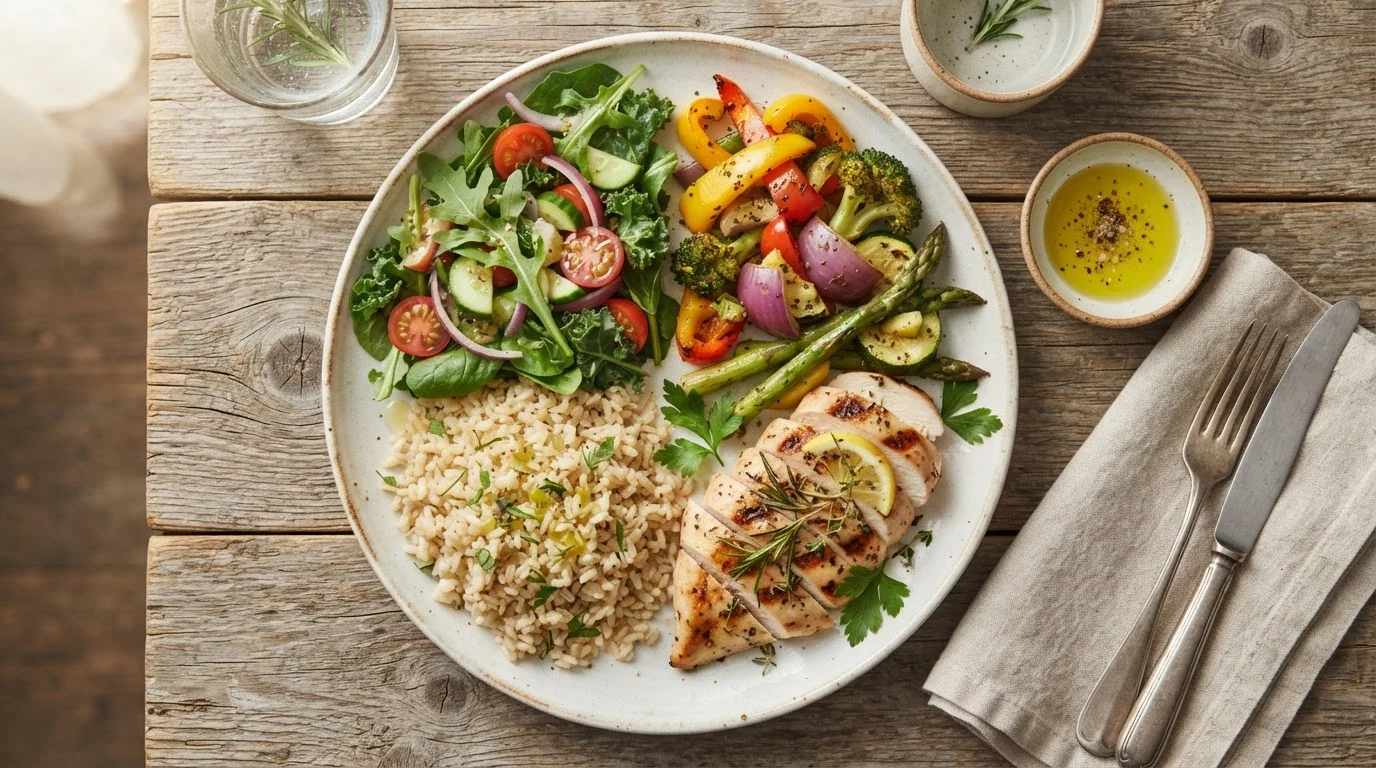
Tofu and tempeh deserve special mention: both are soy-based, both complete proteins, and tempeh's fermentation process improves digestibility further. These are particularly useful anchors for plant-forward eating patterns. Once you have your protein sources sorted, building a balanced plate helps you work them into complete, well-proportioned meals.
Practical Guidance for Mixed and Flexible Eaters
Most Americans don't fall neatly into omnivore, vegetarian, or vegan categories - many are flexitarian, meaning they eat mostly plant-based with occasional animal protein. This pattern can be nutritionally excellent when approached thoughtfully.
A few practical principles for any eating pattern:
- Prioritize variety: No single protein source covers all nutritional bases. Rotating eggs, legumes, dairy, and tofu throughout the week gives you a broader nutrient profile overall.
- Watch portion context: Protein density varies widely. A cup of cooked lentils provides about 18 grams of protein; a cup of Greek yogurt provides roughly 17 grams; a large egg provides about 6 grams. Adjust portions to your actual protein needs, which vary by age, activity level, and health status.
- Consider the full nutrient package: Eggs bring choline; dairy brings calcium and vitamin D; legumes bring fiber and iron; tofu provides isoflavones. You're not just choosing a protein - you're choosing the whole food.
If you're building meals around multiple protein sources, a practical framework for balanced plates can help you structure portions without obsessive tracking.
This article is for general nutrition education only and is not a substitute for personalized dietary advice. Consult a registered dietitian or qualified healthcare professional for guidance tailored to your individual health needs.