
What Makes a Protein 'Complete' or 'Incomplete'?
Protein is built from 20 amino acids, nine of which the human body cannot synthesize on its own - these are called essential amino acids (EAAs). A protein source containing all nine EAAs in adequate proportions is called complete; one that is low in one or more EAAs is labeled incomplete.
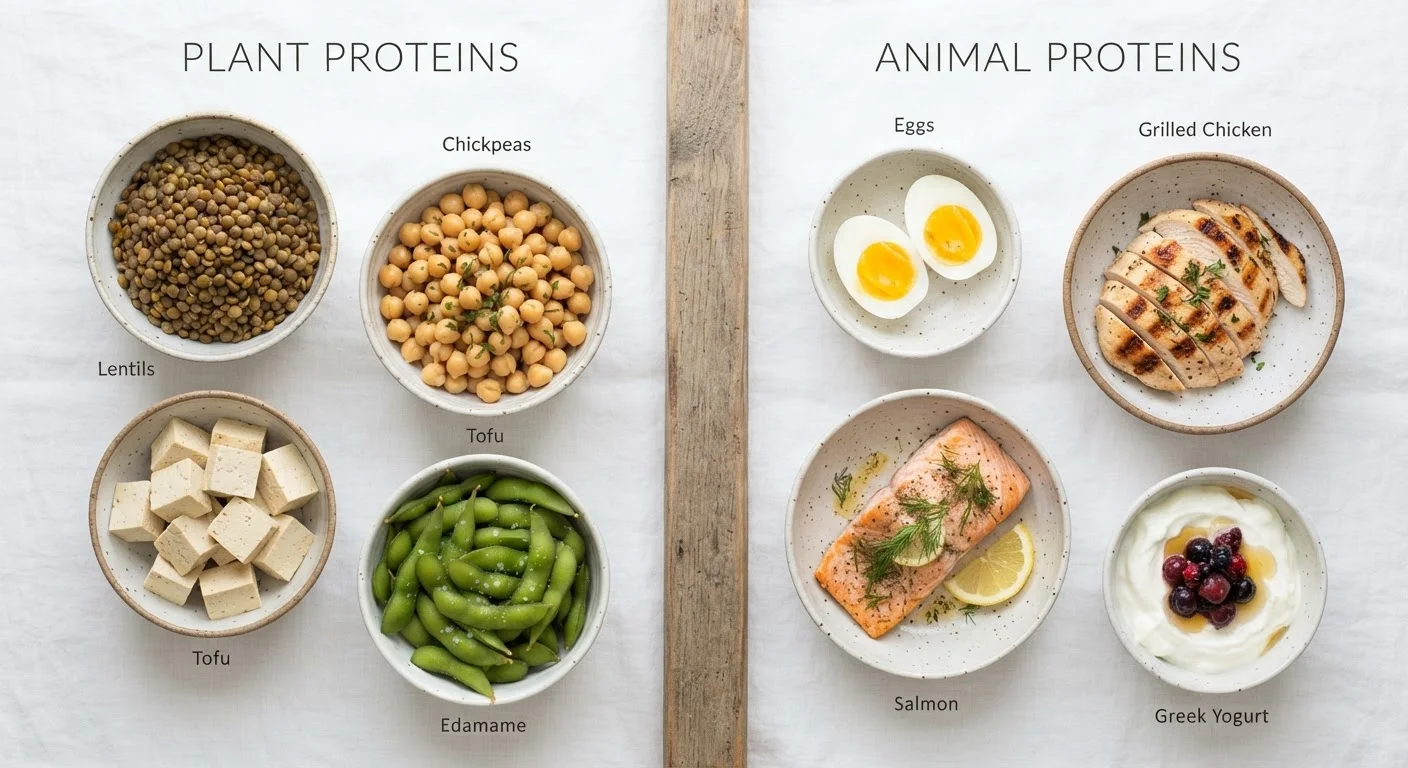
Animal proteins - including meat, poultry, fish, eggs, and dairy - are consistently complete. Most plant proteins fall short on at least one EAA. Lysine is often limiting in grains; methionine is lower in legumes. However, this does not mean plant proteins are inadequate for human health. Eating a variety of plant foods across the day provides the full spectrum of EAAs. For a broader look at how these terms are defined, see our practical guide to nutritional terms.
Soy is a notable exception among plants - it is considered a complete protein, making tofu, tempeh, and edamame particularly valuable for people avoiding animal products.
Digestibility and Bioavailability: How Much Protein Actually Gets Used?
The quantity of protein listed on a food label does not tell the whole story. Bioavailability - how much of a nutrient the body actually absorbs and uses - varies meaningfully between sources. Researchers use a metric called the DIAAS to assess protein quality, accounting for both amino acid content and digestibility.
By DIAAS standards, animal proteins such as eggs, dairy, and meat consistently score above 1.0 (the benchmark for a high-quality protein). Many plant proteins score below 1.0, though exceptions exist: soy protein isolate and some processed legume products score competitively.
| Criterion | Animal Proteins | Plant Proteins | |
|---|---|---|---|
| Amino acid completeness | Complete (all 9 EAAs) | Usually incomplete; soy is an exception | |
| Digestibility (DIAAS) | Generally high (>1.0) | Generally moderate; varies by source | |
| Vitamin B12 | Naturally present | Absent; supplementation needed | |
| Heme iron | Present; highly bioavailable | Absent; non-heme iron only | |
| Fiber content | None | Significant; supports gut health | |
| Saturated fat | Often higher (varies by source) | Generally lower | |
| Phytonutrients | Absent | Rich; antioxidants and polyphenols |
Cooking and food processing can improve plant protein digestibility. Soaking, sprouting, and fermenting legumes, for example, reduces antinutrients like phytates that can inhibit mineral and protein absorption. For more on how processing affects nutritional value, see what food processing really means for nutritional quality.
Key Micronutrients That Follow Protein Sources
Choosing a protein source means choosing an accompanying micronutrient package. Animal proteins carry nutrients that are sparse or absent in plant foods:
- Vitamin B12: Found almost exclusively in animal products; deficiency is a genuine risk for those on fully plant-based diets without supplementation.
- Heme iron: The form in red meat is absorbed more efficiently than non-heme iron from plants, though pairing plant iron sources with vitamin C improves uptake.
- Zinc and calcium: Present in both categories, but bioavailability is generally higher from animal sources due to lower antinutrient interference.
- Creatine and carnosine: Compounds found in muscle meat that play roles in energy metabolism; not present in plant foods.
Plant proteins, meanwhile, arrive bundled with fiber, antioxidants, and phytonutrients that animal proteins lack. These compounds are associated with a range of health benefits in epidemiological research, though individual results vary widely. For a deeper look at protein sources across different eating patterns, explore our comparison of protein sources across eating patterns.
Putting It Into Practice: Building Protein Into Your Diet
Nutritional science broadly supports flexibility. Large-scale studies consistently show that diets emphasizing a variety of whole protein sources - whether omnivore, flexitarian, or fully plant-based - can sustain good health when overall nutrient needs are met.
For people who eat animal products, incorporating a range of sources (lean meats, fatty fish, eggs, dairy) covers amino acid and micronutrient bases efficiently. For those on plant-based diets, intentional variety is essential: combine legumes with grains, include soy-based foods regularly, and discuss B12 and iron status with a healthcare provider.
Regardless of preference, protein does not exist in isolation on the plate. How protein sources fit into your overall eating pattern - alongside vegetables, whole grains, and healthy fats - matters more than any single food choice. Our guide to building a balanced plate for everyday meals offers a practical framework for putting these principles into action.
This article is for general informational and educational purposes only and does not constitute medical or dietary advice. Consult a qualified healthcare professional or registered dietitian for guidance tailored to your individual health needs.