Why Caffeine Levels Vary So Much
Caffeine is a naturally occurring stimulant found in dozens of plants, including coffee, tea, cacao, and guarana. The amount in any given drink depends on a surprisingly long list of factors: plant species, growing conditions, processing method, brewing time, water temperature, and serving size all play a role.
Because of this complexity, the numbers in this reference are approximate ranges, not fixed guarantees. A cup of coffee brewed at home can differ significantly from one prepared at a café, even if both use the same bean. Use the figures here as general orientation, not precise measurements.
For a deeper look at how roast level affects caffeine, see Coffee Roast Levels Decoded, which also explains common misconceptions about dark versus light roasts.
| FDA daily caffeine guideline (healthy adults) | Up to 400 mg (U.S. Food and Drug Administration (FDA)) |
| Caffeine in a single espresso shot (~1 fl oz) | 60-75 mg (USDA FoodData Central) |
| Caffeine in an 8 fl oz cup of drip coffee | 80-180 mg (USDA FoodData Central) |
| Caffeine in an 8 fl oz cup of green tea | 20-45 mg (USDA FoodData Central) |
| Caffeine retained in decaf coffee | 2-15 mg per 8 fl oz (FDA consumer guidance) |
| Plants that naturally contain caffeine | 60+ species (General botanical consensus) |
Caffeine Ranges by Beverage Category
The table below organizes common drinks from typically higher to lower caffeine content per standard serving. Serving sizes matter enormously - a small espresso shot contains concentrated caffeine, while a large brewed coffee delivers more total caffeine despite lower concentration.
| Beverage | Typical Serving | Approximate Caffeine Range |
|---|---|---|
| Cold brew coffee | 12 fl oz | 150-260 mg |
| Drip / filter coffee | 8 fl oz | 80-180 mg |
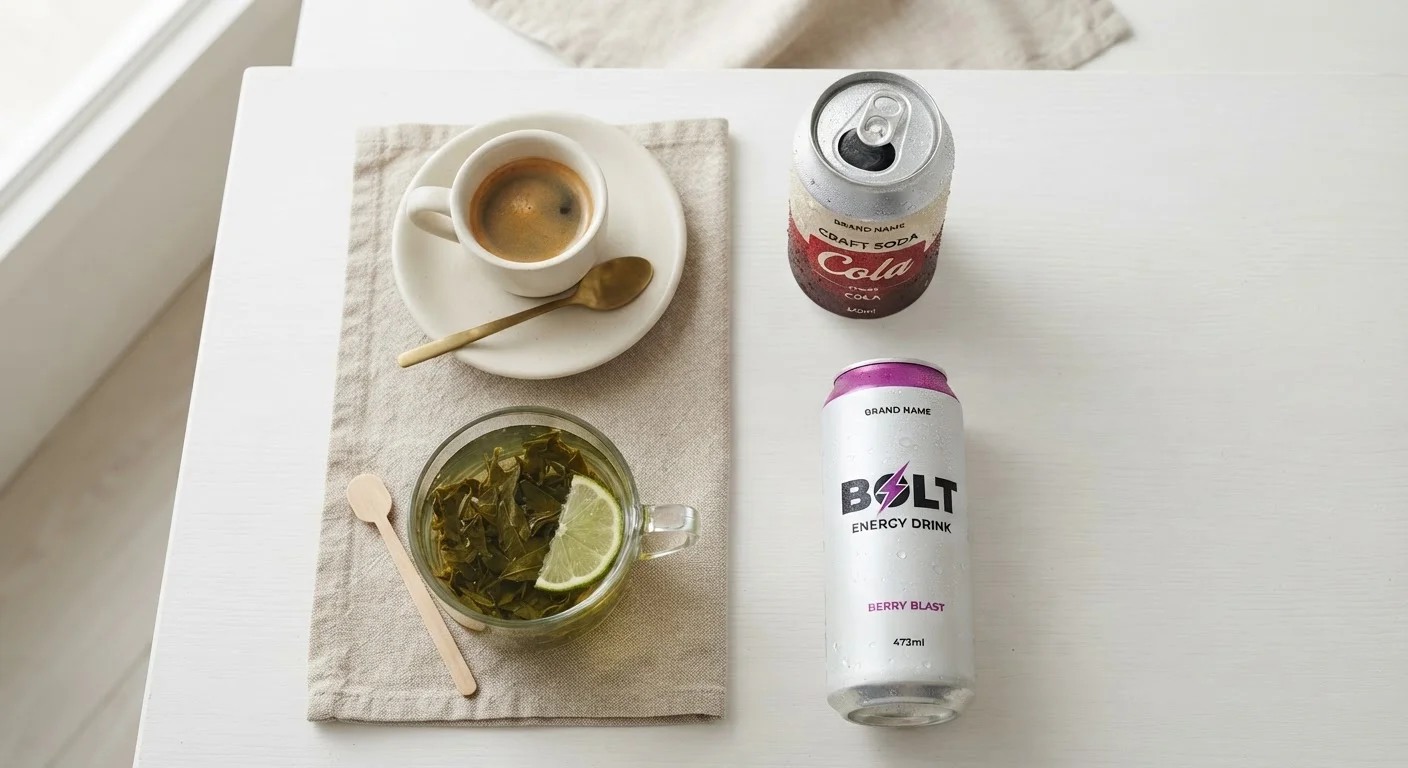
| Espresso | 1 fl oz (single shot) | 60-75 mg |
| Energy drinks | 8-16 fl oz | 80-200 mg |
| Black tea | 8 fl oz | 40-70 mg |
| Green tea | 8 fl oz | 20-45 mg |
| White tea | 8 fl oz | 15-30 mg |
| Cola soda | 12 fl oz | 30-55 mg |
| Decaf coffee | 8 fl oz | 2-15 mg |
| Herbal tea (tisane) | 8 fl oz | 0 mg |
Note that cold brew often delivers more total caffeine than espresso per serving because of its larger volume and long-steep extraction process. The Difference Between Cold Brew and Iced Coffee breaks down why these two chilled drinks are far less similar than they appear.
Energy drinks deserve special attention because their caffeine can come from multiple sources - including guarana, which contributes additional caffeine not always fully reflected on labels. Energy Drinks: What the Ingredients Actually Do explains how to read those ingredient lists more critically.
Putting Caffeine Intake in Context
Regulatory agencies such as the U.S. Food and Drug Administration (FDA) have indicated that up to 400 mg of caffeine per day is generally considered within a safe range for healthy adults - though individual sensitivity varies considerably. People who are pregnant, breastfeeding, or managing certain health conditions are typically advised to consume less; anyone in those groups should consult a qualified healthcare professional for personalized guidance.
Caffeine sensitivity is influenced by genetics, body weight, medication use, and habitual consumption. Someone who rarely drinks coffee may feel strong effects from a single cup, while a regular drinker might notice very little from the same amount. Neither experience is abnormal.
If you want to better understand the nutrition vocabulary on beverage labels - terms like antioxidants or bioavailability - A Practical Reference Guide to Common Nutritional Terms is a useful companion resource.
And if you're curious about why Americans drink what they drink, American Drinking Habits: A Brief History of What We Sip and Why provides helpful cultural context.
This article is for informational purposes only and is not medical advice. If you have questions about caffeine and your individual health, consult a qualified healthcare professional.