The Colonial Table: Cider, Beer, and the Problem of Water
Before refrigeration, water treatment, or municipal plumbing, early Americans faced a practical problem: much of the available water was contaminated. Fermented beverages - hard cider, small beer, and ale - were everyday solutions, not signs of vice. Apples thrived in the Northeast, making cider the dominant household drink through much of the 17th and 18th centuries. Beer was brewed at home by many families and consumed by adults and children alike, though the alcohol content of "small beer" was typically very low.
Tea enjoyed a brief period of cultural prestige as a British-imported habit among wealthier colonists, but that changed abruptly. After the Boston Tea Party of 1773 and the taxation disputes that preceded it, tea became politically charged. Coffee, already available through Atlantic trade routes, stepped into the gap and began its long ascent as America's default hot beverage.
The 19th Century: Soda Fountains, Temperance, and the Rise of Soft Drinks
The 1800s introduced two forces that permanently reshaped American drinking: the temperance movement and the industrial revolution. Temperance advocates pushed back hard against alcohol consumption, framing it as a public health and moral crisis. This created space - and demand - for non-alcoholic alternatives.
Into that gap came carbonated water, initially dispensed at pharmacies as a medicinal product. Druggists began adding flavored syrups, creating early versions of what we now call soda. By the late 1800s, soda fountains were social gathering points across American towns. The Prohibition era (1920-1933) accelerated this trend, as breweries pivoted to soft drinks and malt beverages to survive, and soda became thoroughly normalized as a mealtime drink.
~40 gallons
Annual per-capita cider consumption in colonial New England
Historical estimates from food historians suggest cider was consumed at rates that reflect its role as an everyday staple, not an occasional beverage.
1920-1933
Years of National Prohibition in the United States
The 18th Amendment and Volstead Act banned the manufacture and sale of alcoholic beverages, dramatically accelerating the soft drink industry's growth.
Top 3
Ranking of packaged water among U.S. beverage categories by volume
Bottled and packaged water has ranked among the highest-selling beverage categories in the U.S. for several years, according to industry tracking data.
German and Eastern European immigrants brought lager brewing traditions that transformed American beer from an artisan product into an industrial one. By the early 20th century, large-scale breweries were supplying a national market - a distribution model that soft drink companies would soon replicate and expand.
The 20th Century: Mass Market, Bottled Water, and the Coffee Revolution
Post-World War II America embraced convenience, and the beverage industry responded. Canned soda, TV dinners, and fast-food chains created a culture where sweetened carbonated drinks were standard with every meal. Per capita soda consumption grew dramatically through the 1950s through 1980s.
The 1970s and 1980s introduced a surprising newcomer: bottled water. Treated municipal water was widely available, so the appeal of bottled water was initially puzzling to many observers. It caught on anyway, driven by concerns about tap water quality, effective marketing, and a growing fitness culture that associated water consumption with health. Today bottled and packaged water is one of the largest beverage categories in the country.
Simultaneously, specialty coffee began reshaping how Americans thought about what was in their cup. Pacific Northwest roasters in the 1980s popularized the idea that coffee could be an artisan product with distinct origins, roast profiles, and preparation methods - not just a uniform commodity. That movement eventually produced the espresso-forward café culture that now spans the country. If you've ever stared down a café menu wondering what separates a cortado from a flat white, our guide on decoding a coffee shop menu breaks it all down.
Where We Are Now: Health, Transparency, and Beverage Complexity
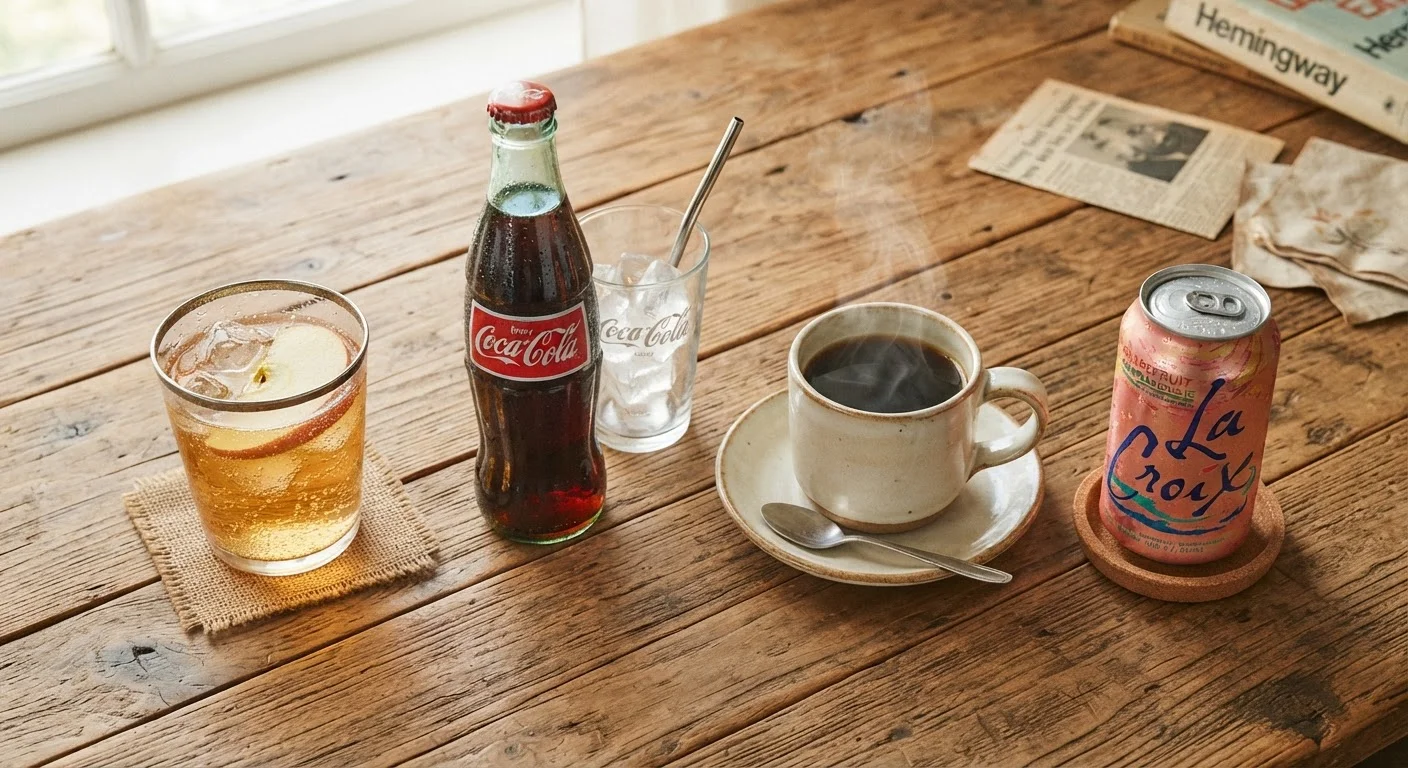
Today's American drink landscape is more complex than at any previous point in history. Soda consumption has declined from its mid-century peak as awareness of added sugar's health implications has grown. In its place, a category of "better-for-you" beverages has exploded: sparkling waters, kombucha, cold brew coffee, functional teas, electrolyte drinks, and plant-based milks now crowd retail shelves.
The modern drinker often wants to know what's in their beverage and why. Ingredient transparency, low sugar counts, and origin storytelling - where was this coffee grown, how was this tea processed - are increasingly common marketing angles that reflect genuine consumer interest. Whether those claims always hold up to scrutiny is worth examining carefully.
Understanding caffeine content alone has become its own area of consumer interest. Coffee, tea, soda, and energy drinks all deliver caffeine in different concentrations. Our caffeine reference guide gives practical ranges across common beverages so you can make informed choices.
It's also worth interrogating some of the health claims baked into popular drink culture. Does your choice of sparkling water actually matter nutritionally? Does coffee dehydrate you? For evidence-based answers, see our piece on common hydration myths.
This article is for informational purposes only and is not a substitute for professional dietary or medical advice. Consult a qualified healthcare professional for personalized guidance about your diet and health.