What Roasting Actually Does to a Coffee Bean
Raw, or green, coffee beans are dense, grassy-smelling seeds with little of the flavor complexity we associate with a morning cup. Roasting transforms them through heat-driven chemical reactions - most notably the Maillard reaction and a process called pyrolysis - that develop hundreds of aromatic compounds, darken the bean's color, and drive off moisture. The longer and hotter a bean roasts, the more its original character gives way to roast-derived flavors like caramel, chocolate, and smoke.
One key moment roasters watch for is called the first crack - an audible pop caused by steam escaping the bean. A second crack follows at higher temperatures, marking the point where cell walls begin to fracture. Where a roaster stops relative to these cracks largely determines the roast level and the resulting cup profile.
Light, Medium, and Dark Roasts: What Each One Means
Roast labels aren't perfectly standardized across the industry, so the same bag might be called "City Roast" by one roaster and "Medium" by another. Still, the three broad categories share consistent characteristics worth knowing.
Light Roast
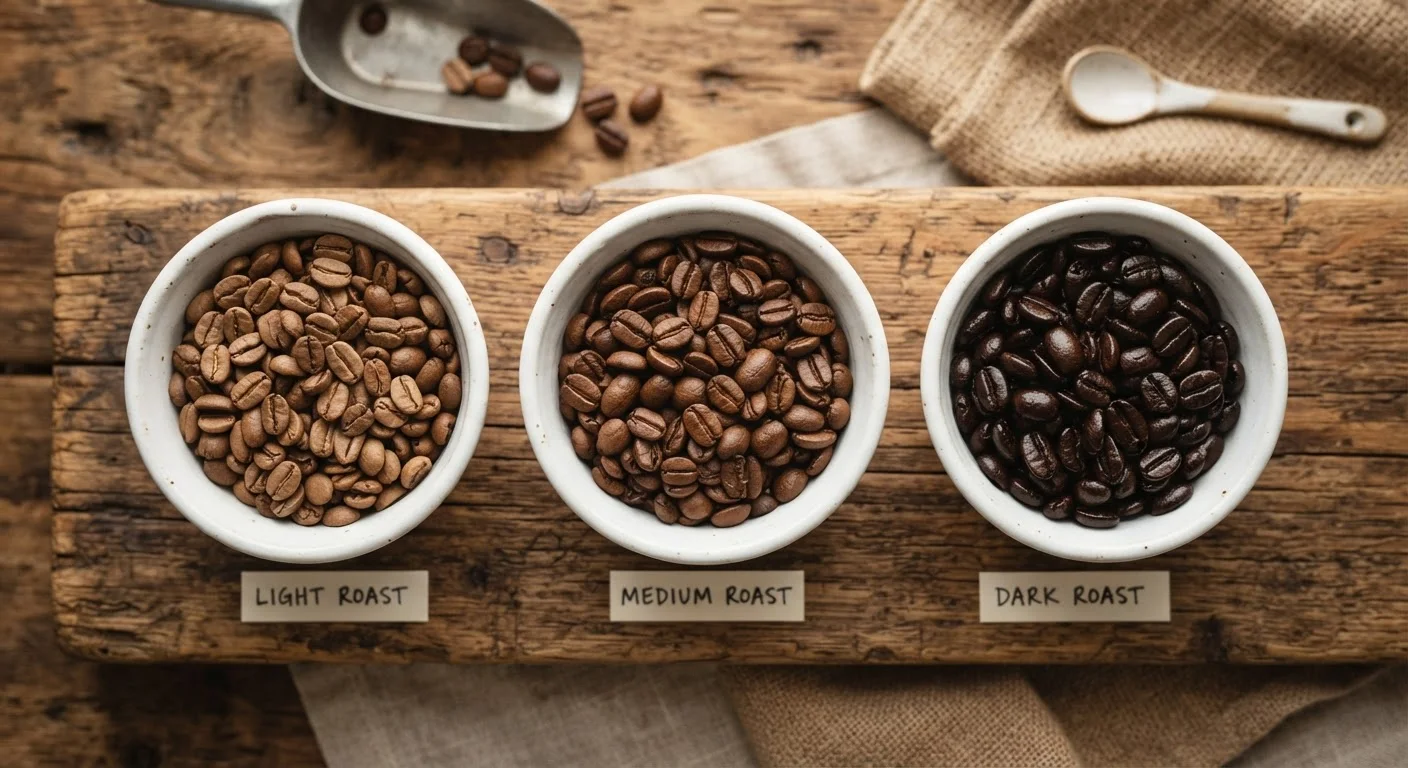
Stopped shortly after the first crack, light roasts retain the most moisture and origin character. Expect higher acidity, fruity or floral notes, and a lighter body. These beans often taste bright and complex - which is exactly why specialty roasters frequently use lighter roasts to showcase single-origin beans from places like Ethiopia or Colombia.
Medium Roast
Roasted a bit longer, medium roasts balance origin flavors with roast-developed sweetness. Acidity softens, body increases slightly, and flavors tend toward caramel, nuts, and milk chocolate. This is the most versatile roast and pairs well with a wide range of brewing methods.
Dark Roast
Taken past the second crack, dark roasts produce oily beans with bold, smoky, or bittersweet flavors. Origin character largely disappears, replaced by roast-forward notes. Body feels heavier but can also taste thinner if the bean was over-roasted. These roasts hold up well in espresso and milk-based drinks like lattes. If you enjoy specialty coffee menus, understanding how roast levels interact with common drinks can sharpen your ordering instincts.
The Caffeine Myth - and What's Actually True
A widely repeated claim holds that dark roast coffee is stronger or higher in caffeine than light roast. The reality is more nuanced. Roasting actually slightly reduces caffeine - a molecule that is relatively heat-stable but does degrade marginally at higher temperatures. So by weight, light roast beans contain a touch more caffeine than dark roast beans.
However, dark roast beans are less dense (moisture and CO₂ have escaped), so they take up more volume per gram. If you measure coffee by the scoop rather than by weight, you may end up using more dark-roast beans, roughly equalizing caffeine. For a deeper look at how roast compares to other drink choices, see our practical caffeine reference across beverages.
Bottom line: roast level has a modest effect on caffeine, but brewing method, coffee-to-water ratio, and bean variety matter far more.
Matching Roast Level to Brewing Method
Different brew methods extract compounds at different rates, which means roast level and brewing method interact meaningfully.
- Pour-over and drip: Light and medium roasts shine here. Slower, more controlled extraction highlights delicate acidity and nuanced aromas.
- French press: Medium to dark roasts complement the immersion method's full-bodied, less-filtered result. Heavy oils integrate well with no paper filter in the way.
- Espresso: Traditionally paired with medium-dark or dark roasts, though many specialty shops now pull light-roast espresso successfully - it requires precise grind and pressure calibration.
- Cold brew: Medium roasts are a reliable choice; their sweetness reads well without heat. Cold brew and iced coffee differ in how extraction works, which affects which roast tastes best in each.
Experimenting with different roast-method combinations is genuinely one of the most practical ways to find what you enjoy - there's no single correct answer.
This article is for general informational purposes only. Individual health conditions, including caffeine sensitivities, vary. Consult a qualified healthcare professional for personal guidance.