Caffeine: The Core Driver
Caffeine is the ingredient doing the heavy lifting in virtually every energy drink. It works by blocking adenosine receptors in the brain - adenosine is the chemical that signals fatigue - which temporarily promotes alertness and reduces the perception of tiredness. The effect typically begins within 15 to 45 minutes of consumption and can last several hours depending on individual metabolism.
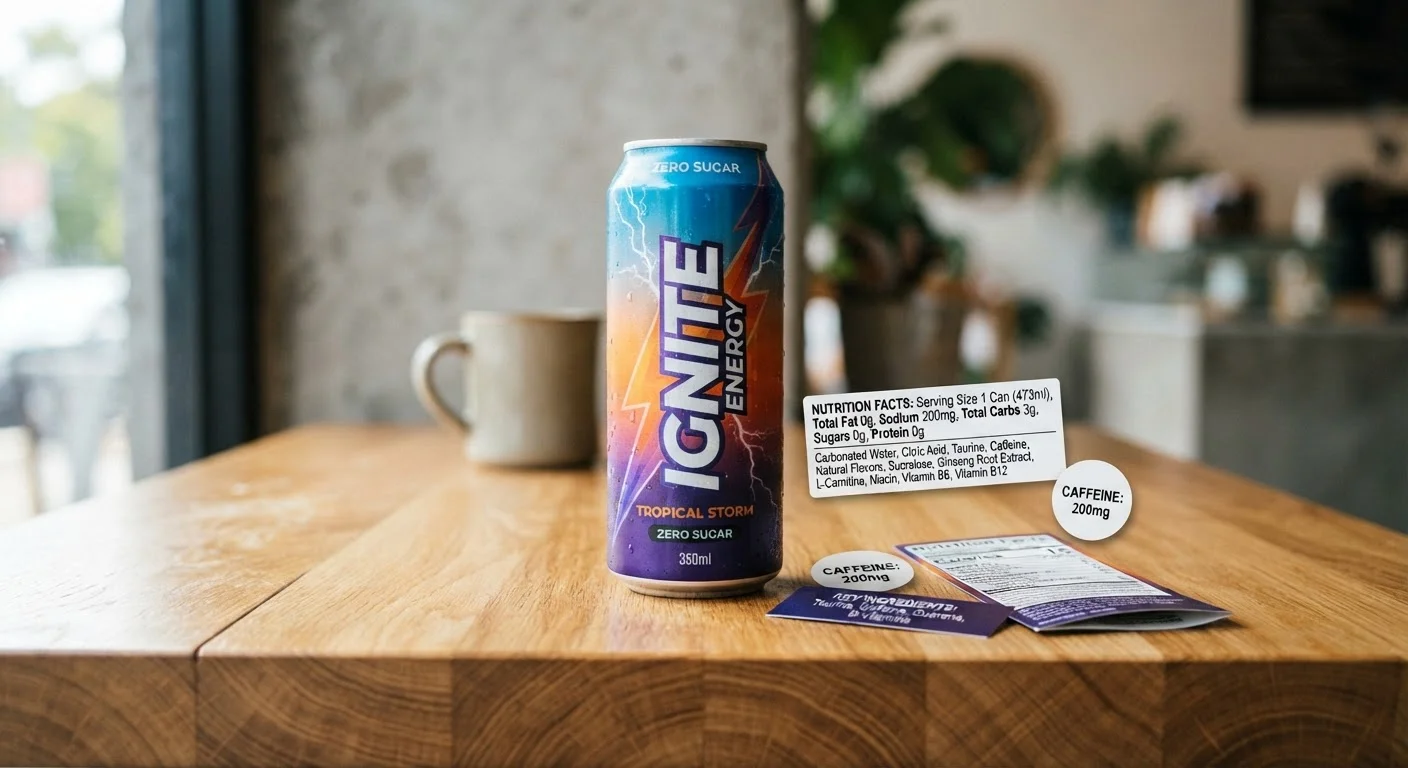
Most energy drinks contain between 80 mg and 300 mg of caffeine per can. The FDA considers 400 mg per day a generally safe upper limit for healthy adults, but sensitivity varies considerably from person to person. For a broader comparison of caffeine across beverages, see our caffeine reference guide.
Check for Hidden Caffeine Sources
When reading an energy drink label, look beyond 'caffeine' to ingredients like guarana, green tea extract, and yerba mate - all of which contribute additional caffeine. Adding these up gives you a truer picture of your total intake. Our caffeine reference guide can help you compare across drinks.
Guarana, Taurine, and the Ingredients That Sound Mysterious
Guarana is a seed from a South American plant that contains natural caffeine - typically at a higher concentration than coffee beans by weight. When guarana extract appears on an energy drink label, it adds to the total caffeine load. Some products list caffeine from guarana separately or not at all, which is why the actual caffeine content can be higher than the labeled figure suggests.
Taurine is one of the most misunderstood ingredients on any energy drink label. It's an amino acid found naturally in meat, fish, and dairy. It is not a stimulant. Taurine plays roles in regulating electrolyte balance and supporting cardiovascular and muscle function, but it does not independently produce an energy boost or meaningfully amplify caffeine. The idea that taurine is derived from bull bile is a persistent myth - commercial taurine is synthesized in a laboratory.
B Vitamins and Sugar: What They Contribute
Almost every energy drink includes a lineup of B vitamins - commonly B3 (niacin), B6, and B12 - often at doses far exceeding the daily recommended intake. B vitamins are essential for converting the food you eat into cellular energy, which is why their presence sounds compelling on a label. But here's the key distinction: having enough B vitamins matters; having more than enough does not produce additional energy. If your diet already covers your B vitamin needs, the surplus is largely excreted.
Sugar is another significant ingredient in many non-sugar-free varieties. A standard 16 oz energy drink can contain 50-60 grams of added sugar, contributing a rapid rise in blood glucose that may produce a short-lived sense of energy followed by a dip. Understanding how to read added sugars on a label is covered in our guide to reading a Nutrition Facts label.
80-300 mg
Caffeine range per energy drink can
According to FDA and published beverage analyses, caffeine content varies widely across energy drink brands and sizes.
400 mg
Daily caffeine limit for healthy adults (FDA)
The FDA considers 400 mg of caffeine per day generally safe for healthy adults, though individual tolerance varies.
~50-60 g
Added sugar in a typical 16 oz energy drink
Many standard (non-sugar-free) energy drinks contain added sugar levels comparable to or exceeding a can of soda.
Putting It All Together: What to Consider Before You Drink
Energy drinks aren't inherently dangerous for healthy adults who consume them occasionally and within reasonable caffeine limits. But the combination of high caffeine, added sugars, and other bioactive compounds means they deserve more scrutiny than a bottle of juice or sparkling water.
A few practical considerations: account for total caffeine from all sources in your day, not just the can in your hand. Note the serving size - some cans technically contain two servings. And if you're pregnant, under 18, or managing a heart condition, high blood pressure, or caffeine sensitivity, speak with a healthcare professional before consuming energy drinks regularly. This article is general nutrition education and is not a substitute for personalized medical advice.
This article is for general informational purposes only and is not medical advice. Consult a qualified healthcare professional for personalized guidance, especially if you have an existing health condition or take medications.