Why Nutrition Labels Trip People Up
Nutrition Facts labels pack a lot of information into a small space, and most of us were never formally taught how to read one. The result: shoppers fixate on calories, skim the rest, or walk away more confused than when they started. If that sounds familiar, you're not alone - and it's a fixable problem.
The label exists to give you a standardized, comparable snapshot of what's in a food. The FDA regulates its format, so once you understand the structure, you can decode almost any packaged food in seconds. This guide walks you through each section in the order it appears, so you know exactly what you're looking at and what to do with the information. For a deeper plain-language glossary of the terms you'll encounter, see our practical reference guide to common nutritional terms.
A Quick Label-Reading Habit That Helps
Train yourself to read labels in the same order every time: serving size → calories → nutrients to limit → nutrients to seek → added sugars. This consistent scan takes under 30 seconds once practiced. Pairing this habit with an understanding of common nutrition misinformation patterns makes it easier to cut through misleading front-of-package claims.
How to Read Each Section of a Nutrition Facts Label
Follow these steps in order - each section builds on the one before it.
Check the serving size first - everything else depends on it
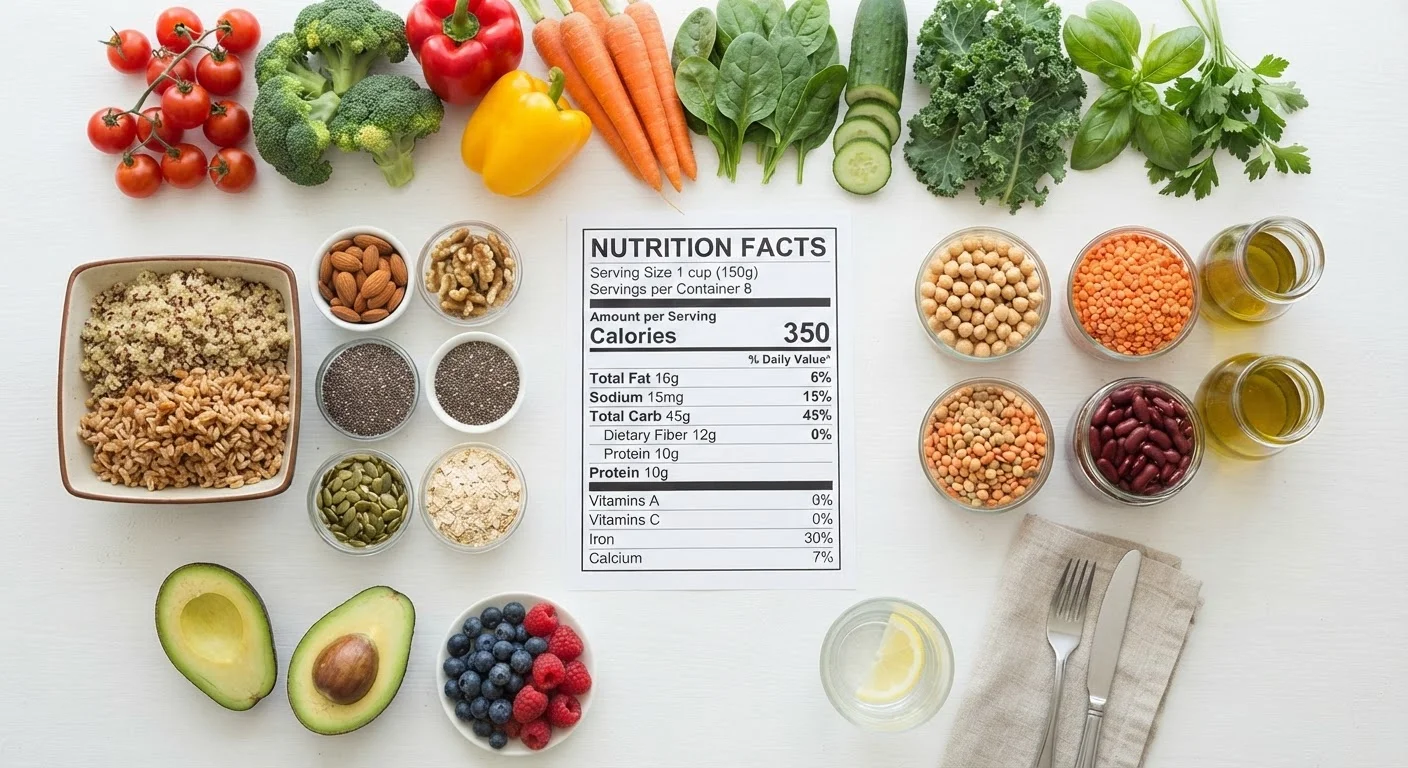
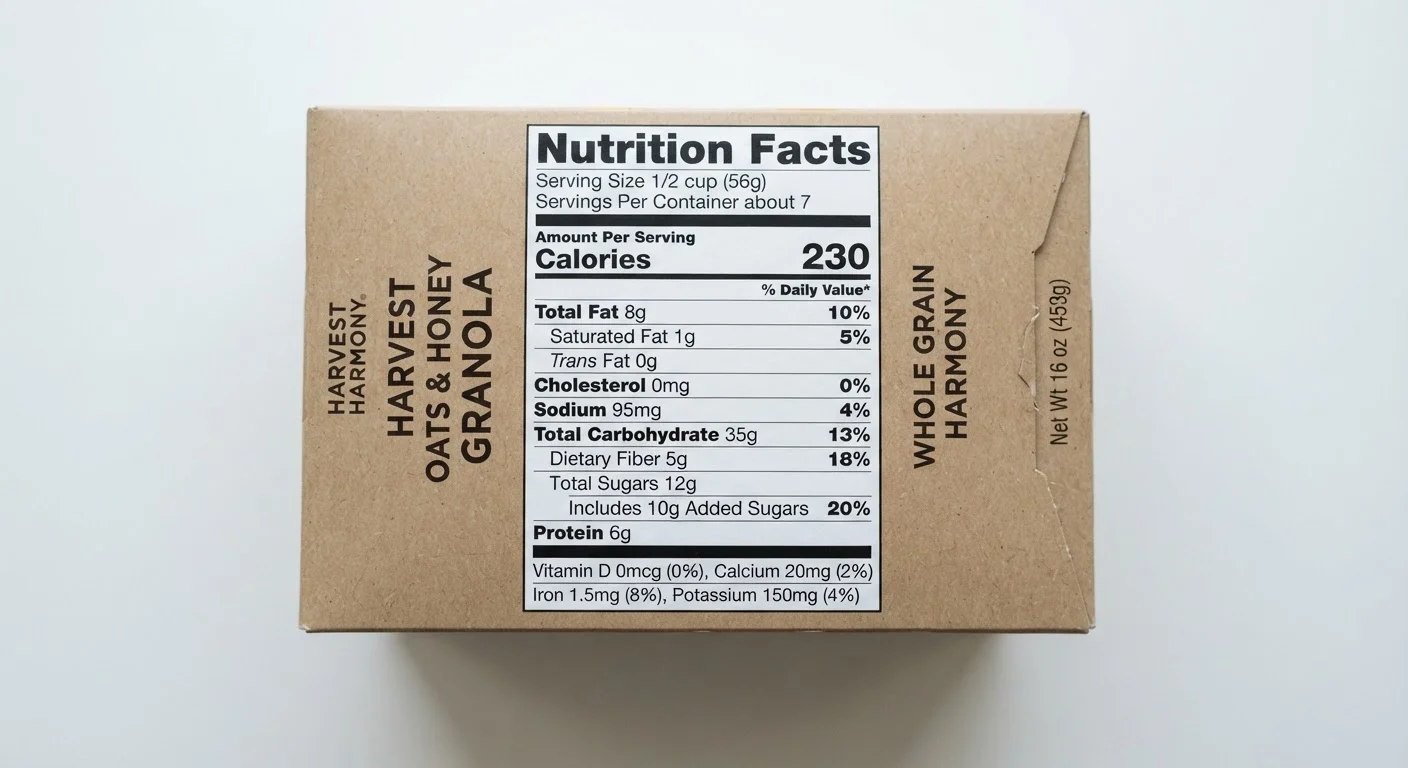
The serving size is always listed at the very top, in bold, directly under the "Nutrition Facts" header. It tells you the portion the following numbers describe - not necessarily a recommended amount, just a standardized reference unit used for consistent comparison across products.
Also note the number of servings per container. If a bag lists a serving as 1 oz but contains 3.5 servings, eating the whole bag means multiplying every value by 3.5. This single step prevents more label-reading errors than any other.
Read the calorie count in context
Calories measure the total energy a food provides per serving. The number appears large and bold on updated labels for easy scanning. While calories matter, they don't tell you about nutrient quality, satiety, or how the food fits into your overall diet - see our piece on why calorie counting tells only part of the story for more on this.
Identify nutrients to limit
The upper section of the nutrient list covers what most Americans consume in excess: saturated fat, trans fat, cholesterol, and sodium. Trans fat has no %DV because there is no established safe intake level - any amount listed is worth noting.
Keeping these lower is a general public health goal for most adults, though individual needs vary. Your healthcare provider can clarify what targets make sense for your situation.
Look for nutrients to seek out
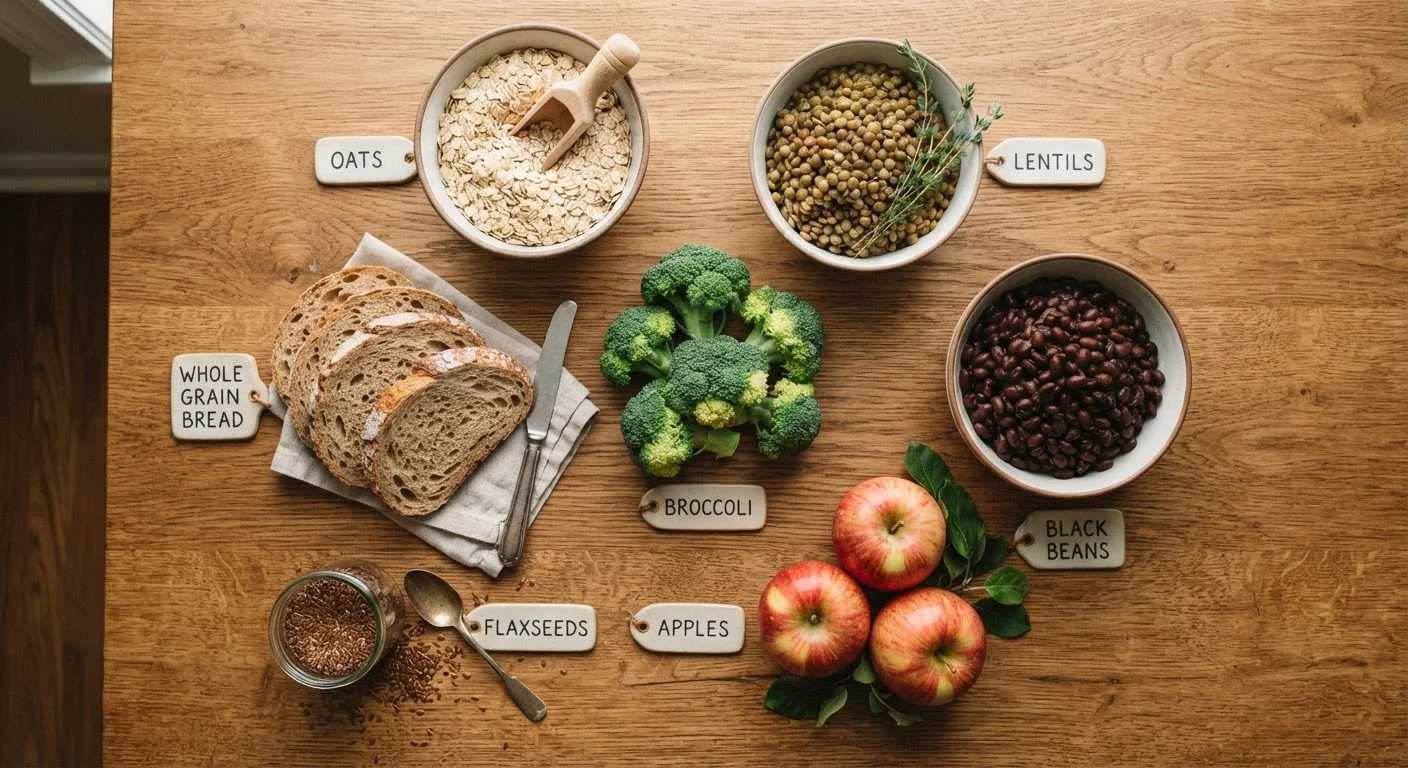
Below the nutrients-to-limit section, labels list nutrients many Americans fall short on: dietary fiber, vitamin D, calcium, iron, and potassium. Higher %DV values here are generally favorable.
Dietary fiber, in particular, affects satiety and digestive health. Foods with 10% DV or more of fiber per serving are considered good sources.
Parse total sugars vs. added sugars
Total sugars includes both naturally occurring sugars (from fruit, dairy) and any sugars added during processing. Added sugars is listed as a sub-item with its own %DV. The FDA set the %DV for added sugars at 10% of a 2,000-calorie diet, or about 50 grams per day, based on dietary guidelines.
A food with 12g total sugars but 0g added sugars (think plain yogurt) is nutritionally very different from one with 12g total and 10g added. For a thorough look at why this distinction matters, see sugar in the diet: natural vs. added.
Understand what %DV is - and isn't
The Percent Daily Value (%DV) column answers one question: how much does one serving contribute toward a general daily intake goal? These reference values are set by the FDA based on a 2,000-calorie diet and established dietary guidelines. They're useful for comparing products or gauging whether a food is high or low in a particular nutrient.
They are not personalized targets. Children, older adults, pregnant individuals, and people managing chronic conditions may have significantly different needs. Always consult a registered dietitian or physician for guidance tailored to your health profile.
Common Mistakes and How to Avoid Them
Even once you know the structure, a few persistent habits can lead you astray. The most common: treating the entire package as one serving when the label lists two or three. A standard bottle of juice or a small bag of chips often contains multiple servings, meaning every number on the label must be multiplied to reflect what you actually consumed. Our article on how your mental picture of portion size can be off explains why this disconnect is so common.
A second frequent mistake is treating %DV as a percentage of your daily needs. The values are calculated for a 2,000-calorie reference diet - your actual needs may differ based on age, activity level, and health status. Use %DV as a directional signal, not a personal prescription. For personalized guidance, consult a registered dietitian or your healthcare provider.
Finally, don't ignore the ingredient list below the label. Ingredients are listed in descending order by weight, so the first few items define what the food mostly is. If added sugars appear in the first three ingredients under several different names - corn syrup, dextrose, cane juice - that context matters alongside the grams shown on the label. Our article on natural sugars vs. added sugars explains why that distinction is meaningful.
This article provides general nutrition education and is not a substitute for personalized medical or dietary advice. Consult a qualified healthcare professional for guidance specific to your health needs.