The Physics Behind the Pause
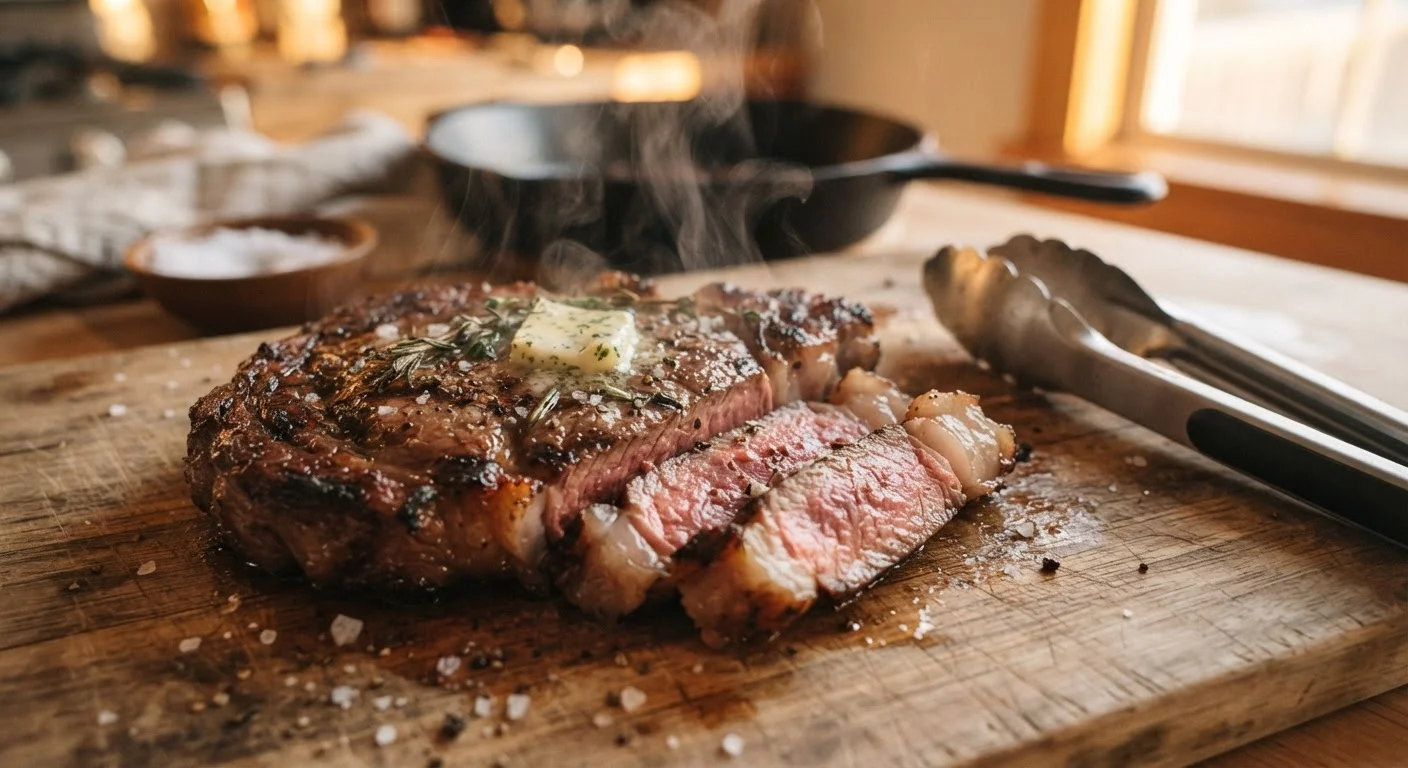
When meat hits a hot pan or oven, two things happen simultaneously. First, the exterior proteins contract rapidly from the intense heat, tightening the muscle fibers near the surface. Second, moisture inside the meat gets pushed toward the center as the outer layers firm up. Think of it like squeezing a wet sponge - pressure drives liquid inward.
If you slice the meat the moment it leaves the heat, all that displaced juice rushes out immediately. You've seen it happen: a pool of liquid collects on the cutting board while the meat on your fork is disappointingly dry. That's not a seasoning problem or a cooking time problem. It's a timing problem.
Resting gives those contracted muscle fibers time to relax. As the temperature gradient between the hot exterior and cooler interior evens out, the fibers loosen, and the juice redistributes more evenly throughout the cut. Understanding this is the same kind of kitchen intuition that comes with learning how pan temperature affects your food - once you see the mechanism, the rule makes sense on its own.
What Carry-Over Cooking Actually Means
There's a second reason to rest meat that often gets overlooked: carry-over cooking. The interior of a thick piece of meat doesn't stop cooking the instant you remove it from the heat. The outer layers are hotter than the center, and that stored heat keeps moving inward for several minutes.
For a large beef roast, this effect can raise the core temperature by 5-10°F after removal from the oven. That's significant - enough to take a roast from medium-rare to medium if you're not accounting for it. Experienced cooks pull their meat before it hits the target temperature, knowing carry-over will finish the job during the rest.
Pull Meat Early to Hit Your Target
Always account for carry-over when deciding when to pull meat off the heat. For thick cuts, remove the meat 5-10°F before your desired final temperature and let resting do the rest. This prevents overcooking while still reaching a safe internal temperature.
The size of the cut determines how dramatic the carry-over effect is. A thick ribeye or pork loin will carry over more than a thin chicken breast, simply because there's more stored heat in the mass of the meat.
Practical Guidelines: How Long to Rest
There's no single universal resting time, but a reliable framework is to rest meat for roughly half the time it took to cook - with size as the dominant variable.
- Thin steaks and chicken breasts: 3-5 minutes
- Thick steaks (1 inch or more): 5-10 minutes
- Pork tenderloin or whole chicken: 10-15 minutes
- Large roasts and whole turkeys: 15-30 minutes
For most cuts, a loose foil tent preserves warmth without trapping steam that would soften a seared crust. This applies equally to dry-heat cooking methods like roasting and grilling, where a good exterior crust is part of the payoff.
One common misconception: that resting is only for red meat. Pork, poultry, lamb, and even thick fish fillets all benefit from a brief rest. The underlying physics - heat redistribution and fiber relaxation - are the same across proteins. For food safety guidance specific to those proteins, it's worth cross-referencing reliable sources, since some food safety beliefs about meat are more myth than fact.