The Science of Linking Storms to a Warming Planet
For much of the 20th century, scientists were cautious about connecting any single extreme weather event to climate change. The climate system is variable by nature, and rare events happen even without human influence. But attribution science - which applies statistical and physical modeling to quantify climate change's contribution to specific events - has matured significantly. Researchers can now say with confidence that certain categories of extreme weather are becoming more frequent, more intense, or both, as a direct result of rising greenhouse gas concentrations.
That doesn't mean every flood, heat wave, or wildfire is a climate story. It means some types of events now carry a measurable, well-documented climate signal. Understanding which ones - and how strong that signal is - helps readers think clearly about both risk and policy. The distinction between weather and climate is foundational to making sense of what follows.
What Attribution Science Actually Tells Us
Attribution science doesn't claim climate change "caused" a specific storm or flood. Instead, it asks: how did climate change alter the probability or intensity of this type of event? The answers are expressed in statistical terms - an event made twice as likely, or 15% more intense. This probabilistic framing is important for accurately interpreting headlines about extreme weather and climate. For a deeper look at common misunderstandings in this space, see persistent climate myths examined against the evidence.
Six Event Types Where the Climate Signal Is Clearest
Heat Waves
Of all extreme weather types, heat waves carry the clearest climate fingerprint. Attribution studies - a branch of science that estimates climate change's role in specific events - consistently find that dangerous heat waves are now significantly more likely and more intense because of rising global temperatures. A landmark analysis of the 2003 European heat wave, which killed tens of thousands, found human-caused warming had at least doubled its probability. Since then, scientists have reached similar conclusions about major heat events across North America, South Asia, and Australia. As baseline temperatures climb, what once was a rare extreme becomes a recurring norm.
Heat waves carry the clearest climate fingerprint of any extreme weather type studied so far.
Heavy Precipitation and Inland Flooding
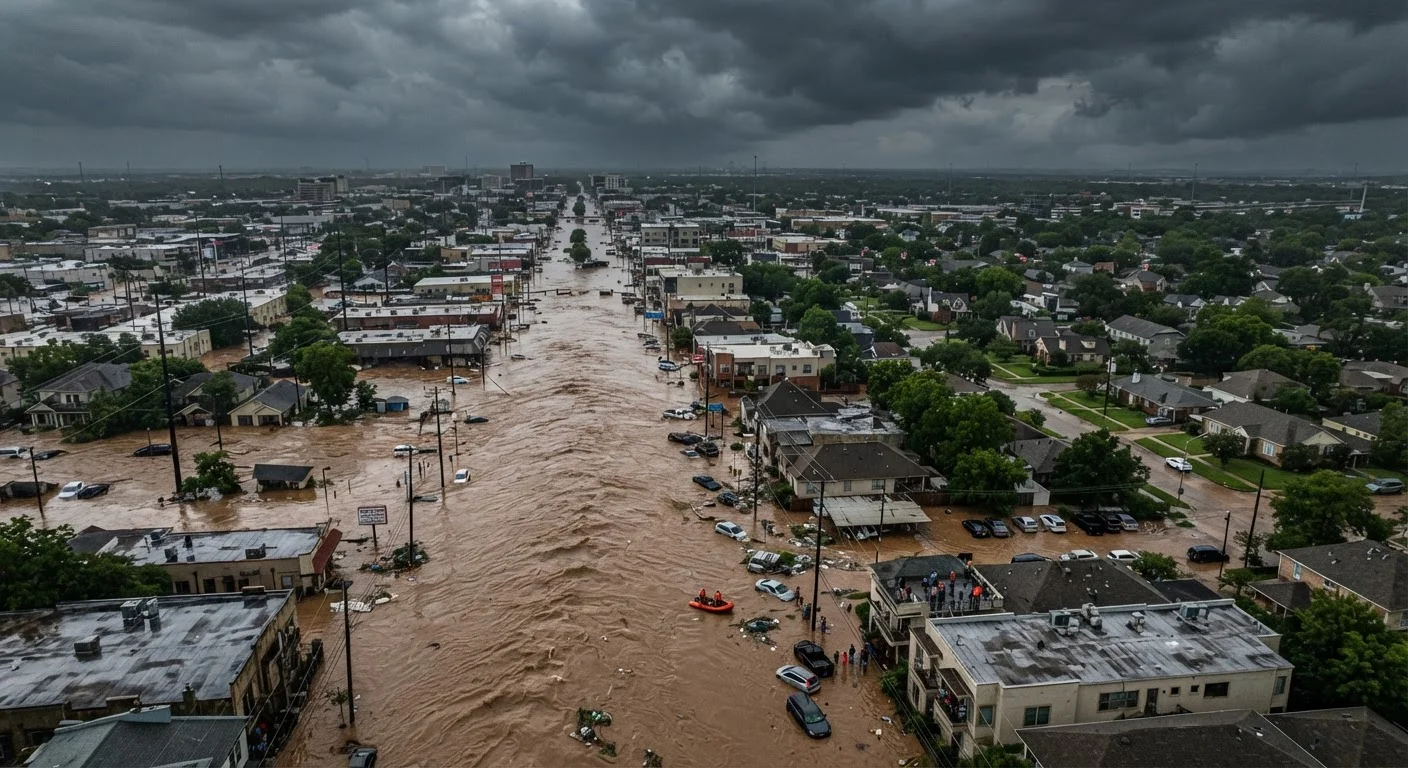
A warmer atmosphere holds more moisture - roughly 7% more water vapor for every 1°C of warming, following a well-established physical relationship called the Clausius-Clapeyron equation. That extra moisture intensifies rainfall when storms do occur. Research consistently links climate change to heavier downpours across the mid-latitudes, and attribution studies of events like Hurricane Harvey's record rainfall found that climate change made such extreme precipitation several times more likely. This doesn't mean all flooding is climate-driven - land use, drainage infrastructure, and storm tracks all matter - but the rainfall totals at the extreme end are trending upward in measurable ways.
A warmer atmosphere holds roughly 7% more water vapor per degree of warming, fueling heavier downpours.
Coastal Flooding and Storm Surge
Sea level rise, driven primarily by ocean thermal expansion and melting ice sheets, is amplifying the damage from coastal storms. Even moderate storms can now flood areas that historically experienced high water only during major hurricanes. The attribution here is direct: higher baseline sea levels mean surge events that previously reached a given flood threshold now occur far more frequently. NOAA tracking data show that so-called "nuisance flooding" - minor but disruptive high-tide flooding - has increased dramatically along U.S. coasts over recent decades, a trend scientists attribute primarily to sea level rise rather than changes in storm frequency.
Rising seas mean storm surge events now flood communities that once only saw flooding during major hurricanes.
Wildfire Weather Conditions
Climate change doesn't ignite wildfires, but it reliably creates the conditions that make them more destructive. Hotter temperatures, lower humidity, and prolonged drought dry out vegetation, turning landscapes into fuel. Attribution research links climate warming to a significant expansion of the fire weather season across the western United States, southern Europe, and parts of Australia. A key metric - vapor pressure deficit, which measures how thirsty the atmosphere is - has increased markedly in fire-prone regions, and scientists attribute a meaningful share of that increase to human-caused warming. Larger, faster-moving fires in recent decades reflect this shift in background conditions.
Climate change expands fire weather seasons and drives up atmospheric dryness, amplifying wildfire risk significantly.
Intense Tropical Cyclones
The relationship between climate change and hurricanes is more nuanced than other event types. Total hurricane frequency may not be increasing - and some models project fewer but stronger storms overall. What attribution science does support more confidently is that the strongest hurricanes are becoming more intense, and that storm rainfall totals are rising in line with the physics of a wetter atmosphere. Rapid intensification events - where a storm's winds increase sharply in a short window - appear to be becoming more common in warmer ocean waters. For readers wanting to understand the distinction between weather and longer-term trends, this breakdown of weather versus climate provides useful grounding.
The strongest hurricanes are intensifying faster and producing more rainfall, even if total storm counts aren't rising.
Drought and Soil Moisture Deficits
Drought is among the most complex extremes to attribute because it depends on both precipitation patterns and evaporation rates. Climate change affects both. Higher temperatures accelerate soil moisture loss even when rainfall totals don't change dramatically, a dynamic sometimes called "hot droughts." Research on recent droughts in the American West and Mediterranean region finds that warming temperatures significantly worsened their severity beyond what precipitation deficits alone would explain. This kind of compound effect - heat and dryness reinforcing each other - is an emerging focus in attribution science and connects directly to tipping points researchers are tracking in Earth's climate system.
Rising temperatures intensify droughts by accelerating soil moisture loss, even when rainfall totals hold steady.
What This Means for Understanding Risk
Attribution science doesn't replace local preparedness or infrastructure investment - but it does change how communities should think about risk baselines. A flood that was considered a once-in-50-years event may now occur every 20 years. A heat wave that was survivable a generation ago may now be lethal under similar conditions. These shifts in probability are real, measurable, and consequential for public health, insurance, and urban planning.
For those interested in where these trends may lead over longer timescales, researchers have identified specific thresholds in the Earth system - from Arctic permafrost to Atlantic ocean circulation - that could lock in accelerating change. Exploring tipping points in Earth's climate system offers a sobering but evidence-grounded look at what's at stake beyond individual extreme events.