What Actually Sets These Milks Apart
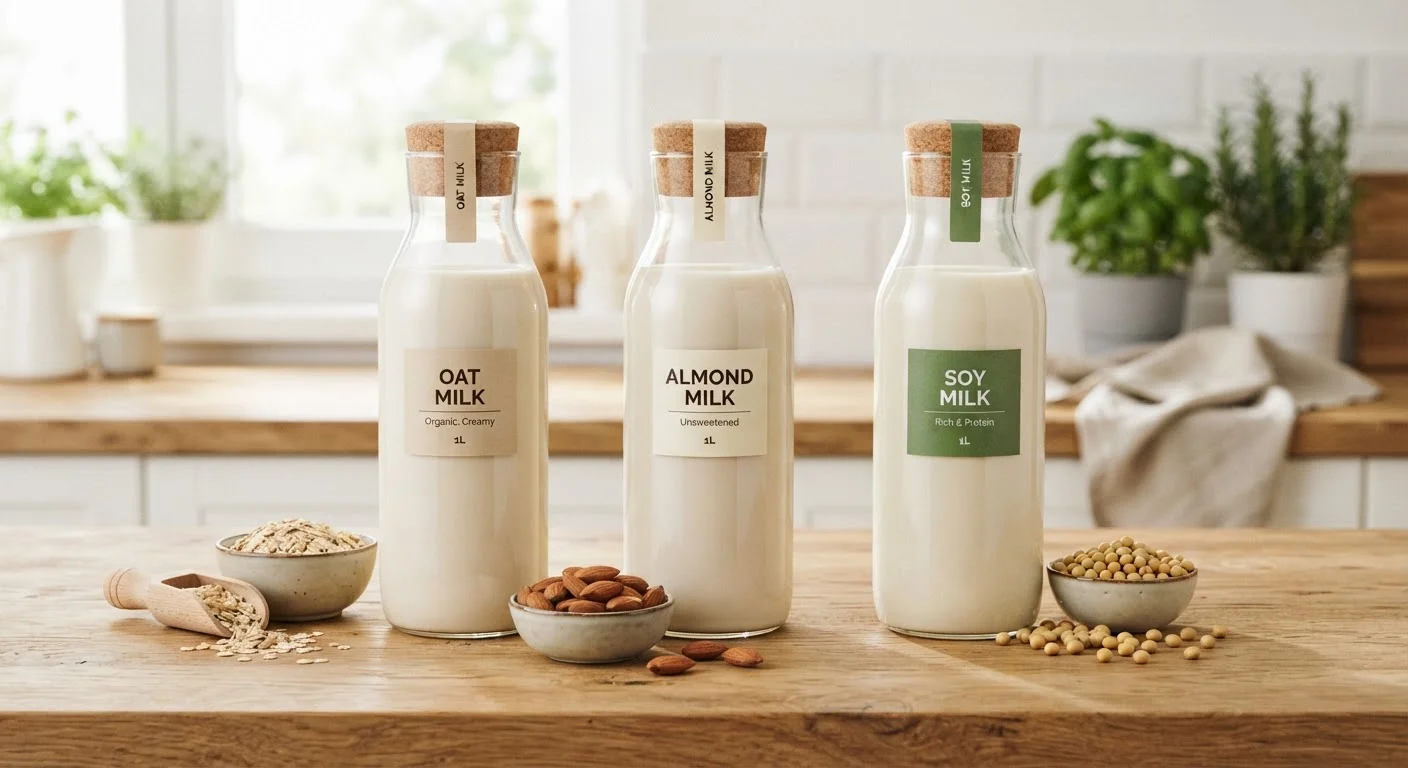
Walk down any grocery aisle and you'll see oat, almond, and soy milk jostling for shelf space. All three are dairy-free, but their similarities largely end there. They differ in how they're made, what nutrients they deliver, how they behave in cooking, and what producing them means for the planet.
Understanding these differences isn't about finding a "winner" - it's about matching the right option to your kitchen habits, dietary needs, and personal priorities. This breakdown covers nutrition, taste, culinary use, and environmental impact so you can make a genuinely informed choice.
Nutrition: Protein, Carbs, and Calories
Nutritional profiles vary considerably across these three milks, and the gaps matter depending on your diet. Here's how they stack up per unsweetened, unflavored cup (roughly 240 ml):
| Oat Milk | Almond Milk | Soy Milk | |
|---|---|---|---|
| Calories (per cup, unsweetened) | ~120 kcal | ~35-50 kcal | ~80-100 kcal |
| Protein (per cup) | 2-4g | ~1g | 7-9g |
| Carbohydrates (per cup) | 15-17g | 1-2g | 4-5g |
| Fat (per cup) | 2-3g | 2-3g | 4-5g |
| Texture | Creamy, froths well | Thin, mild | Medium body, slightly beany |
| Water footprint | Low | High | Moderate |
| Best culinary use | Coffee, baking, sauces | Smoothies, cold cereal | Baking, savory cooking |
Soy milk stands out as the nutritional peer of dairy milk, delivering around 7-9 grams of protein per cup - comparable to cow's milk. It contains all nine essential amino acids, making it a complete protein. For a deeper look at how plant proteins measure up, see our comparison of plant-based and animal proteins.
Oat milk offers moderate carbohydrates (around 15-17g per cup) because oats naturally contain starch. This gives it a subtly sweet flavor, but it's worth noting for anyone monitoring blood sugar. It has about 2-4g of protein per cup.
Almond milk is the lightest option at 30-50 calories per cup unsweetened, with roughly 1g of protein. Most of the natural almond solids are filtered out during production, leaving a thin, mild liquid. It's not a meaningful protein source.
Fortification matters across all three. Many brands add calcium, vitamin D, and vitamin B12, but levels vary - reading the nutrition label is essential, not optional.
Taste and Texture in Real Cooking
Flavor and mouthfeel significantly affect which milk you'll actually enjoy day to day.
- Oat milk has a creamy, slightly sweet body that froths well - a key reason baristas and home coffee enthusiasts gravitate toward it. It works in oatmeal, smoothies, baked goods, and savory sauces without clashing with other flavors.
- Almond milk is thin and mildly nutty. It works well in smoothies and cold cereal but can curdle in hot coffee and tends to produce a lighter, sometimes denser texture in baked goods. It's not ideal for frothing.
- Soy milk has a neutral, slightly beany flavor that some people notice but most find unobtrusive once heated or blended. It froths reasonably well and behaves most like dairy in cooking and baking - useful if you're substituting in recipes.
Check the Label Every Time
Nutritional content in plant-based milks can vary substantially between brands - especially for calcium, vitamin D, and added sugars. Always compare nutrition facts panels rather than relying on general category estimates. Unsweetened varieties are almost always a smarter baseline for cooking and everyday use.
When using any plant-based milk in cooking, always check for added sugar in flavored varieties. Unsweetened versions give you better control over a recipe's overall flavor and sweetness.
Environmental Footprint
Sustainability is a genuine factor for many shoppers, and the differences between these milks are meaningful.
Almond milk has drawn scrutiny for water use. Almonds are grown predominantly in California, a drought-prone region, and research published in environmental journals has found that producing a single liter of almond milk requires significantly more water than oat or soy milk production.
Oat milk generally carries a lower environmental impact - oats require less water and produce lower greenhouse gas emissions per liter compared to almond milk, according to lifecycle analyses conducted by researchers at institutions such as Oxford University.
Soy milk sits in the middle. Soy farming has been linked to deforestation in some global regions, though much of the soy used in U.S. plant-based milk is domestically grown. Its greenhouse gas footprint is lower than dairy milk but higher than oat milk in most analyses.
None of these milks are a perfect environmental solution, but oat milk tends to perform best across water use, land use, and emissions combined. This connects to broader questions about how processing affects food's nutritional and environmental profile.
This article is for general informational purposes only and is not medical or dietary advice. Consult a qualified healthcare professional or registered dietitian for personalized nutrition guidance.