
Why Bother Tracking at All?
Most readers underestimate how many books they actually finish - or forget titles they genuinely loved just two years ago. Tracking isn't about turning reading into a performance metric; it's a simple memory aid that reveals patterns you'd otherwise miss. Once you have even a basic log, you start to notice things: that you tend to abandon nonfiction in winter, or that you've read twelve thrillers and no short story collections in the past year.
The data itself doesn't tell you what to do, but it creates a foundation for more intentional choices. As part of building a sustainable reading life, tracking sits somewhere between habit and reflection - it keeps you honest without requiring much effort once the system is in place.
| Most common tracking formats | Notebooks, spreadsheets, dedicated apps, e-reader built-ins |
| What logs typically capture | Title, author, genre, start/finish dates, ratings or notes |
| What logs rarely capture | Comprehension, emotional impact, or how much was retained |
| Privacy consideration | App-based trackers collect your reading data; local logs (notebook, spreadsheet) do not |
| Effort level by method | Apps: lowest entry effort; spreadsheets: medium; notebooks: most flexible but fully manual |
The Main Methods and What Each Captures
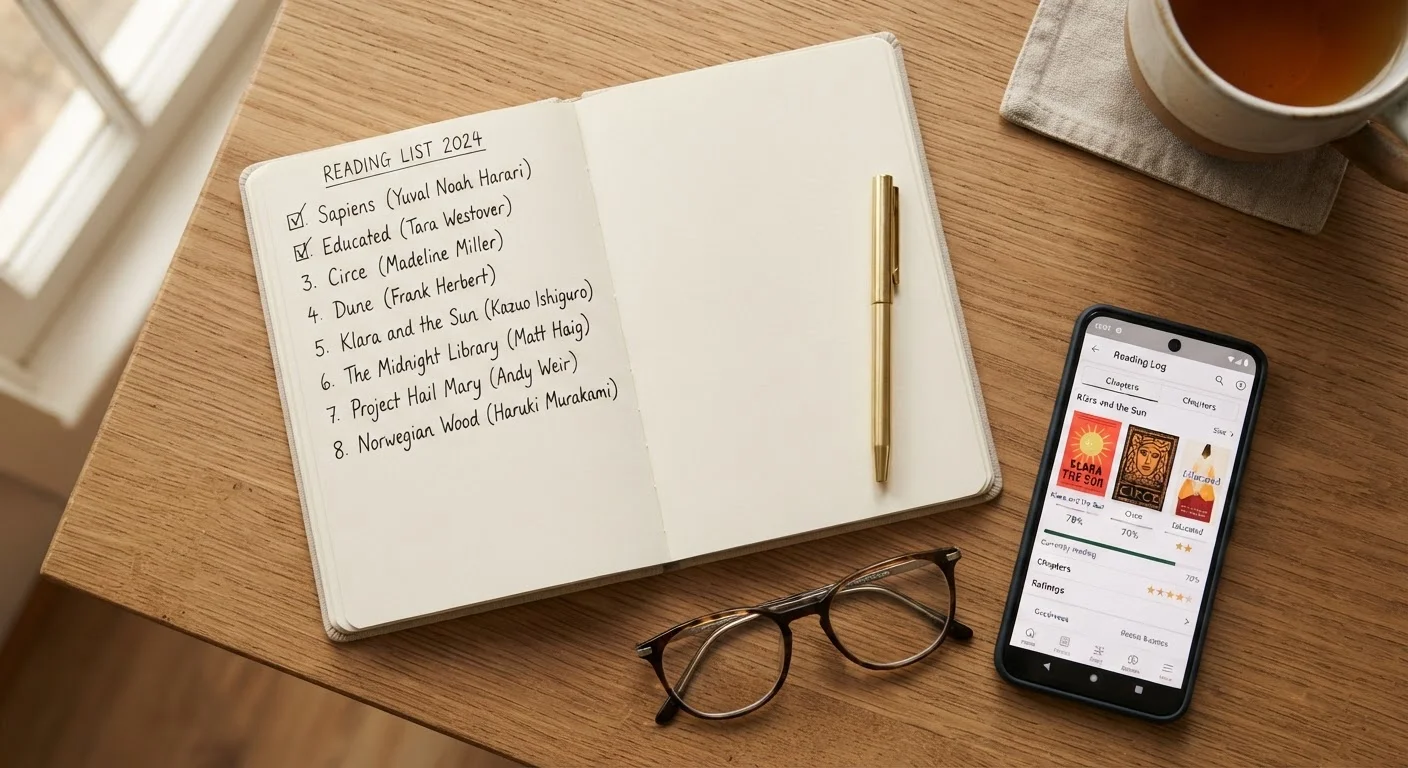
Paper notebooks and journals remain the most tactile option. You write what you read, when you finished it, and whatever notes feel relevant. The upside is flexibility - there's no template forcing you to rate books on a five-star scale or fill in predetermined fields. The downside is searchability: finding that title you read three summers ago means flipping through pages. For readers who also reflect on themes or emotional responses, a notebook can blur naturally into a reading journal. See also what a reading journal is and whether you actually need one.
Spreadsheets sit in the middle ground. A simple grid with columns for title, author, genre, date started, date finished, and a notes field captures structured data you can sort and filter. Want to know how many pages you averaged per month last year? A spreadsheet can surface that in seconds. The trade-off is setup: you need to decide which columns matter before you start, and blank fields have a way of accumulating.
Dedicated apps - such as Goodreads, StoryGraph, or Literal - automate much of the data entry by pulling book metadata from existing databases. They track reading dates, generate annual summaries, and surface genre breakdowns without extra effort. Many readers find the social and discovery features genuinely useful; others find them distracting. Worth noting: these platforms collect your reading data for their own purposes, so if privacy matters to you, a local spreadsheet or notebook is the more controlled option.
E-reader built-in tracking logs time spent reading and page progress automatically, but it's format-specific - it captures only what you read on that device. If you're curious about how different reading formats compare, keep in mind that audiobooks and physical books rarely appear in the same tracking system unless you enter them manually.
What the Data Is Actually Good For
A reading log answers questions you didn't know you had. How many books did you actually finish versus abandon? Are you gravitating toward the same three authors on autopilot? Do you read more during certain months? These aren't trivial questions - they're the raw material for adjusting how you read, not just how much.
Tracking also functions as a gentle commitment device. Readers who keep logs tend to finish more books, partly because the record creates a low-stakes sense of accountability. This connects to the broader question of whether to read one book at a time or juggle several at once - your log can show you which approach actually leads to more completions for you personally.
There are limits worth acknowledging. A reading log captures quantity and metadata easily, but it doesn't capture what you absorbed or how a book changed your thinking. That's where something closer to a reflective journal or emotional processing practice adds value - an entirely different purpose than logging. If you're drawn to that kind of depth, understanding how emotional journaling differs from routine logging is worth exploring separately.
The best system is simply the one you'll actually maintain. If a spreadsheet feels like homework, try a notebook. If a notebook feels like friction, try an app. And if you're just beginning to build a reading habit, don't wait until you have a perfect system - start logging with whatever's at hand and refine as you go.