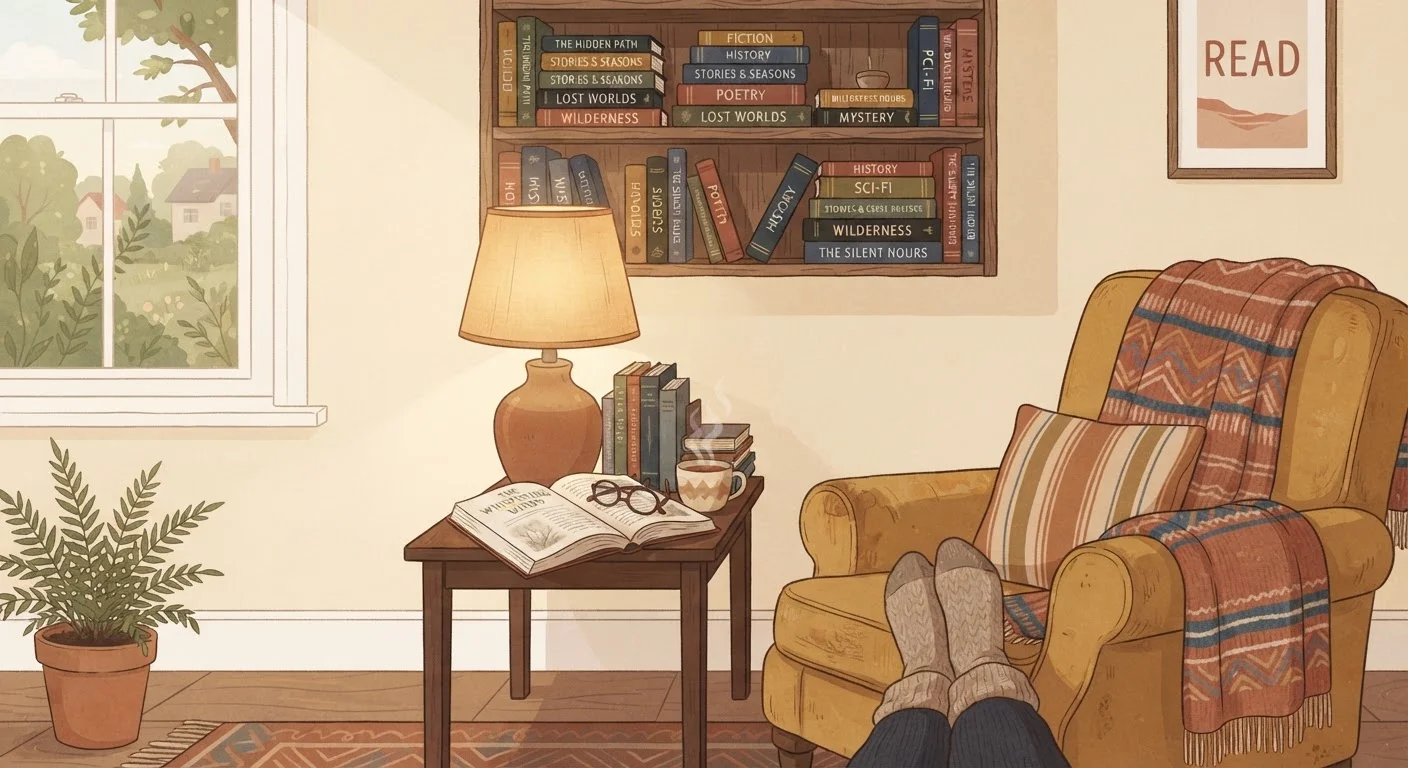

What a Sustainable Reading Life Actually Means
The word sustainable gets applied to everything from farming to fashion, but it fits reading surprisingly well. A sustainable reading life isn't about finishing fifty books a year or powering through dense classics - it's about building a habit that holds up across busy seasons, emotional slumps, and life's general unpredictability.
Think of it less like a sprint and more like a slow, reliable river. Readers who stay with books for decades tend to share a few traits: they read what genuinely excites them, they don't berate themselves for slow stretches, and they've figured out small rituals that make picking up a book feel like a reward rather than an obligation. Whether you're starting your reading life from scratch or rebuilding a habit that fell away, the principles are largely the same.
Choosing Books You'll Actually Finish
Abandoning a book you don't enjoy isn't failure - it's editorial judgment. The trouble is that many readers feel obligated to power through books they chose for the wrong reasons: a bestseller list, social pressure, or a vague sense that they should read it. That path leads to reading slumps faster than almost anything else.
A more useful approach is to identify what you actually find absorbing. That might mean mysteries that keep you up past midnight, narrative nonfiction about subjects you'd Google anyway, or literary fiction with prose so good you read sentences twice. Genre discovery is worth taking seriously - the world of literature and culture is far broader than any school curriculum suggested.
Keep a short "to-read" list of no more than ten books at any given time. A shorter list forces you to prioritize what you're genuinely excited about rather than hoarding titles you feel you ought to read.
Long, aspirational lists often function as pressure rather than inspiration, contributing to the paralysis and guilt that stall reading habits.
Leave your current book somewhere visible - on your pillow, next to the coffee maker, on your desk. Physical proximity is one of the most reliable cues for triggering a habit without relying on willpower.
Behavioral research consistently shows that environmental design, not motivation, drives habit consistency. Visibility lowers the activation energy needed to start.
If you're unsure where to start, the "fifty-page rule" - giving a book fifty pages before deciding whether to continue - offers a fair trial without the guilt of quitting too early or slogging through three hundred pages of joyless obligation.
Finding Time in a Packed Schedule
The most common reason people cite for not reading is time - and it's a legitimate constraint. But "time to read" doesn't have to mean an uninterrupted hour in an armchair. Research on habit formation consistently suggests that small, repeated behaviors compound more reliably than infrequent marathon sessions.
Ten minutes before bed, a chapter during a lunch break, a few pages while waiting for coffee to brew - these micro-sessions add up. A modest ten minutes of daily reading translates to roughly fifteen to twenty average-length books per year for most adults, depending on reading speed. For a deeper look at fitting books into a genuinely full day, see practical strategies for reading when your schedule is packed.
Picking a Format That Works for Your Life
Print books, e-readers, and audiobooks each have real advantages - and the right choice depends entirely on your circumstances, not on which format feels most "legitimate." Audiobooks, for instance, let commuters and people with visual impairments access literature they might otherwise miss entirely. E-readers allow someone traveling light to carry a hundred titles. Print remains preferred by many readers for retention and the tactile pleasure of the physical object.
There's also no rule that says you must pick one. Many consistent readers use different formats for different contexts - audiobooks for exercise or driving, e-readers for travel, print at home. See how each format compares before committing to one approach. The goal is removing friction, not honoring a hierarchy.
Tracking Progress Without Burning Out
Reading trackers - apps like Goodreads, simple paper journals, or even a sticky note on the fridge - can be motivating tools or quiet sources of anxiety, depending on how you use them. Annual reading challenges, for example, encourage some readers to pick up books they'd have ignored; for others, the pressure to hit a number pushes them toward shorter books or away from rereading favorites.
The healthiest approach is to use tracking selectively. Record what you've read if the log brings you satisfaction. Set a goal only if it feels exciting rather than obligatory. And recognize that the quality of your reading experience - how often you felt absorbed, moved, or genuinely curious - matters more than any numerical tally.
One underappreciated question is whether to read books one at a time or several simultaneously. Both work; understand the real trade-offs of reading one book versus several at once before assuming one method suits everyone.
Keeping the Habit Alive Long-Term
Even committed readers go through dry spells. Life disrupts routines, a bad book sours enthusiasm, or reading begins to feel like another task on an already overwhelming list. Recognizing burnout early - and responding with flexibility rather than guilt - is what separates readers who drift away permanently from those who return.
A few reliable recovery strategies: switch genres entirely, return to a beloved childhood book, try a format you haven't used recently, or simply give yourself explicit permission to take a break. Reading is one of the more health-supportive habits a person can cultivate - it's associated in research with stress reduction, empathy, and cognitive engagement across the lifespan. But it only delivers those benefits when it's something you genuinely want to do.
The sustainable reading life, in the end, is the one you're still living ten years from now - not the one that looked the most impressive this January.