
Why So Many People Feel Like "Non-Readers"
If you've ever said "I'm just not a reader," you're in enormous company. Many adults arrive at that conclusion after years of reading feeling like a school assignment - dense texts assigned without context, measured by comprehension quizzes, timed and graded. That experience leaves a mark.
But there's a meaningful difference between not enjoying the books you were handed and not being capable of enjoying reading at all. Most self-described non-readers have simply never had the chance to find books that match their actual curiosity. The reading life that works for you may look nothing like the one celebrated in English class.
Reading habit
A consistent, repeated behavior of reading that becomes automatic over time - built through small, regular practice rather than willpower or large blocks of time.
Genre
A category of books that share similar themes, styles, or formats - such as mystery, fantasy, memoir, or science fiction - helping readers find books that match their tastes.
Narrative nonfiction
True stories written with the pacing and storytelling techniques of fiction - real events and real people, told in an engaging, story-driven way rather than as dry facts.
Reading ritual
A small, repeated action paired with reading - like making tea or sitting in a specific chair - that signals to your brain it's time to shift into a reading mindset.
DNF (Did Not Finish)
A common reader shorthand for abandoning a book before its end, treated by many experienced readers as a healthy and normal part of finding books worth reading.
Choosing Your First (or Next) Book
The single biggest lever in building a reading life is book selection. Choose a book that feels like homework and you'll treat it like homework. Choose one that pulls you forward and the habit practically builds itself.
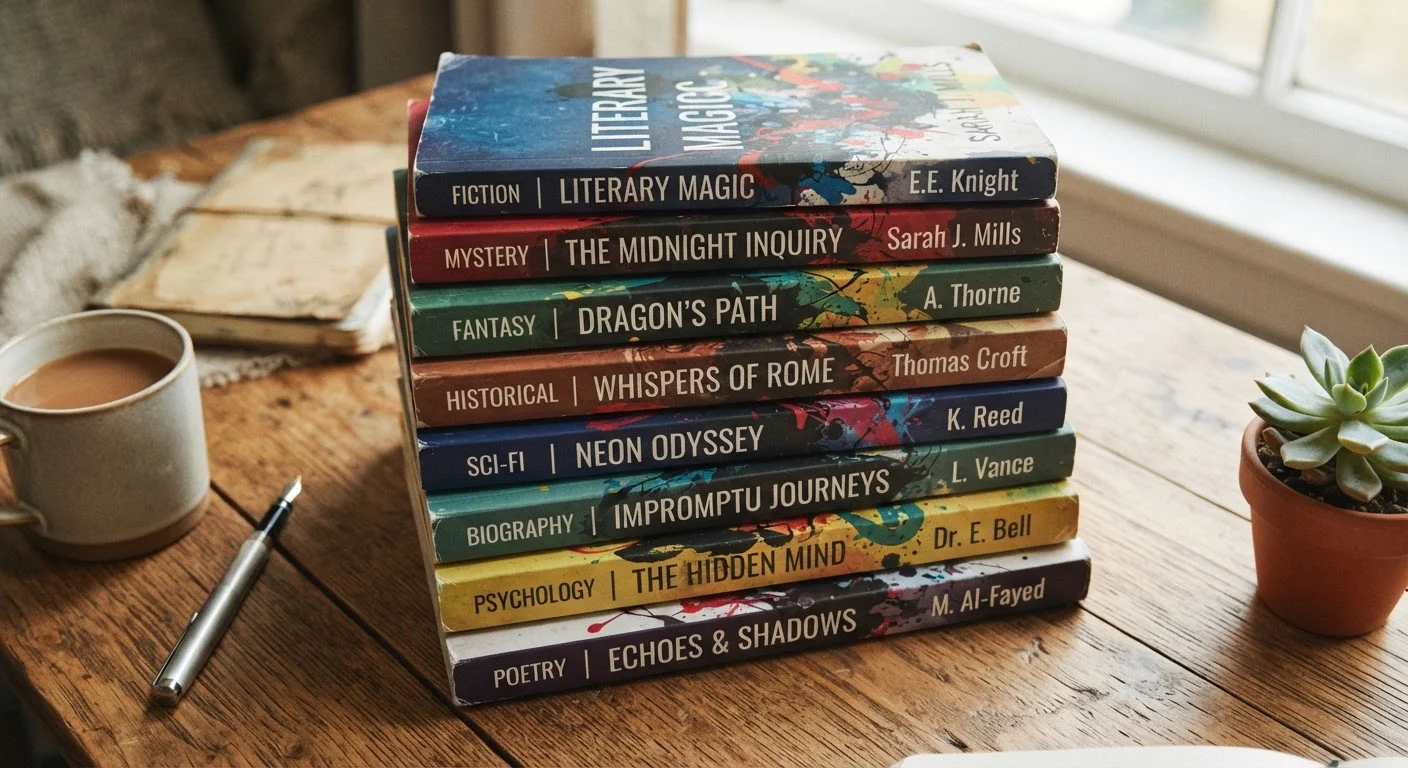
Start by looking sideways at your existing interests. Do you follow true crime podcasts? Explore narrative nonfiction about real cases. Love fantasy television? The genre has novels written at every pace and complexity level. Enjoy self-improvement content? There are highly readable books on psychology, habits, and human behavior that feel more like conversation than lecture.
If you're paralyzed by too many options, our guide to choosing your next book quickly offers concrete criteria that cut through the noise. And if you want to understand your preferences at a deeper level, finding your reading identity explores how mood, pacing preference, and subject passion point you toward books you'll actually finish.
Setting Expectations That Actually Work
One of the fastest ways to derail a new reading habit is setting goals that sound inspiring but collapse under the weight of ordinary life. Pledging to read a book a week feels motivating on January 1st and demoralizing by January 14th.
A more durable approach: think in minutes rather than pages or books. Even ten minutes of reading a day is a real reading practice. It's roughly 8-12 pages, depending on the book - enough to stay inside a story, enough to feel like forward motion. Over a year, that modest daily commitment translates to several books.
It also helps to understand why ambitious reading goals tend to fall apart. The patterns are well-documented: unrealistic targets, skipped days that spiral into abandoned habits, and books chosen for prestige rather than genuine interest. Our article on why reading habits fall apart examines what the research says - and what actually sustains a reading routine over time.
Start Smaller Than Feels Worthwhile
If ten minutes feels too easy, that's actually the point. Habits form through repetition, not duration. Starting with a target so achievable you can't miss it removes the friction that kills most new reading practices before they take root. You can always read longer - but you need to show up first.
Making Reading Feel Like a Reward, Not a Chore
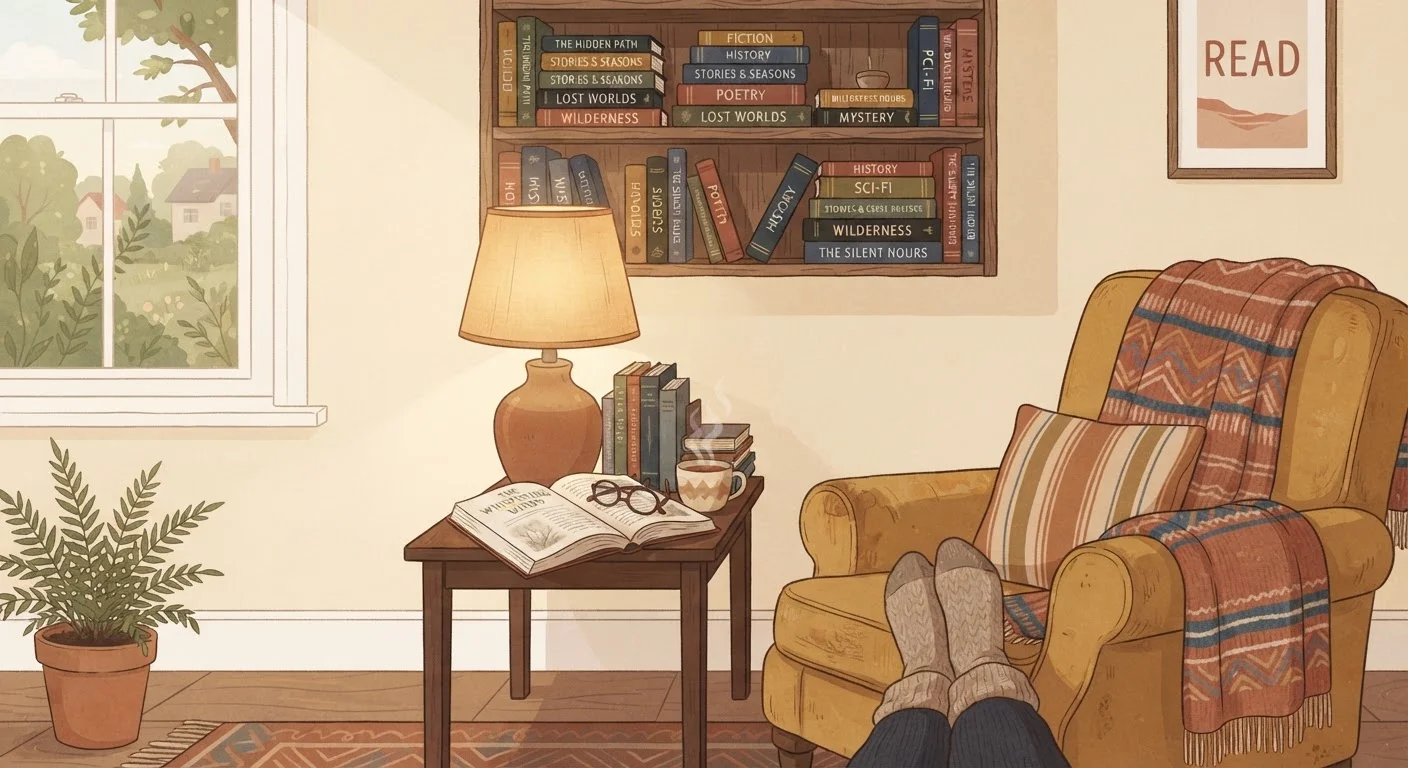
The environment where you read sends powerful signals to your brain about what reading is. A harsh overhead light, a noisy room, and a phone buzzing on the table all frame reading as effortful. Soft light, a comfortable seat, and a silenced phone frame it as something worth settling into.
Small rituals help too. Brewing a specific tea before you read, or keeping your book on your pillow as a visual cue, pairs reading with existing comfort anchors. These aren't gimmicks - they're how habits get encoded. The science behind reading routines explains exactly how cue-response loops shape the way reading behaviors form and stick.
Some readers also find that keeping a simple log - even just a list of titles and a few words about each - adds a satisfying sense of progress. If that appeals to you, what a reading journal is and whether you need one breaks down how they work and who genuinely benefits from them.
When You Get Stuck - and How to Keep Going
Every reader hits a slow book eventually. The pacing drags, the characters don't click, or life interrupts and you lose the thread entirely. Knowing in advance that this will happen - and having a plan - makes all the difference.
First: give yourself permission to stop reading a book that isn't working. This isn't failure. It's editorial judgment. Protecting your momentum matters more than finishing any single title. Second: when you return to reading after a break, don't restart from where you left off if you've lost context. Skim back a chapter, remind yourself who's who, and re-enter the story gently.
If you find yourself unsure whether to read one book at a time or keep several going, that's a real strategic question worth thinking through. Our piece on reading one book at a time versus several at once walks through the trade-offs honestly. There's no universally right answer - only what fits your attention and lifestyle.
The reading life you're building doesn't need to look like anyone else's. It just needs to be sustainable enough to last past the first enthusiastic week - and enjoyable enough that you actually want to come back.