
How the Brain Turns a Choice Into a Default
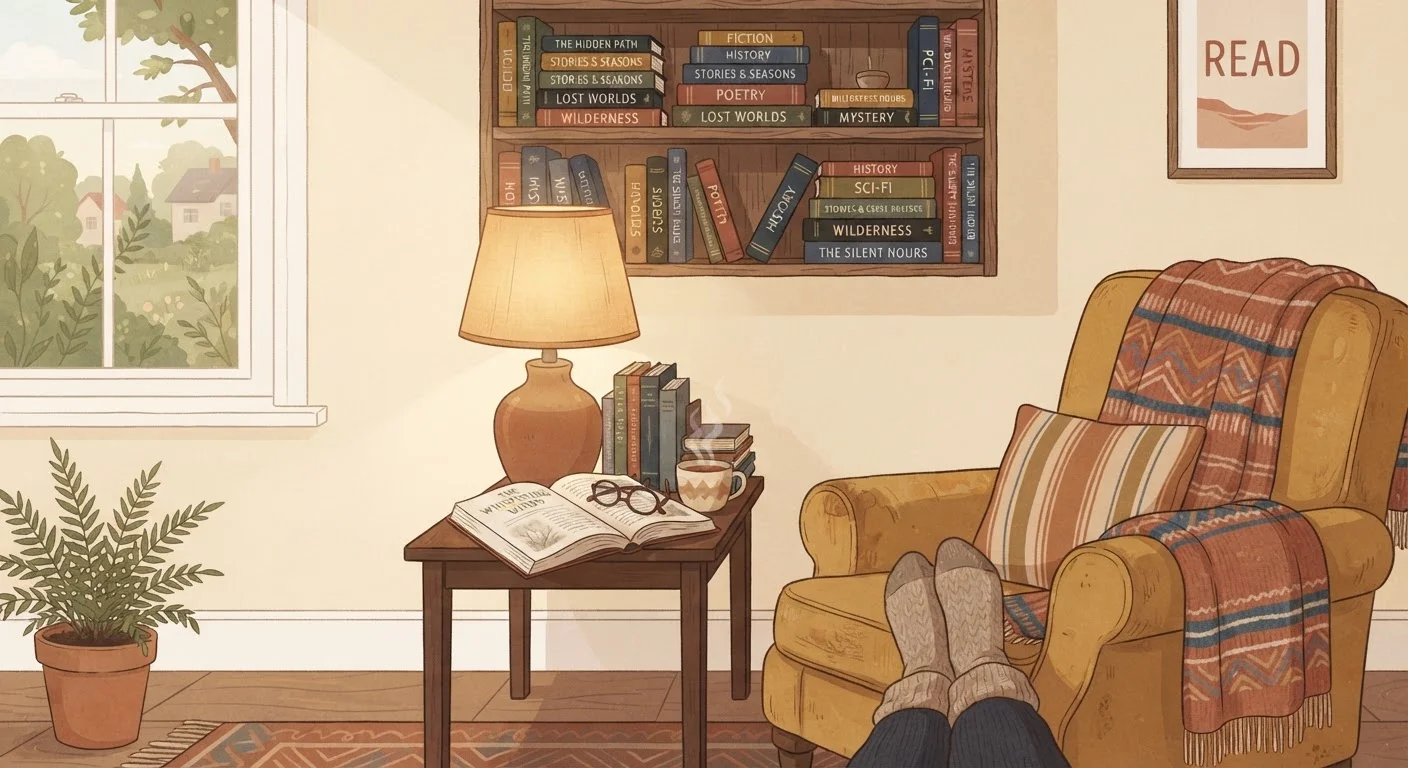
Every time you sit down with a book in the same chair, at the same time, something quiet happens in your brain. The prefrontal cortex - the part responsible for deliberate decision-making - does a little less work. The basal ganglia, a deeper structure associated with learned patterns, does a little more. Over weeks and months of repetition, reading in that context stops feeling like a choice and starts feeling like something you just do.
This is the core insight from habit research: behaviors become automatic not through discipline, but through repetition in stable contexts. The brain is fundamentally an efficiency machine. When it detects that a particular cue reliably precedes a particular behavior that reliably produces a reward, it begins to encode that sequence as a chunk - a stored routine that can run with minimal conscious oversight.
For readers, this is both freeing and instructive. It means the goal isn't to summon motivation every evening. It's to build the right conditions so the brain eventually handles the heavy lifting on its own. To understand how, it helps to understand the loop itself. The neurological loop behind all habits follows the same basic architecture regardless of the behavior involved.
The Cue-Routine-Reward Loop in Practice
Behavioral researchers describe habits in terms of a three-part loop: a cue that triggers the behavior, the routine itself, and a reward that signals the brain to remember the sequence. For reading, this might look like: the smell of morning coffee (cue) → thirty minutes of reading (routine) → a satisfying sense of calm or curiosity fulfilled (reward).
What makes this structure powerful - and sometimes frustrating - is that the cue does most of the work. Once a cue is strongly associated with reading, simply encountering it generates an anticipatory pull toward the behavior. Miss the cue, or encounter it in a different context, and the whole chain can break down. This is why vacations and schedule disruptions derail reading routines so reliably: the environmental cues that normally trigger the behavior are simply absent.
Anchor Your Reading to an Existing Habit
Instead of scheduling reading as a standalone task, try attaching it to something you already do automatically - morning coffee, lunch, or the ten minutes before sleep. This technique, sometimes called habit stacking, borrows the cue-strength of an existing routine and transfers it to reading. Start with just a few pages to keep the friction low.
Researchers sometimes call this habit stacking - the practice of attaching a new behavior to an existing, well-established one. For readers, anchoring a reading session to something already automatic (morning coffee, the evening commute, lights-out wind-down) dramatically reduces the friction of starting. The existing habit becomes the cue.
For a closer look at what causes these loops to unravel over time, understanding why reading habits fall apart is a natural next step.
Identity and the Reader You Think You Are
There's a dimension to reading habit formation that goes beyond cues and rewards: identity. Research in behavioral psychology - including work by James Clear, whose writing has popularized identity-based habit formation - suggests that the most durable habits are anchored not just in routines, but in self-concept. People who describe themselves as readers, rather than people who are trying to read more, show greater behavioral consistency over time.
66 days
Median time for a habit to become automatic
According to a study published in the European Journal of Social Psychology by Phillippa Lally and colleagues, the median time for a behavior to reach automaticity was 66 days, with a wide individual range.
~26%
U.S. adults who read daily for personal interest
Pew Research Center surveys have consistently found that only about a quarter of American adults read every day for pleasure, suggesting most reading is sporadic rather than habitual.
This isn't about self-affirmation for its own sake. Identity-based framing changes how we interpret missed sessions (a reader who skipped a day, versus a non-reader who tried and failed) and how we make small decisions throughout the day (a reader notices a spare fifteen minutes differently than someone who doesn't hold that identity). The label shapes perception, and perception shapes behavior.
If you've struggled to see yourself as a reader, starting with genre alignment can help. Finding the genre that fits your reading identity explores how mood, pacing preference, and subject passion can point you toward books you'll actually finish - which is, ultimately, what starts building the identity in the first place.
Environment as the Underrated Variable
Habit researchers consistently emphasize that environment is not a backdrop to behavior - it is behavior, in the sense that context powerfully shapes what we do automatically. A reading-friendly environment reduces what psychologists call friction: the small obstacles between intention and action that erode follow-through.
In practical terms, this means visibility matters. A book left on the kitchen table is picked up more often than one stored on a bedroom shelf. A phone kept in another room during reading time dramatically reduces the pull of competing stimuli. These aren't willpower hacks - they're environmental design, and they work because they reduce the number of micro-decisions standing between a person and actually opening a book.
For readers building from scratch, the combination of a simple environmental setup, a clear anchor habit, and a book that genuinely interests them is far more effective than ambitious time goals. Starting a reading life from scratch offers a grounded starting point. And for those ready to build something more sustained, building a sustainable reading life covers the full picture - from book selection to avoiding burnout.