
The Simple Idea Behind MVNOs
When you sign up for a wireless plan, you might assume the company whose name is on your bill also owns the towers keeping you connected. That's often not the case. A large and growing segment of the US wireless market is served by Mobile Virtual Network Operators - companies that resell network access they lease from the major carriers.
Think of it like a landlord-tenant relationship. The major carriers - the ones who spent billions building out towers and acquiring spectrum licenses - are the landlords. MVNOs are tenants who rent a portion of that capacity and repackage it into plans they sell under their own brand names. The physical infrastructure never changes hands.
For a broader look at how that infrastructure actually works, see our breakdown of cell towers and network backhaul. If you're newer to how wireless networks function at all, this plain-language starting point covers the core concepts without assumptions.
How the Wholesale Agreement Works
MVNOs negotiate what are called wholesale or roaming agreements with host carriers. In practical terms, the MVNO pays for a block of network capacity - measured in data, minutes, or some combination - and then resells that capacity to individual customers at retail prices.
The host carrier provides the radio spectrum, the towers, and the core network infrastructure. The MVNO provides the customer relationship: billing, SIM cards, customer service, and plan design. Some MVNOs go further by operating their own back-end systems for billing and account management, while others rely heavily on the host carrier even for those functions.
~100M
Estimated US MVNO subscribers
Industry analysts have estimated that MVNOs collectively serve roughly 100 million US subscribers, representing a significant share of the overall wireless market.
3
Major US host carrier networks available to MVNOs
Most US MVNOs run on one of three nationwide networks - AT&T, T-Mobile, or Verizon - giving them access to coverage that spans the vast majority of the country's populated areas.
The key detail consumers rarely see is that these wholesale deals include terms about network priority. During periods of heavy traffic - rush hour in a dense city, a major event - the host carrier's own subscribers are typically served first. MVNO customers may be deprioritized, meaning their data speeds can temporarily slow. This practice is legal and common, but it isn't always clearly advertised. What carriers don't spell out when you sign up covers this and other fine-print issues in more detail.
Coverage: Same Towers, Same Map
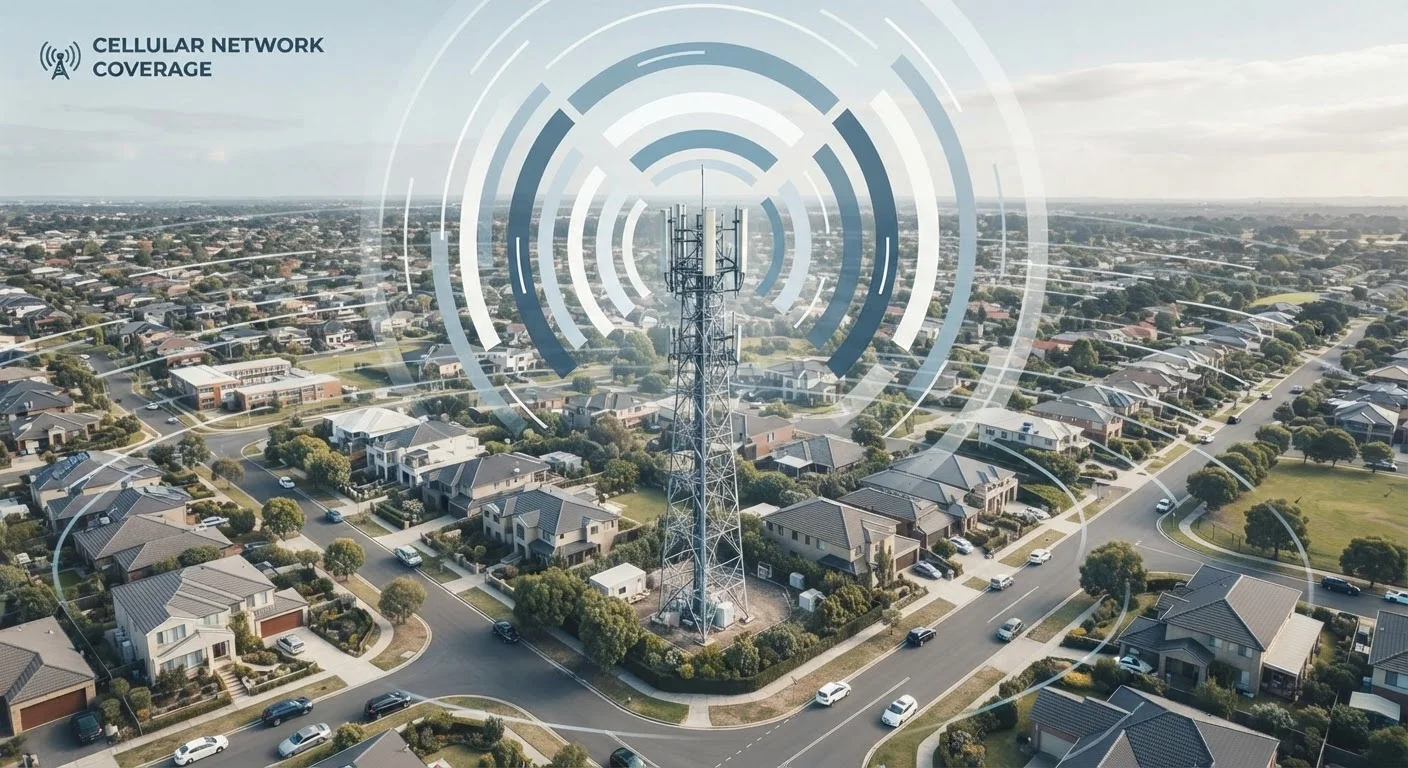
Because MVNOs run on a major carrier's network, their coverage footprint is essentially the same as that carrier's. If the host carrier has strong rural coverage in a given region, MVNO customers on that network benefit from the same reach. If the host carrier has gaps, those gaps show up for MVNO customers too.
This is worth verifying before choosing a plan. Most MVNOs publish coverage maps that mirror their host carrier's map, and some explicitly name the underlying network. Matching the host carrier to the geography where you actually live and travel is a more reliable predictor of your experience than brand recognition alone.
Curious how phones navigate between networks and handle edge cases like Wi-Fi calling? Roaming, Wi-Fi Calling, and Network Switching walks through what's happening behind the scenes.
What This Means for Your Wallet and Experience
The MVNO model can translate into meaningful cost differences for consumers. Because these companies don't carry the capital expense of building and maintaining network infrastructure, their overhead is lower. That can result in plans priced below what the host carrier charges for comparable data allotments - though the plan structures and included features vary widely.
The trade-offs are real, though. International roaming options, device financing programs, and premium customer support are areas where MVNOs sometimes offer less than the major carriers. Plan terms also tend to be simpler - often no annual contracts - which some customers prefer and others find limiting.
Understanding the terminology in any wireless plan is important before you commit. The Mobile Plan Glossary defines 40 key terms, including deprioritization, QCI, and eSIM, in plain language. For device questions related to compatibility and unlocking, the Phones & Devices hub is a useful starting point.
The bottom line: an MVNO isn't a cut-rate imitation of wireless service. It's a different business model built on the same physical network. Knowing which network sits underneath a given MVNO - and how that carrier handles congestion - gives you an honest picture of what you're actually buying.