
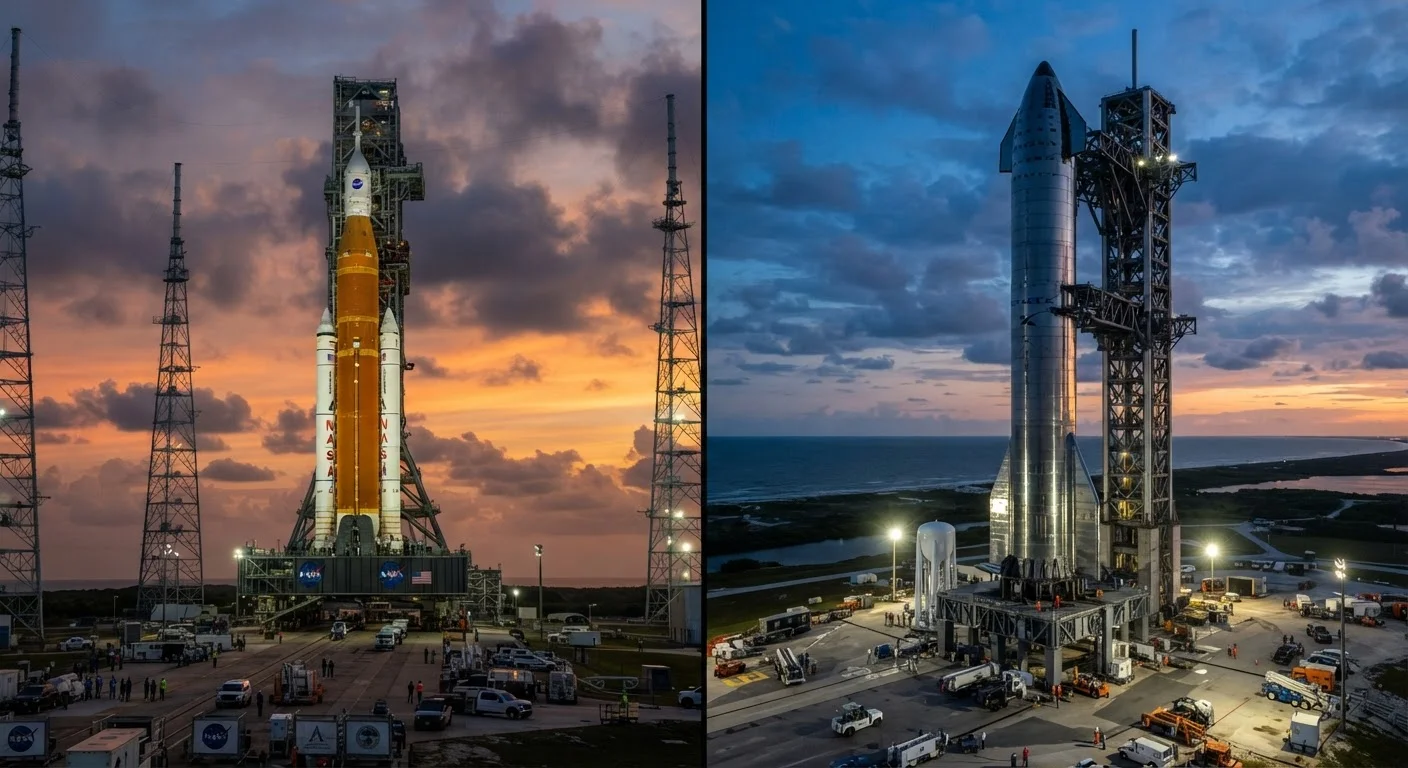
Who Funds Space Exploration - and Why It Matters
Space exploration has always been expensive, risky, and slow to produce returns - which is exactly why governments dominated the field for its first six decades. Agencies like NASA, the European Space Agency (ESA), JAXA (Japan), and Roscosmos are funded through national budgets and report to elected governments or intergovernmental bodies. Their mandate is broad: advance scientific knowledge, support national security interests, and represent their nations on an international stage.
Private spaceflight companies, by contrast, raise capital through investors, contracts, and - increasingly - direct revenue from satellite launches, cargo deliveries, and planned passenger services. Their incentive structure is fundamentally different: they must eventually generate returns. That financial pressure has produced remarkable engineering efficiency but also shapes which missions get prioritized.
Understanding this funding divide is the starting point for comparing what each sector can and cannot do well.
Goals, Timelines, and Risk Tolerance
Government agencies routinely operate on timelines measured in decades. NASA's Voyager probes were launched in 1977 and continue to return data from interstellar space today - a mission horizon no private company could justify to shareholders. Deep planetary science, heliophysics, and fundamental astronomy remain almost exclusively in the public domain precisely because the payoff is diffuse and distant. As our separate coverage explains, space missions take far longer than most people expect, driven by orbital mechanics and fuel constraints that no amount of private capital can shortcut.
Private programs, meanwhile, have shown a high appetite for risk on a compressed schedule - but a commercially rational kind of risk. Reusable rocket technology, which SpaceX pioneered with the Falcon 9 and Falcon Heavy, reduced the cost per kilogram to orbit dramatically. Rocket Lab, United Launch Alliance, and other firms compete in an emerging commercial launch market where speed and price are primary metrics.
Where agencies tolerate uncertainty for the sake of knowledge, private programs tolerate technical risk in pursuit of cost reduction and market advantage.
| Government Agencies | Private Programs | |
|---|---|---|
| Primary Funding Source | National budgets / taxpayer funds | Private capital, contracts, revenue |
| Mission Timelines | Decades-long horizons common | Near-to-medium term focus |
| Primary Goals | Scientific discovery, national prestige | Cost efficiency, market revenue |
| Risk Model | Scientific uncertainty tolerated | Commercial risk managed tightly |
| Accountability | Public / governmental oversight | Investor and market accountability |
| Output Type | Public-domain scientific knowledge | Commercial services and infrastructure |
| International Cooperation | Extensive treaty-based partnerships | Limited; mainly contractual |
| Launch Cost Trajectory | Historically high; improving via contracts | Driven sharply lower by reusability |
Collaboration: The Blurring Line Between Public and Private
The most significant recent development in spaceflight is not competition between these two models - it is their convergence. NASA's Commercial Crew Program, for example, contracts private companies to transport astronauts to the International Space Station. This public-private structure allows the agency to focus resources on deep-space exploration while leveraging private-sector efficiency for routine logistics.
This hybrid model has proven effective: crew transportation costs fell substantially after the transition from the Space Shuttle to commercial providers. However, government oversight and safety standards still govern these missions. Private firms bidding on NASA contracts must meet rigorous technical specifications - the public sector sets the bar, even when a private firm does the flying.
The practical lesson is that these sectors are not rivals in a zero-sum race but participants in an evolving ecosystem where each fills gaps the other cannot easily cover.
Scientific Output vs. Commercial Output
One of the clearest distinctions between the two models is what they produce. Government missions have generated the bulk of humanity's scientific understanding of the solar system: the Mars rover datasets, Hubble Space Telescope imagery, Cassini's Saturn reconnaissance, and the James Webb Space Telescope's infrared observations of the early universe. This knowledge enters the public domain and benefits researchers globally.
Private missions, by contrast, primarily produce services and infrastructure: broadband satellite constellations, launch capacity, and eventually - according to multiple companies' stated roadmaps - space tourism and in-orbit manufacturing. Some private missions do carry scientific payloads, often under government contract, but the primary output is commercial value rather than pure knowledge.
Neither output type is inherently more valuable; they serve different human needs. But readers evaluating space programs should recognize that scientific return and commercial return are distinct measures of success.