
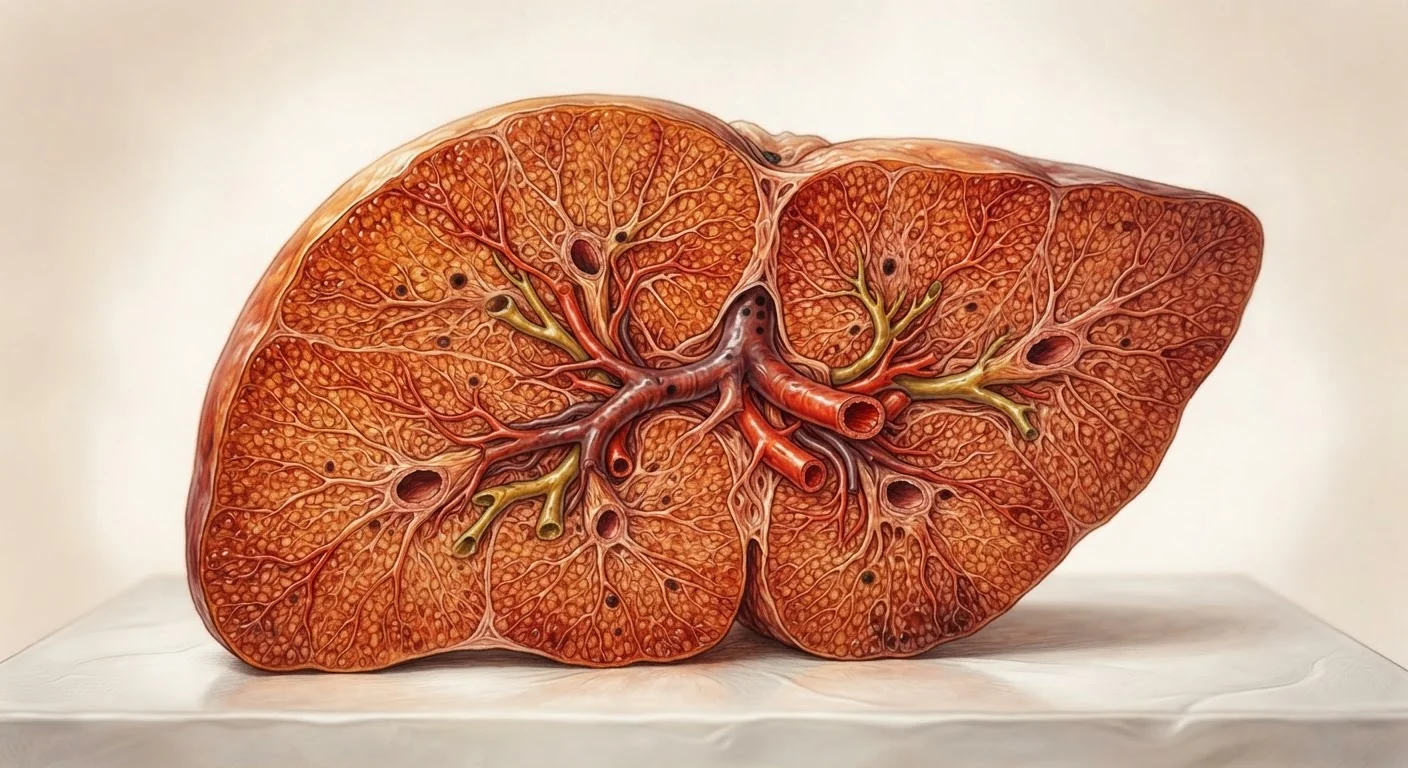
The Organ Doing the Most Work You've Never Noticed
Tucked beneath your right ribcage, the liver is the body's largest internal organ - and arguably its hardest working. While the heart gets credit for keeping you alive and the brain earns attention for thought, the liver operates quietly in the background, performing hundreds of interlocking tasks every second of every day. Most people only think about the liver in the context of alcohol. That framing sells it dramatically short.
The liver sits at a metabolic crossroads, receiving blood from two separate sources simultaneously: the hepatic artery delivers oxygenated blood from the heart, while the portal vein brings nutrient-rich blood directly from the digestive tract. Every bite of food you eat passes through the liver's chemical processing before the rest of your body gets to use it. That alone would be a full-time job. The liver holds roughly a dozen more.
Understanding what this organ actually does reframes how you think about nutrition, energy, immunity, and even mood. It's covered in more depth as part of the broader picture in seven biological processes most people never think about.
The Liver's Core Jobs, Explained Plainly
Filtering and detoxification. Blood from the gut contains everything absorbed through digestion - nutrients, but also bacteria, medications, alcohol, and byproducts of metabolism. The liver acts as a gatekeeper, chemically transforming harmful substances into forms the kidneys can excrete. Drugs are metabolized here; their dosing and timing are calibrated around how quickly the liver processes them.
Glucose regulation. After a meal, blood sugar rises. The liver absorbs excess glucose and stores it as glycogen - a compact form of energy held in reserve. Between meals, when blood sugar dips, the liver breaks glycogen back down and releases glucose to keep levels stable. This happens without any conscious input from you, continuously adjusting to match demand.
Protein synthesis. Nearly all the proteins circulating in your blood plasma are manufactured in the liver. This includes albumin, which maintains fluid balance between blood vessels and surrounding tissue, and clotting factors, which allow wounds to stop bleeding. A liver that isn't functioning well often shows up first as swelling (edema) or unusual bruising - both reflecting disrupted protein production.
Bile production. The liver produces roughly half a liter of bile per day, a digestive fluid stored in the gallbladder and released into the small intestine when fat is consumed. Bile emulsifies dietary fats - breaking large droplets into smaller ones so digestive enzymes can access them efficiently. Without bile, fat-soluble vitamins like A, D, E, and K can't be properly absorbed.
Cholesterol and lipid management. The liver synthesizes cholesterol - a molecule essential for building cell membranes and producing hormones - and packages fats into lipoproteins for transport through the bloodstream. It also clears excess cholesterol and processes it for excretion. The liver is deeply involved in the balance that cholesterol tests measure.
Immune defense. Specialized immune cells called Kupffer cells line the liver's internal passages. They capture and destroy bacteria, debris, and foreign particles arriving from the gut before they can enter general circulation. The liver is, in this sense, a frontline immune organ - one that rarely gets credit for that role.
This article is for informational purposes only and is not medical advice. For any concerns about liver health or function, consult a qualified healthcare professional.