
Why Environmental Language Outpaces Environmental Science
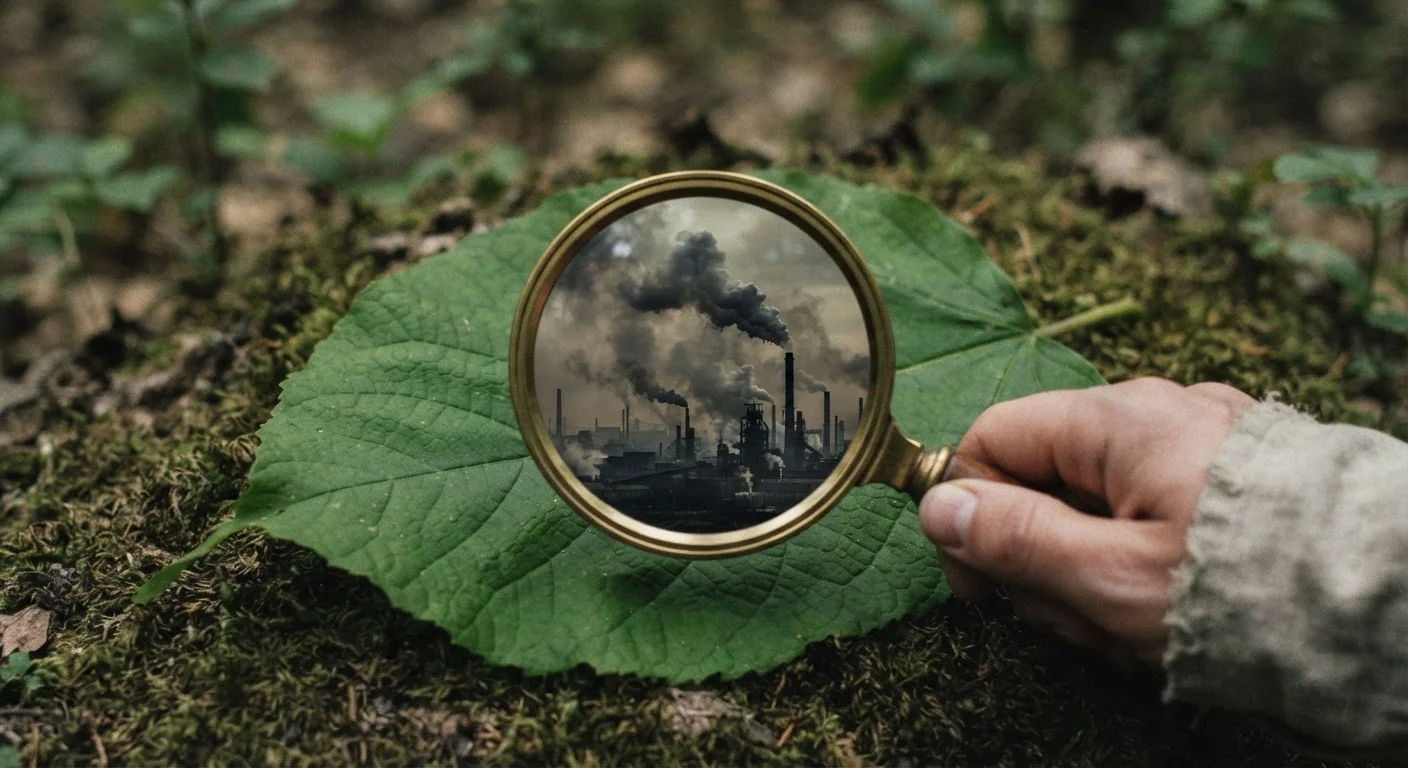
Environmental marketing has expanded dramatically as consumer awareness of ecological issues has grown. The result is a marketplace saturated with claims - 'carbon neutral,' 'planet-friendly,' 'zero waste' - that reference environmental concepts while frequently bypassing the scientific standards those concepts require. This gap between language and measurement is what researchers and regulators commonly call greenwashing.
Greenwashing isn't always intentional deception. It often emerges from genuine misunderstanding of complex environmental science, combined with strong market incentives to appear responsible. The challenge for readers is that the vocabulary of environmental science - lifecycle, emissions, biodiversity - sounds technical and authoritative even when it's being used imprecisely. Understanding the most common errors helps separate meaningful data from persuasive framing. For a parallel look at how the same dynamic plays out in nutrition, see our examination of popular nutrition claims that similarly fail scientific scrutiny.
Vague Claims Aren't Harmless
When consumers and policymakers make decisions based on misleading environmental language, resources flow away from genuinely effective interventions. Misrepresented science doesn't just confuse - it can actively delay progress on measurable environmental goals. Treating unverified marketing language as equivalent to peer-reviewed data has real ecological consequences.
The Most Common Errors - and the Science Behind Them
The mistakes below recur across industries, product categories, and even policy documents. Each one exploits a genuine scientific concept - recycling, carbon accounting, material footprints - while omitting the methodological rigor that gives those concepts meaning.
Accepting vague eco-labels like 'green,' 'natural,' or 'sustainable' as scientifically meaningful without scrutiny.
Why it happens: These terms are emotionally resonant and widely used, and consumers often assume they carry regulatory weight. In reality, most have no universally enforced scientific definition.
Evaluating environmental impact based on a single metric, such as carbon emissions, while ignoring water use, biodiversity effects, or toxicity.
Why it happens: Single-metric framing is simpler to communicate and easier for audiences to absorb, so it dominates marketing materials even when it gives an incomplete picture.
Conflating 'recycled' or 'recyclable' with actually being recycled or having a low environmental footprint.
Why it happens: The distinction between what can theoretically be recycled and what is actually processed in existing infrastructure is rarely explained in consumer-facing materials.
Treating carbon offset programs as scientifically equivalent to direct emissions reduction.
Why it happens: Offsets are easier for organizations to implement than structural change, and their presentation is often indistinguishable from genuine reduction in public communications.
Accepting 'net zero' pledges without examining the underlying methodology or timeframe.
Why it happens: Net zero has become a broadly adopted term across industries, but there is no single agreed-upon scientific standard defining what it requires, making it easy to use aspirationally rather than precisely.
Understanding how these errors operate also clarifies what rigorous environmental science actually looks like: defined scope, measurable indicators, peer-reviewed methodology, and independent verification. Claims that lack these elements should be read as aspirational at best. For a deeper look at how scientific evidence is routinely misrepresented on environmental topics, our analysis of persistent climate myths walks through specific claims and the evidence that addresses them.
Applying Scientific Literacy to Environmental Claims
Environmental science offers genuinely powerful tools for understanding ecological impact - but those tools depend on transparent methodology, honest scope definition, and a willingness to present trade-offs rather than only favorable data. When evaluating any environmental claim, three questions sharpen the picture: What exactly is being measured? Over what timeframe and boundary? And who independently verified the result?
No product, process, or policy eliminates environmental impact entirely - lifecycle science confirms that every material choice involves trade-offs. Claims that suggest otherwise deserve extra scrutiny. The goal isn't cynicism about environmental progress; it's the calibrated skepticism that good science itself requires.
~42%
Online green claims found to be exaggerated or false
A 2021 European Commission screening of websites across multiple sectors found roughly 42% of green claims were exaggerated, false, or deceptive.
10%
Plastic packaging actually recycled globally
Research published in Science Advances estimated that less than 10% of all plastic ever produced has been recycled, highlighting the gap between recyclability claims and actual outcomes.