Why the Distinctions Matter
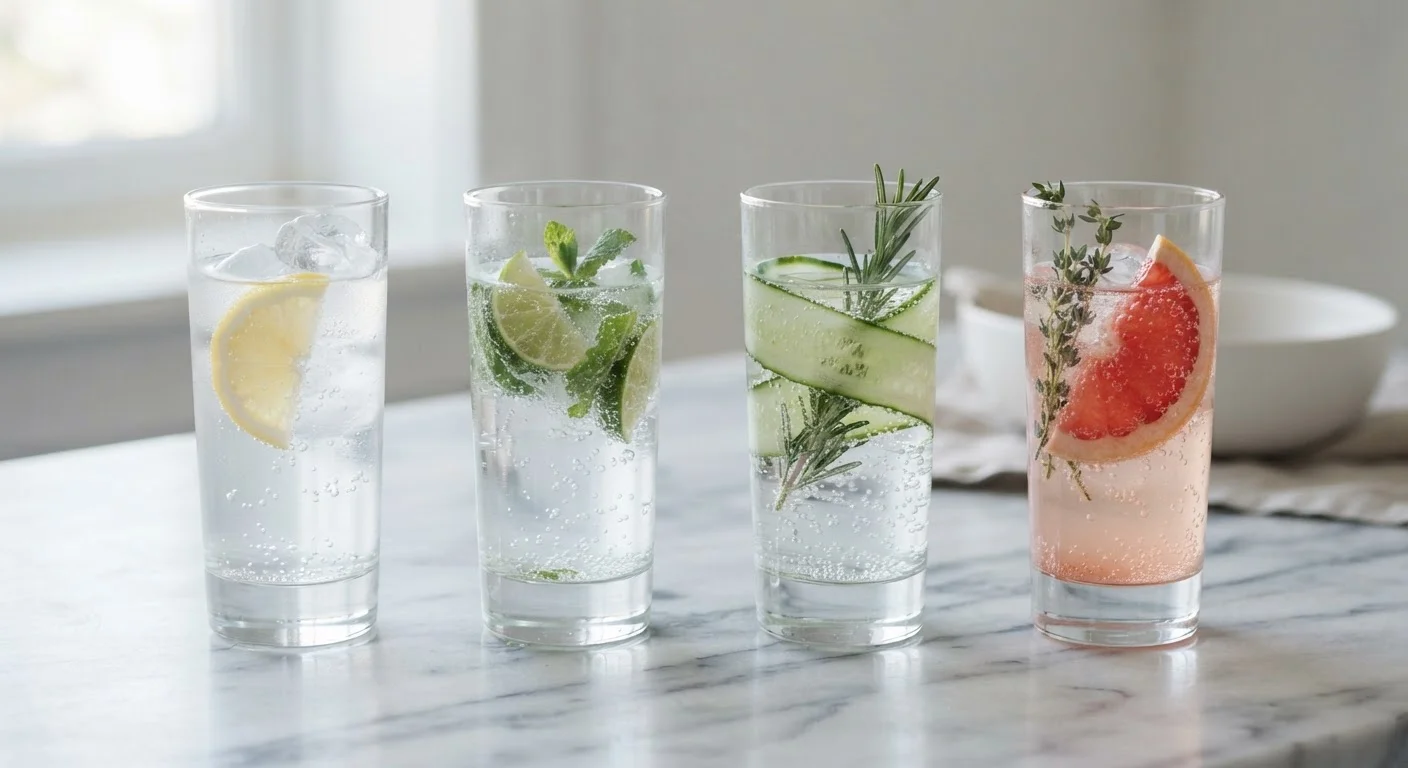
Walk down any grocery store beverage aisle and you'll find shelves lined with bubbly water - labeled seltzer, club soda, sparkling mineral water, tonic, and a dozen brand-specific names. They all share carbonation, but their ingredients, mineral content, flavor profiles, and best uses diverge considerably. Mixing them up can affect everything from the taste of your cocktail to how much sodium or sugar you're unknowingly consuming.
Understanding what's actually in each type helps you make more intentional choices - whether you're hydrating, mixing a drink, or simply enjoying a glass with dinner. As the history of American drinking habits shows, our relationship with carbonated beverages has evolved considerably, and so has the variety available to us.
The Four Main Types, Explained
Seltzer
Seltzer is the simplest of the four: plain water with carbon dioxide (CO₂) added under pressure. That's it. No minerals, no additives, no flavor - unless it's been flavored after the fact. The fizz is artificially introduced during production, giving seltzer its clean, neutral taste. It's a reliable stand-in for still water when you want bubbles without anything else getting in the way.
Club Soda
Club soda starts the same way - carbonated water - but manufacturers add mineral-like compounds such as potassium bicarbonate, potassium sulfate, or sodium bicarbonate to mimic naturally occurring minerals. These additives give club soda a slightly saltier, more mineral-forward taste compared to seltzer, and they contribute a small amount of sodium. Bartenders have long favored club soda as a mixer because its mineral character adds a subtle complexity without overpowering other ingredients.
Sparkling Mineral Water
Sparkling mineral water comes from a natural underground source - a spring or well - and contains minerals that occur naturally in the water as it moves through rock formations. Regulations in the U.S. require that water labeled "mineral water" contain no less than 250 parts per million of total dissolved solids from its source. Common minerals include calcium, magnesium, and bicarbonate, which vary by source and give each brand a distinct taste. The carbonation may be natural (captured from the source) or added back after processing. The mineral content is real and consistent, unlike the added compounds in club soda.
Tonic Water
Tonic water is a fundamentally different product. It contains carbonated water, but also quinine - a bitter compound originally derived from cinchona bark - and, in most standard formulations, added sugar or high-fructose corn syrup. Quinine gives tonic its characteristic bitter edge. A standard 12-ounce serving of regular tonic water can contain roughly 30-35 grams of added sugar, making it nutritionally closer to a soft drink than a plain sparkling water. Diet and low-calorie tonic versions substitute artificial or natural non-sugar sweeteners for the sugar.
Carbonation
The process of dissolving carbon dioxide (CO₂) gas into water under pressure, creating the bubbles associated with sparkling beverages. It can occur naturally at a water source or be added industrially.
Quinine
A naturally bitter compound originally extracted from the bark of the cinchona tree. It is added to tonic water to produce its characteristic bitter flavor and was historically used to treat malaria.
Total Dissolved Solids (TDS)
A measure of the combined concentration of all inorganic and organic substances dissolved in water. Mineral water is defined in part by a minimum TDS level from its natural source.
Mineral Water
Water sourced from a protected underground source that naturally contains a consistent level of minerals and trace elements. U.S. regulations require a minimum of 250 parts per million total dissolved solids.
Choosing the Right One for Your Needs
If you're looking for a calorie-free, additive-free hydration option, seltzer is your most straightforward choice. If sodium intake is a concern, check the label on club soda - some formulations are higher than others. Sparkling mineral water can contribute small amounts of calcium and magnesium to your diet, though it shouldn't be counted as a primary mineral source. Tonic water, despite its bubbly appearance, contains added sugar in most regular versions and should be treated accordingly.
For cooking and cocktails, the differences matter too. Seltzer's neutrality makes it versatile for everything from lightening pancake batter to diluting spirits. Club soda's slight mineral note works well in mixed drinks. Sparkling mineral water's distinct character shines best on its own or paired with food. Tonic is largely irreplaceable in a classic gin and tonic - its bitterness is the point.
This article is for general informational purposes only and does not constitute dietary or medical advice. Individuals managing sodium intake, sugar consumption, or specific health conditions should consult a qualified healthcare professional.