What Makes a Tea a "True" Tea?
Walk down any grocery aisle and you'll find hundreds of products labeled "tea" - chamomile tea, peppermint tea, rooibos tea, and beyond. But botanically and culinarily speaking, only one plant produces what experts define as true tea: Camellia sinensis, an evergreen shrub native to East Asia.
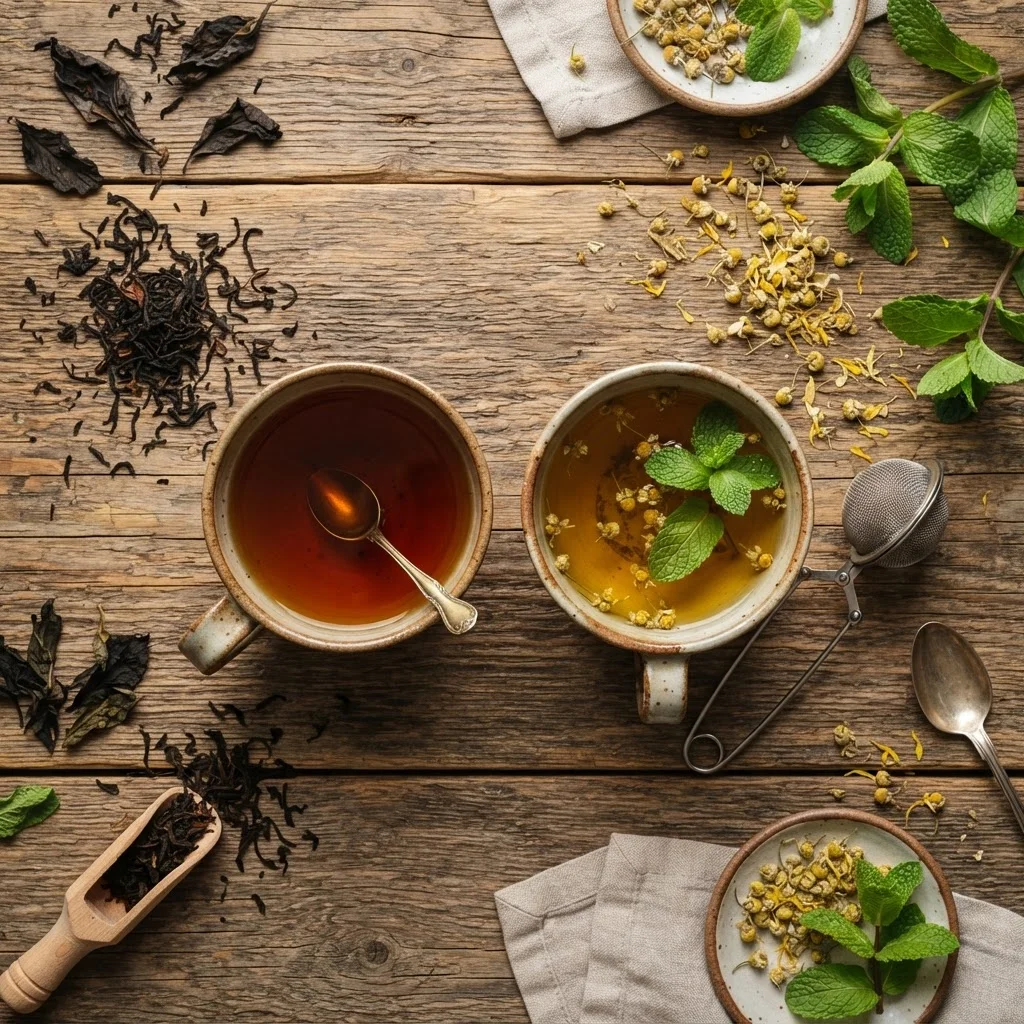
Every variety of true tea - including green, black, white, oolong, and pu-erh - comes from leaves or buds of this single species. What differentiates them is not the plant itself, but the way the leaves are processed after harvest. Black tea undergoes full oxidation, giving it a deep color and bold flavor. Green tea is minimally processed to prevent oxidation, preserving its grassy, vegetal character. White tea uses the youngest buds with very little processing, while oolong falls somewhere between green and black. Pu-erh is fermented, producing earthy, complex notes.
Because all true teas share the same botanical origin, they also share one defining characteristic: natural caffeine content. The amount varies by type and steeping time, but none are naturally caffeine-free. This matters enormously for readers who are monitoring their caffeine intake.
If you're curious about building a deeper brewing practice, our beginner's guide to loose-leaf tea walks through types, tools, and steeping basics in plain language.
What Is a Tisane - and Why Does the Label "Herbal Tea" Stick?
Beverages made by steeping herbs, flowers, fruits, roots, or spices in hot water are technically called tisanes (tih-ZAHN). They contain no leaves from the Camellia sinensis plant and are therefore not true teas in any strict sense. Common examples include chamomile, peppermint, hibiscus, ginger, and rooibos.
The term "herbal tea" is a widely accepted everyday shorthand, and there's no harm in using it - just know what it signals. Tisanes are naturally caffeine-free, which is one of their biggest draws. They also offer enormous variety in flavor, aroma, and the cultural traditions behind them.
| Criterion | True Tea | Herbal Tea (Tisane) |
|---|---|---|
| Botanical source | Camellia sinensis plant only | Herbs, flowers, fruits, roots |
| Caffeine content | Always present naturally | Naturally caffeine-free |
| Main varieties | Green, black, white, oolong, pu-erh | Chamomile, peppermint, hibiscus, ginger |
| Flavor range | Grassy, earthy, malty, floral | Highly variable by plant used |
| Processing role | Determines the tea type | Minimal; mostly dried or fresh |
| Medication interactions | Some possible (e.g. blood thinners) | Possible; varies by botanical |
It's worth noting that not all herbal ingredients are created equal. Some - like valerian root or certain herbal blends - may interact with medications or be unsuitable for people who are pregnant, nursing, or managing specific health conditions. If you're using an herbal infusion for a specific health purpose, consult a qualified healthcare professional rather than relying on packaging claims alone.
This article is for informational purposes only and is not medical advice. Always consult a qualified healthcare professional for questions about your health or any supplements and botanicals you consume.
How to Tell What's in Your Cup
The simplest way to know exactly what you're drinking is to read the ingredient list. A product labeled "green tea with mint" may contain both a true tea and an herb - meaning it does contain caffeine. A product simply called "peppermint tea" should list only peppermint leaf and be caffeine-free.
Check Labels on "Wellness" Blends
Many packaged wellness and sleep teas combine true tea (like green or white tea) with herbal ingredients. Even a small amount of true tea adds caffeine to the blend. If you need to avoid caffeine entirely, look for products that explicitly state "caffeine-free" and list no Camellia sinensis, green tea, black tea, white tea, or oolong among their ingredients.
Some blended products blur the line intentionally - for example, a "bedtime blend" might pair chamomile with a small amount of green tea for flavor. These blends may contain low but non-zero amounts of caffeine, which matters for light sleepers or highly caffeine-sensitive individuals.
Just as cold brew and iced coffee may look identical in the glass but are made very differently, true teas and tisanes share a serving ritual but diverge fundamentally in origin and chemistry. Our article on the difference between cold brew and iced coffee is another good example of why looking past appearances pays off when you want to make informed drink choices.
Understanding these distinctions doesn't require a culinary degree - it just requires knowing what question to ask when you pick up a box: Is this actually Camellia sinensis, or something else entirely? Either can be delicious. Knowing which one it is just helps you drink intentionally.