
Why Job Search Jargon Matters
Job searching involves its own language - one that hiring managers and recruiters use every day but rarely explain to candidates. When you don't know what an ATS is, you might unknowingly submit a resume it can't read. When you misread a compensation offer, you might accept less than the role actually pays. Getting fluent in this vocabulary is a practical advantage, not a nice-to-have.
This reference covers the terms you're most likely to encounter from your first application through your first paycheck. For a broader orientation to the full job search process, see our complete job search walkthrough.
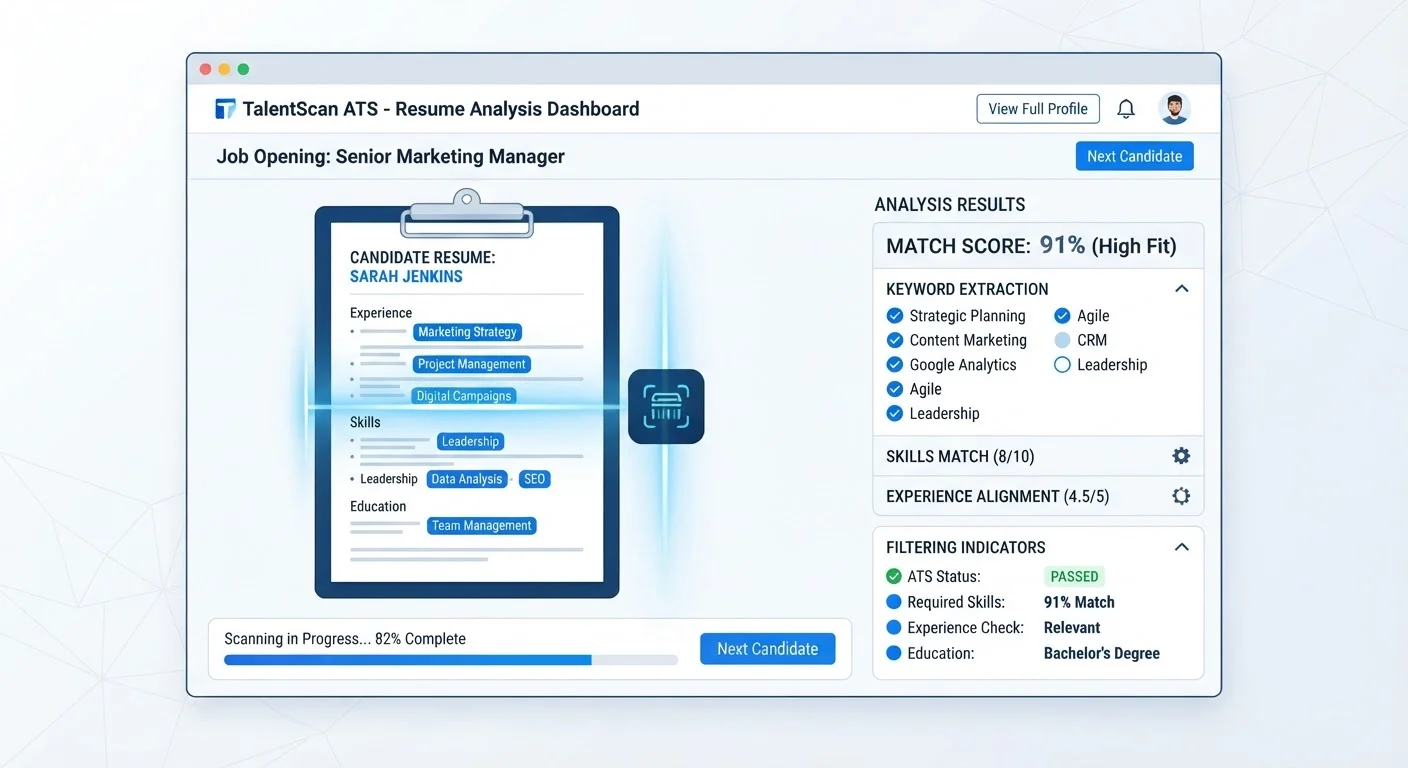
ATS (Applicant Tracking System)
Software that employers use to receive, parse, and screen job applications before a human reviewer sees them. Resumes should be formatted simply to ensure the ATS reads them correctly.
Hiring manager
The person who will supervise the new hire and typically makes the final hiring decision. Distinct from the recruiter or HR contact managing the process.
Total compensation
The full value of an employment offer, including base salary, bonuses, equity, benefits, and retirement contributions. Two offers with equal salaries can differ substantially in total value.
Exempt vs. non-exempt
A legal classification under the FLSA. Non-exempt workers are entitled to overtime pay for hours over 40 per week; exempt workers are not, based on salary level and job duties.
W-2
The annual tax form employers provide to employees showing total wages paid and taxes withheld. Contrasts with the 1099, which is issued to independent contractors.
Vesting schedule
The timeline over which an employee gains full ownership of employer-provided equity or retirement contributions. Leaving before the schedule completes typically means forfeiting unvested amounts.
OTE (On-Target Earnings)
A compensation figure used in variable-pay roles - most often sales - representing expected total earnings if performance goals are fully met. Actual earnings may be higher or lower.
Job requisition
An internal company document authorizing an open position. A role may be posted publicly while the requisition is still pending internal approval, sometimes causing delays in hiring.
Application and Hiring Process Terms
These terms describe how employers find, screen, and select candidates.
| ATS usage among large employers | Widely adopted (Industry surveys consistently show the majority of large U.S. companies use ATS software to manage applications.) |
| Overtime threshold (FLSA) | 40 hours/week (U.S. Department of Labor, Fair Labor Standards Act) |
| W-2 vs. 1099 tax responsibility | Employer withholds vs. contractor pays (IRS Publication 15, current edition) |
| Typical vesting period (equity) | 3-4 years with 1-year cliff (Common structure in U.S. tech and startup employment offers) |
- Job requisition (req): The internal document a company creates when it officially opens a position. A role may be listed publicly but still be on hold if the req hasn't been approved.
- Applicant Tracking System (ATS): Software employers use to collect, filter, and organize applications. Resumes are often parsed by an ATS before a human ever sees them. Formatting matters - overly complex designs can confuse the software.
- Hiring manager: The person the new hire will report to directly. Distinct from the recruiter, who handles the process. The hiring manager typically has final say on who gets the offer.
- Pipeline: The pool of candidates an employer is actively considering for a role or for future openings. Being told you're "in the pipeline" usually means you haven't been rejected but aren't the top choice yet.
- Offer letter vs. employment contract: An offer letter outlines the basic terms of employment (title, salary, start date). An employment contract is a legally binding document with more detailed obligations and is more common in executive or specialized roles.
Don't let assumptions about how employers use job boards limit your approach. See our breakdown of job boards vs. networking for a realistic picture of where hires actually come from.
Compensation and Benefits Vocabulary
Compensation offers are packed with terms that have real financial implications. Misreading them costs money.
- Base salary: Fixed annual pay before bonuses, overtime, or benefits. This is the number to negotiate first.
- Total compensation: Everything included in the package - base pay, bonuses, equity, health insurance, retirement contributions, and other benefits. Two offers with the same salary can differ significantly in total value.
- OTE (On-Target Earnings): Common in sales roles. The projected total earnings if you hit 100% of your quota. Treat this as a ceiling estimate unless you can verify quota attainment rates.
- Exempt vs. non-exempt: Under the Fair Labor Standards Act (FLSA), non-exempt employees are entitled to overtime pay for hours over 40 per week. Exempt employees - typically salaried professionals meeting certain criteria - are not. Knowing which category you fall into matters for scheduling and compensation.
- W-2 vs. 1099: A W-2 is the annual tax form for employees; the employer withholds taxes. A 1099 is issued to independent contractors who handle their own tax payments. Some roles are misclassified - it's worth understanding the distinction. See also our guide to reading your pay stub.
- Vesting schedule: If equity or retirement contributions are part of your offer, vesting determines when those benefits fully become yours. Leaving before you're vested means leaving some compensation behind.
Your rights as an employee extend beyond compensation. For a grounded overview of federal protections on the job, see workplace rights every employee should know.