The Anatomy of a Pay Stub
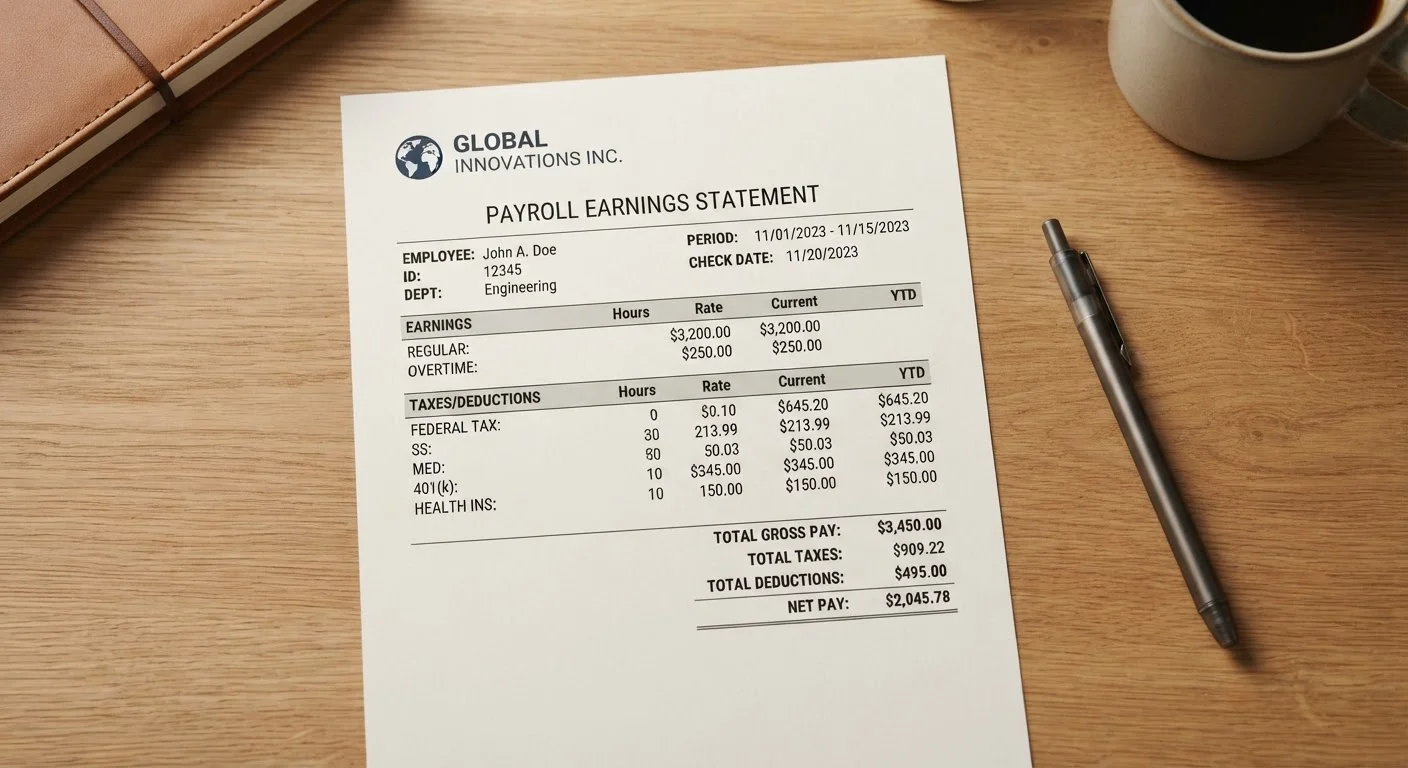
A pay stub is your employer's itemized breakdown of what you earned and where it went each pay period. Most stubs are divided into three broad zones: earnings, taxes, and deductions. Understanding each zone prevents surprises and helps you catch errors before they compound.
| Gross Pay | Total earnings before any taxes or deductions |
| Net Pay | Take-home amount after all taxes and deductions |
| FICA Tax Rate (Employee) | 6.2% Social Security + 1.45% Medicare (IRS Publication 15) |
| Pay Period Types | Weekly, biweekly, semimonthly, or monthly |
| Pre-Tax Deduction Examples | 401(k), health insurance premiums, HSA contributions |
| YTD Column | Cumulative totals from January 1 through current pay date |
Your pay stub may arrive as a paper document or a digital PDF through a payroll portal. Either way, the same core line items apply. If you're newer to the workforce or switching jobs, the key employment terms guide is a useful companion for the broader vocabulary you'll encounter.
Earnings Section: What You Made
Gross Pay is always the starting number - the total you earned before any taxes or deductions are taken out. For hourly workers, it's your rate multiplied by hours worked. For salaried employees, it's your annual salary divided by the number of pay periods. Understanding the difference matters; see how your pay classification affects your rights for the full picture.
Common earnings line items include:
- Regular Pay: Base wages for standard hours worked.
- Overtime Pay: Typically 1.5× your regular rate for hours worked beyond 40 in a workweek, where applicable under federal or state law.
- Bonus / Commission: Variable pay tied to performance or sales targets.
- PTO / Holiday Pay: Compensation for approved paid time off or company holidays.
Always verify that the hours listed match your own records. Payroll errors happen, and you are in the best position to catch them quickly.
Taxes: Federal, State, and FICA
The tax section is where most of the confusion lives. Three categories typically appear:
Federal Income Tax Withholding is based on your W-4 form, which tells your employer how much to withhold. The amount depends on your filing status, any allowances or adjustments you claimed, and your income level. If your withholding is too low all year, you may owe at tax time; too high, and you get a refund but have essentially given the government an interest-free loan.
FICA Taxes fund Social Security and Medicare. As of current federal law, employees contribute 6.2% of gross wages toward Social Security (up to the annual wage base) and 1.45% toward Medicare. Employers match these amounts. High earners may also see an Additional Medicare Tax line.
State and Local Income Tax varies significantly. Some states have no income tax; others have graduated rates. A handful of cities and counties layer on local income taxes as well. Your stub will reflect whichever jurisdictions apply to where you work.
Deductions: Benefits and Other Withholdings
After taxes, deductions reduce your gross pay further. These fall into two categories:
Pre-tax deductions are subtracted before income taxes are calculated, which lowers your taxable income. Common examples include contributions to a traditional 401(k) or 403(b) retirement plan, health insurance premiums under an employer-sponsored plan, and contributions to a Health Savings Account (HSA) or Flexible Spending Account (FSA).
Post-tax deductions come out after taxes are applied. Examples include Roth 401(k) contributions (taxed now, tax-free at retirement), life insurance premiums above certain thresholds, wage garnishments ordered by a court, and union dues.
Net Pay - sometimes labeled "Take-Home Pay" - is the final figure after all taxes and deductions. This is what lands in your bank account. If the net pay doesn't match your direct deposit, check that the deposit account information on file with your employer is current.
Year-to-Date Totals and Why They Matter
Most pay stubs include a Year-to-Date (YTD) column alongside the current-period figures. YTD shows cumulative totals from January 1 through the current pay date. These numbers are useful for several reasons:
- They help you verify your W-2 at tax time - gross YTD on your final stub should closely match Box 1 on your W-2.
- They show when you've hit the Social Security wage base, after which that 6.2% deduction stops for the year.
- They help you track retirement contributions against IRS annual limits.
If a line item looks wrong - an unexpected deduction, a pay rate that doesn't match your offer letter, or a missing overtime entry - bring it to your HR or payroll department promptly. Most payroll systems can issue corrections, but the sooner you flag it, the easier the fix.