What Magical Realism Actually Means
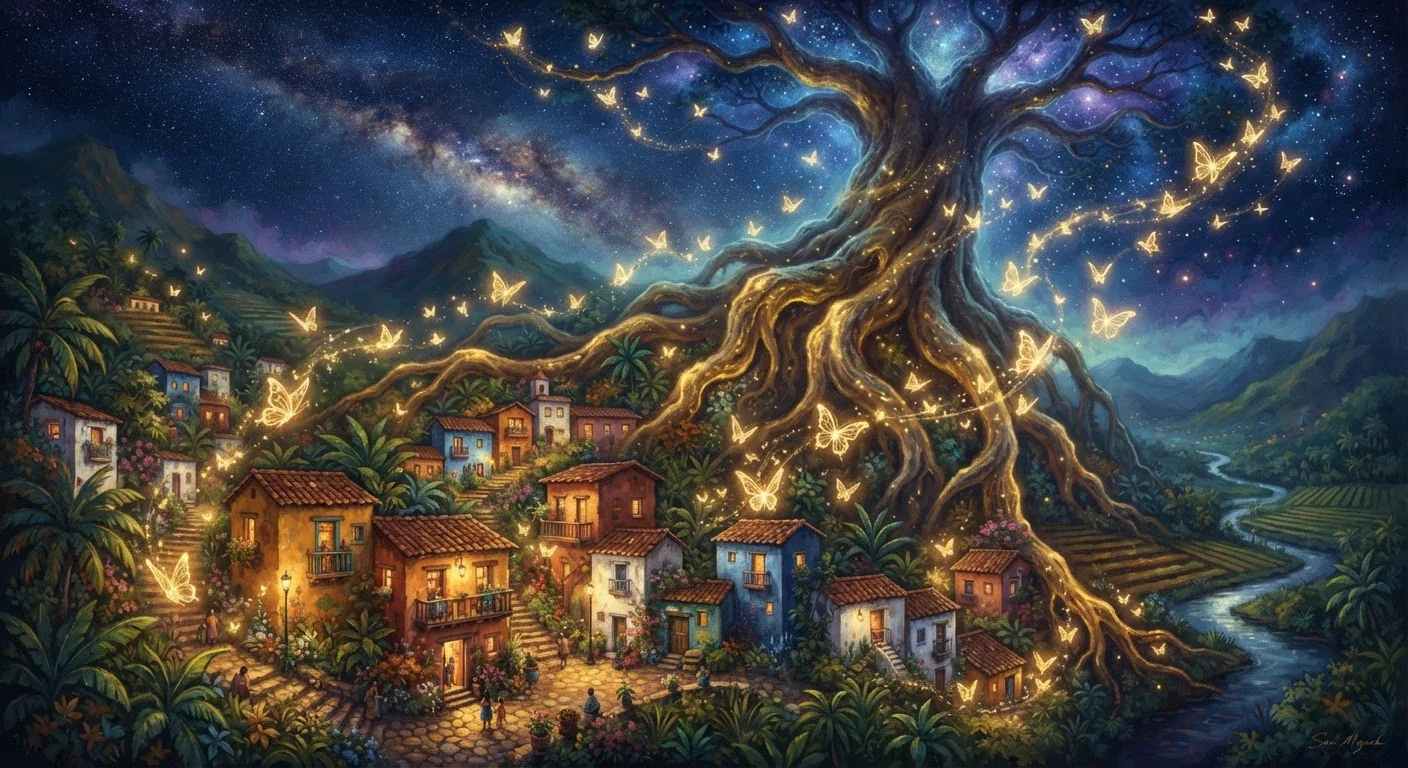
Imagine a novel where a woman levitates slightly each time she prays - and no one in the village thinks much of it. That quiet acceptance is the heart of magical realism: supernatural events presented not as shocking intrusions but as natural threads in the fabric of daily life.
Unlike horror, which uses the impossible to frighten, or fantasy, which constructs entirely alternate worlds, magical realism keeps one foot firmly planted in recognizable reality. The other foot steps freely into myth, folklore, and the uncanny. The result is a mode of storytelling that feels simultaneously grounded and dreamlike.
Magical realism
A storytelling mode in which supernatural or impossible events occur in a realistic setting and are treated by characters as ordinary rather than extraordinary.
Lo real maravilloso
A Spanish phrase meaning "the marvelous real," coined by Cuban writer Alejo Carpentier to describe the idea that Latin American reality is itself inherently extraordinary and mythic.
Epistemology
The study of how we know what we know - in literary terms, it refers to the different cultural frameworks characters use to understand and interpret the world around them.
Matter-of-fact narration
A narrative technique in which unusual or impossible events are described in the same calm, neutral tone as everyday occurrences, without surprise or explanation.
Oral tradition
Stories, myths, and histories passed down through spoken word rather than written text - a major source of the magical and folkloric elements that appear in magical realist literature.
Understanding this balance matters, because readers sometimes mistake magical realism for simple fantasy or allegory. It is neither. The magic is literal in the story's universe, even as it carries symbolic or cultural meaning for the reader. That double layer is what makes the tradition so enduringly interesting.
Where the Tradition Came From
The phrase magical realism was coined in the 1920s by German art critic Franz Roh, who used it to describe a style of post-expressionist painting. But its literary identity was born in Latin America decades later, shaped by writers grappling with histories of colonialism, political instability, and the coexistence of indigenous, African, and European worldviews.
Cuban writer Alejo Carpentier introduced the concept of lo real maravilloso - "the marvelous real" - arguing that Latin American reality was itself inherently magical, layered with myth and cultural contradiction. Venezuelan author Arturo Uslar Pietri applied similar ideas to fiction. The movement gained global attention when Gabriel García Márquez published One Hundred Years of Solitude, a multigenerational family saga where ghosts walk alongside the living and a man is followed through life by a cloud of yellow butterflies.
That novel's Nobel Prize win in 1982 brought magical realism to international readers - but it was never only a Latin American phenomenon. Writers across the globe were already working in the same spirit, from Günter Grass in Germany to Chinua Achebe in Nigeria. The tradition was a meeting point for cultures in which oral storytelling and myth had never been cleanly separated from historical record.
How to Recognize It on the Page
Magical realism has several recognizable hallmarks that distinguish it from neighboring genres. The first is matter-of-fact presentation: the narrator describes impossible events in the same calm, detailed prose used for everything else. There is no gasp, no explanation, no apology.
The second is cultural rootedness. The magic tends to emerge from specific traditions - indigenous belief systems, folk medicine, African spiritual practices, or Catholic ritual. It is not generic fantasy magic; it carries the specific gravity of a community's way of seeing the world. This is part of what separates magical realism from pure escapism and connects it to the broader conversation about what fiction does for readers.
Third, the magic often serves as political or emotional commentary. In Toni Morrison's Beloved, a ghost embodies the unprocessable weight of slavery's trauma. In Laura Esquivel's Like Water for Chocolate, a woman's suppressed emotions literally transfer into the food she cooks. The supernatural is rarely decorative; it is doing narrative work that realism alone cannot.
Why It Resonates Across Cultures
Part of magical realism's staying power is its refusal to rank ways of knowing. A strictly realist novel implicitly privileges empirical, Western frameworks for understanding the world. Magical realism makes room for other epistemologies - the grandmother who reads futures in cards, the community that believes a river has memory, the child born during an eclipse who carries that event in her bones.
This inclusivity explains why the tradition has been embraced by writers from Nigeria, India, Japan, and the American South. It offers a form flexible enough to hold multiple truths at once: documented history and living myth, individual grief and collective trauma.
For everyday readers, it also simply delivers a particular pleasure - the sense that the world is larger and stranger than routine suggests. While it differs fundamentally from speculative fiction (see our piece on how sci-fi and fantasy build their impossible worlds), magical realism has a comparable power to reawaken wonder. It does so, however, without asking readers to leave reality behind entirely.
Where to Start Reading
If you are new to the genre, a few entry points tend to work well for most readers. One Hundred Years of Solitude by Gabriel García Márquez is the canonical choice - sweeping, immersive, and endlessly quotable, though its large cast requires patience. The House of the Spirits by Isabel Allende is similarly multigenerational but often feels more emotionally accessible on a first read.
For something shorter and immediately sensory, Laura Esquivel's Like Water for Chocolate is structured around recipes and monthly chapters, making it one of the most structurally inventive works in the tradition. Toni Morrison's Beloved is essential for readers interested in how the form functions in an American context, confronting the history of slavery with unflinching, hauntingly beautiful prose.
Readers curious about how magical realism sits alongside other literary modes will find it useful to explore how the line between literary and genre fiction keeps shifting - because magical realism has always challenged that boundary, belonging fully to neither camp and enriching both.
Start with a Short Work First
If longer novels feel daunting, consider beginning with short stories by magical realist authors. García Márquez's story collection 'Leaf Storm and Other Stories' and Isabel Allende's 'The Stories of Eva Luna' offer concentrated, memorable introductions to the style without requiring the commitment of a full novel. Short fiction lets you experience the texture and logic of the tradition before diving into its epic expressions.