
How Carriers Build Multi-Line Pricing
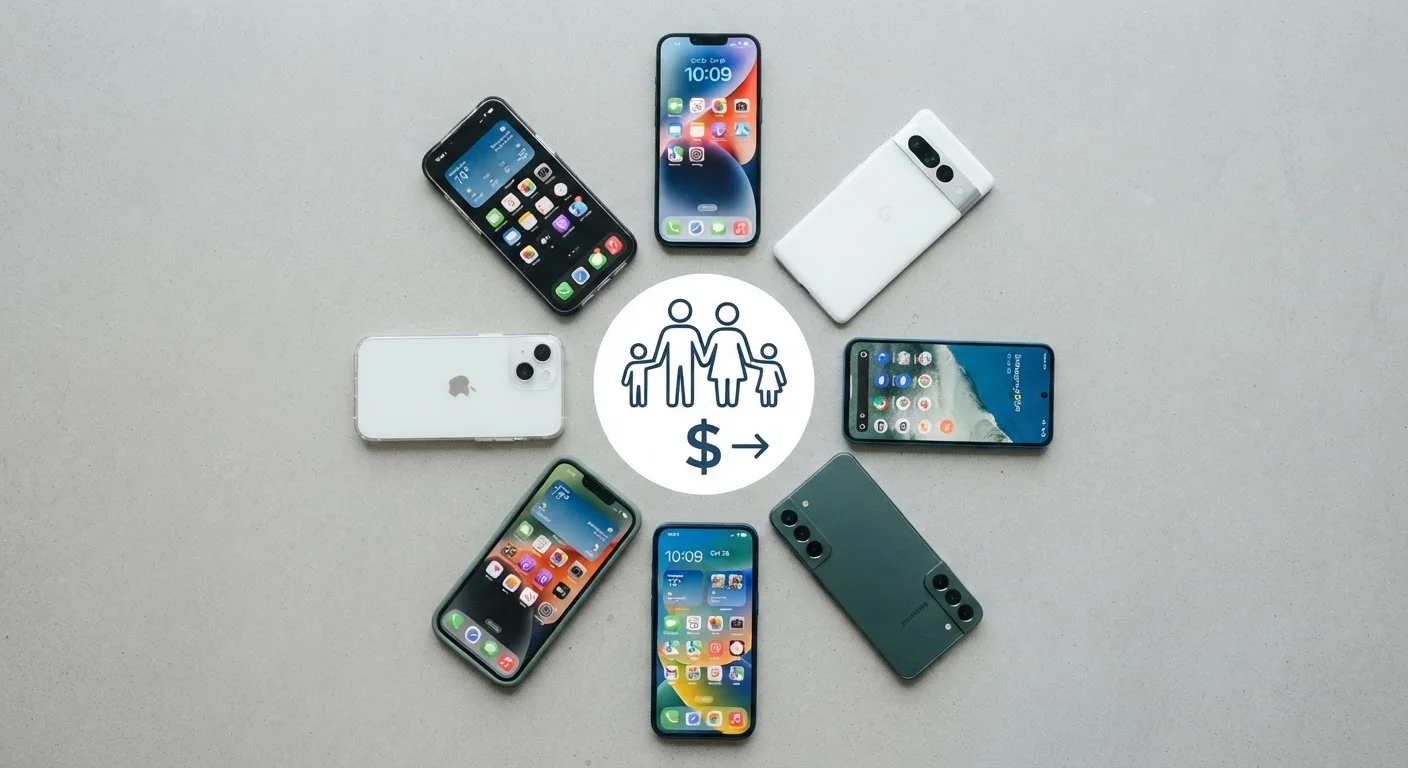
When a carrier advertises a family plan, it is selling a tiered rate structure - not a flat discount. The first line on an account carries the highest per-line cost. Each line added after that is priced lower, because the carrier is spreading its customer-acquisition cost across more revenue. By the third or fourth line, the per-line price can be meaningfully less than what an individual plan would cost.
This structure benefits carriers too. A household locked into one account is far less likely to shop around than four individuals each on separate plans. The discount is real, but it also functions as a retention tool.
Most carriers publish a simple table showing the monthly cost per line at one, two, three, four, and sometimes five or more lines. Reading that table - rather than the headline price in an advertisement - is the clearest way to understand what you will actually pay. See our breakdown of every line item on your wireless bill for help interpreting those charges once you have a plan.
What 'Per-Line Cost' Actually Includes
The per-line price shown in a carrier's family plan advertisement almost always assumes autopay and paperless billing enrollment. Without those, each line typically costs a few dollars more per month. On a four-line account, that difference can add up to a noticeable annual gap between the advertised price and what you actually pay.
Beyond the base rate, each line may have its own data tier - some plans let different lines sit on different service levels within the same account. One line might have a premium unlimited tier while another uses a basic plan. This flexibility can reduce costs for lighter users, but it also makes the total bill harder to predict at a glance.
~40%
Average per-line savings on a 4-line vs. 1-line plan
Industry analysis of major US carrier published rate schedules generally shows per-line costs drop by roughly 35-45% when moving from one line to four lines on comparable unlimited tiers.
$5-$10
Typical autopay discount per line per month
Most major US carriers publicly disclose a per-line autopay credit that is baked into their advertised family plan pricing; removing autopay restores the higher base rate.
4 lines
Most common advertised pricing tier cutoff
Carrier pricing tables at the major US networks typically show the steepest per-line discounts at the four-line level, with diminishing or flat returns beyond that threshold.
Taxes, regulatory fees, and carrier-specific surcharges are added on top of the base plan cost and apply per line. These are not optional and are not included in most advertised prices. For a full picture of what drives those extra charges, our article on what carriers don't spell out at sign-up covers the fine print in detail.
Shared Data vs. Per-Line Allotments
Family plans generally follow one of two data models. In a shared-pool plan, all lines draw from a single combined data bucket - for example, a household might share 30 GB total. In a per-line allotment plan, each line has its own data limit independent of the others.
Shared pools made more sense when data was expensive and usage was lower. Today, most major carriers have moved toward per-line unlimited structures, where throttling or deprioritization kicks in after a line reaches a defined threshold - rather than cutting off the whole account. Understanding which model your plan uses matters, particularly in households with one very heavy data user. Our side-by-side comparison of shared and individual line structures goes deeper on this trade-off.
Account Responsibility and Who Controls What
Every multi-line account has a primary account holder. That person signs the service agreement and is legally responsible for the full monthly bill - regardless of informal payment arrangements between the people sharing the account. Carriers do not mediate internal disputes about who owes what.
Account-level controls - including adding lines, removing lines, and upgrading devices - typically sit with the primary holder. Some carriers allow secondary lines limited self-service access. If you are joining someone else's family plan, it is worth knowing what you can and cannot manage independently.
Device financing adds another layer of complexity. If a line on a family plan has an installment loan for a phone, that financing is tied to the account. Leaving the plan mid-financing usually requires paying off the remaining device balance. Our article on carrier commitment structures and device financing explains how those obligations interact with your service plan.
When an Individual Plan Makes More Sense
Multi-line pricing is not automatically the right choice for every situation. If you need only one line and have no household members to add, an individual plan - or a prepaid plan - may offer more flexibility without the administrative responsibility of managing a shared account. Prepaid and postpaid plans work very differently, and for single users, prepaid options can deliver comparable coverage at lower cost with no contract overhead.
Situations where individual plans tend to make more sense include: people who travel internationally and need plan portability, users whose data needs differ sharply from any household they might join, and anyone who values account independence over per-line savings. The right structure depends on your household size, usage patterns, and how much billing simplicity matters to you - not on which option a carrier promotes most heavily.